Meguiar's Non-Acid Wheel Tire Cleaner: ChemCX Analysis
Ranked Performance
Pricing
Badges
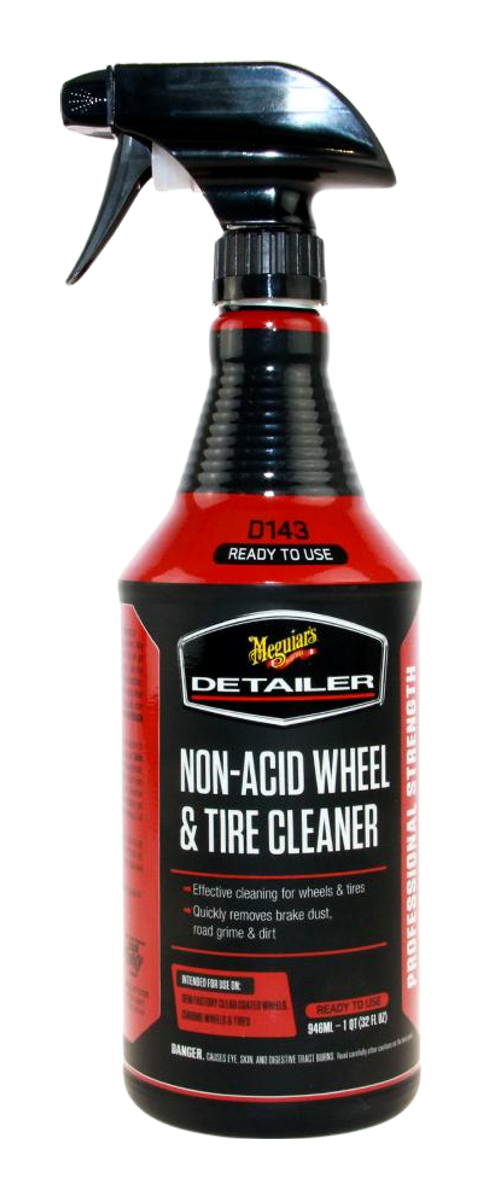
Meguiar's Non-Acid Wheel Tire Cleaner is built for clearing brake dust and road grime off factory clear-coated and chrome wheels without any acid chemistry. It hits hard enough to loosen baked-on brake dust during the dwell, the kind that normally needs a dedicated acid cleaner or a lot of agitation. You spray it on, let it sit, and the contamination breaks down to the point where a pressure rinse or light brush work gets the wheel clean.
Sodium metasilicate drives the formula. It's a strong alkaline salt that dissolves the iron oxides in brake dust and saponifies the oily road film that bonds everything to the wheel surface. The surfactant package pairs anionic and amphoteric agents, which keeps the dissolved grime suspended in solution instead of redepositing as it runs down the barrel. It's a straightforward build: one powerful cleaning salt backed by surfactants that can survive in that alkaline environment. No exotic chemistry, but the formula leans heavily on raw cleaning strength to do the job acid cleaners normally handle.
Specifications
| Attribute | Value |
|---|---|
| pH | 15 |
| Dilution Ratio | Can be used RTU or diluted per professional application |
| Key Actives | Sodium Metasilicate |
| Signal Word | Danger |
| Transparency | excellent |
| Biodegradable | Not disclosed |
Category Context
| Metric | This Product | Category Average | Category Range |
|---|---|---|---|
| pH | 15 | 7.9 | 1 - 15 |
| Price/oz | $0.44 | $0.64 | $0.12 - $1.70 |
Where It Lands
This is the most aggressive alkaline wheel cleaner in the category. At pH 15, the absolute ceiling of the 68-product dataset, it delivers maximum caustic cleaning power straight from the bottle. That positions it squarely for professional detailers tackling neglected wheels with baked-on brake dust and road film. For weekly maintenance on lightly soiled rims, it's overkill; diluting it down is mandatory to avoid stripping sealants or stressing clear coat over time. The concentrate format gives professionals the flexibility to dial back intensity, but Meguiar's doesn't publish specific dilution ratios, which leaves users guessing at working pH.
At $0.44/oz, it lands 31% below the category average, and dilution stretches that further. That's a meaningful cost advantage for shops burning through product daily, undercutting even Meguiar's own Hot Rims at $0.37/oz on a per-use basis once diluted. The value math works best at volume.
How It Compares
Closest Alternatives
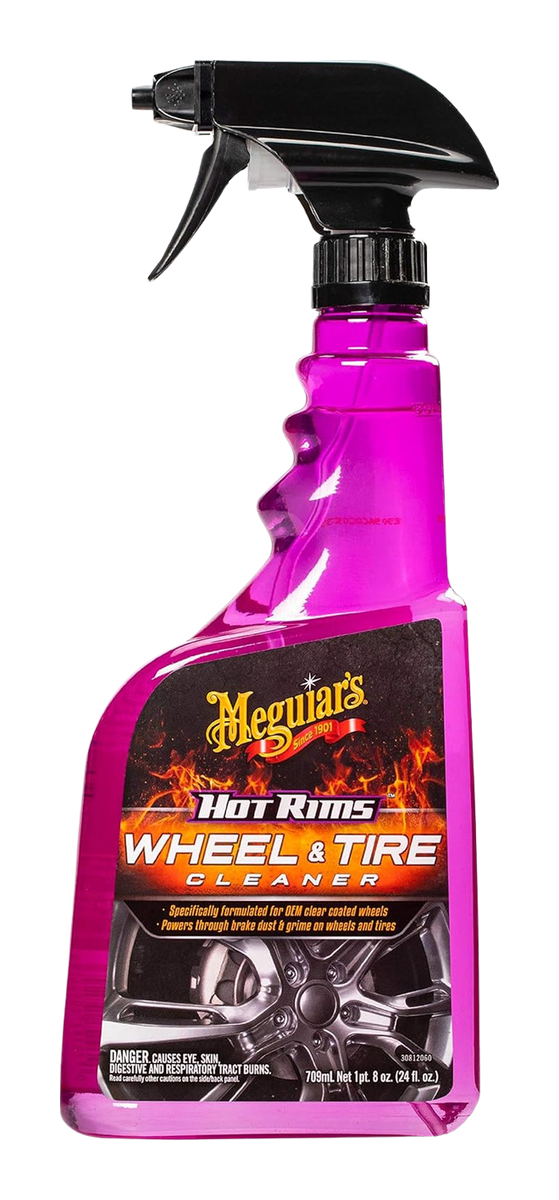
Meguiar's Hot Rims All Wheel Cleaner shares the same brand lineage and alkaline approach but dials back to pH 13.56, still strongly caustic but a meaningful step down from the category ceiling. That gap translates to a formulation better suited for maintained wheels where full-strength caustic power isn't necessary. At $0.37/oz, it also costs less per application.
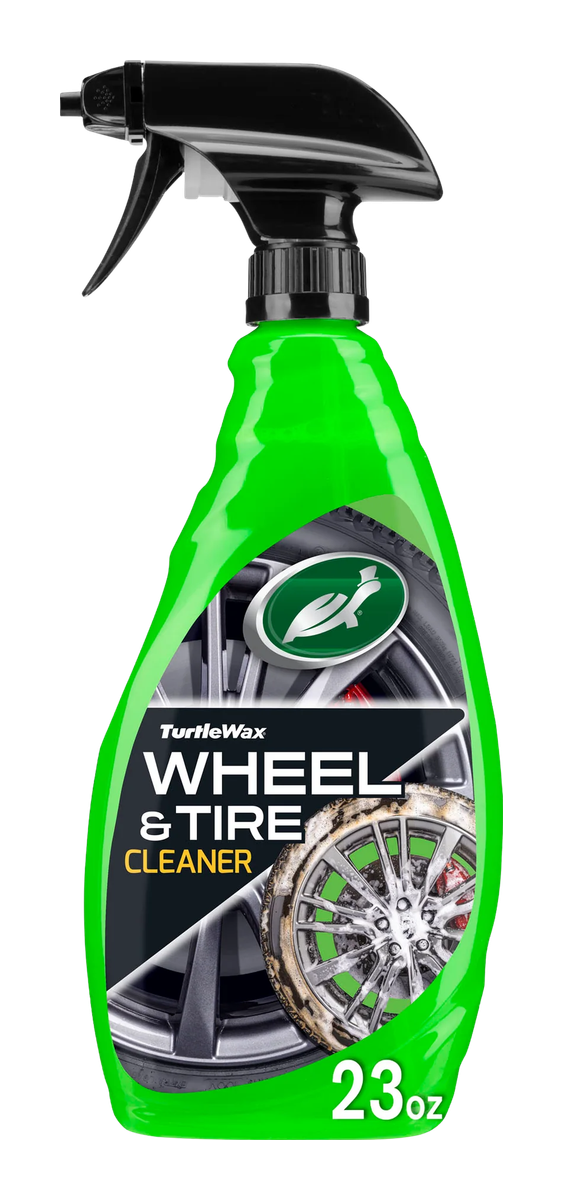
Turtle Wax Wheel & Tire Cleaner lands at pH 13, putting it two full points lower on the scale. The reduced alkalinity makes it a less aggressive option for coated or polished finishes that can't tolerate the subject product's extremes.
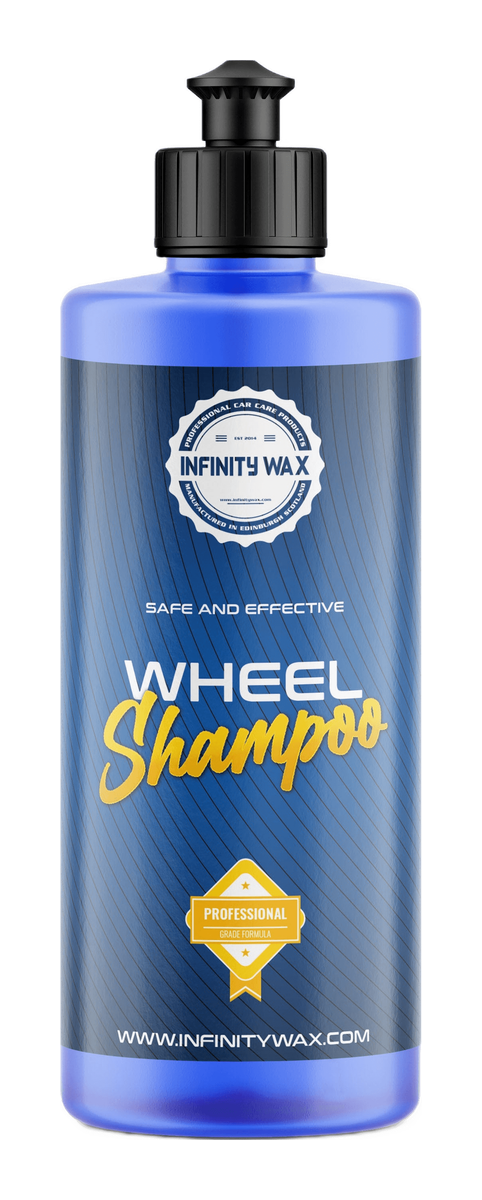
Infinity Wax Wheel Shampoo sits at pH 13 with no listed retail cost, functioning as a shampoo-style wheel cleaner rather than a heavy-duty caustic. A fundamentally lighter-duty tool for routine maintenance washes.
Compare These Products


How the Chemistry Works
Sodium metasilicate drives the cleaning here through alkaline saponification, converting greasy brake pad residues and road film into water-soluble soaps that rinse clean. But raw alkalinity alone doesn't clean a wheel. It needs help reaching contamination, suspending it, and pulling it off the surface. That's where the dual-surfactant system earns its role. Decylamine oxide, an amphoteric surfactant, generates thick foam that clings to vertical spokes and inner barrels, holding the alkaline solution against the surface long enough for saponification to work. The sulfonic acid-based anionic surfactant handles the heavy emulsification, lifting particulate brake dust and oily road grime into suspension so they flush away on rinse. Meanwhile, tetrasodium EDTA chelates the metal ions embedded in brake dust (iron, copper, and other particulates from pad and rotor wear), preventing them from redepositing and ensuring the surfactants operate at full efficiency rather than being deactivated by dissolved metals. The result is a system where alkalinity breaks bonds, chelation neutralizes metallic interference, and surfactants carry everything off the surface.
Decylamine oxide is the ingredient that shapes the user experience most directly. It's an amphoteric surfactant, meaning it functions across a wide pH range without losing stability, which matters in a formula this caustic. Its primary job here is foam boosting and stabilization: it's the reason this product builds a thick, clinging foam layer rather than running off the wheel like water. That extended contact time matters because saponification isn't instant. The alkaline solution needs sustained dwell to break down baked-on brake residue. The formulator could have leaned on the anionic surfactant alone for foam, but amine oxides produce denser, more persistent foam structures. Propoxyethanol, a glycol ether solvent, picks up what the alkaline-surfactant system misses: dissolving petroleum-based greases and waxes that resist saponification. It evaporates slower than lighter solvents, extending the product's working window on the surface.
Seven ingredients with concentration ranges is solid transparency for a professional-grade wheel cleaner. The colorant listing stands out: in this category, dyes often serve as visual application guides, helping users track coverage on complex spoke geometries. What isn't here tells a story too. There are no thickeners or rheology modifiers listed, which means the foam structure relies entirely on the surfactant pairing rather than added gums or polymers. There are also no corrosion inhibitors disclosed. At this alkalinity level, that's a meaningful omission for anyone using the product on bare aluminum or anodized finishes, where unchecked caustic exposure causes irreversible etching. The formulation is clearly optimized for the surfaces Meguiar's specifies: factory clear coat and chrome, where the clear layer acts as the barrier the formula itself doesn't provide.
What We Like
- Concentrate format with flexible dilution — lets professionals dial back the alkalinity for maintenance washes on coated wheels or run it full-strength on neglected chrome, getting two distinct products from one bottle.
- Dual surfactant architecture (anionic + amphoteric) — the amphoteric component stays effective across the extreme pH range where many surfactants denature, ensuring the formula still wets and emulsifies at full concentration instead of relying on raw caustic action alone.
- Sodium metasilicate as the primary active — doubles as a corrosion inhibitor for aluminum substrates, depositing a thin silicate film that buffers the metal surface against the formulation's own alkalinity during dwell.
What to Know
- Maximum alkalinity costs you finish compatibility. Sodium metasilicate at this concentration saponifies more than brake dust. Any wax, sealant, or ceramic coating layer gets stripped on contact. Budget for protection reapplication after every use, even on factory clear-coated wheels that technically tolerate the chemistry.
- RTU versatility demands discipline. Running this concentrate undiluted delivers extreme cleaning power, but the margin for error on dwell time shrinks to minutes. Gloves are a good idea at any dilution. On neglected wheels the potency pays off. On maintained wheels it's overkill that risks etching clear coat.
- No eco data means no disposal shortcuts. Biodegradability is undisclosed, so treat rinse runoff as you would any high-alkaline waste. That matters for mobile detailers working near storm drains or unprepared wash bays.
Who Should Buy This
If you're tackling wheels caked with months of neglected brake dust, the kind where iron deposits have baked into a stubborn film, this formulation's saponification power dissolves what milder alkaline cleaners leave behind. It earns its place in a shop rotation where stripping wheels back to bare surface before recoating is the actual goal, not a side effect. Likewise, if you maintain a fleet and need a concentrate you can dilute across dozens of vehicles per bottle, the flexible dilution ratio keeps per-wash costs low. For weekly maintenance on ceramic-coated or sealed wheels, a milder alternative protects your existing protection layer. This product delivers best on heavy restoration cleans for unprotected chrome and factory clear coat.
Want to see how this stacks up? Compare these 3 wheel cleaners
Frequently Asked Questions
Can I use this on powder-coated or anodized aftermarket wheels? No. Sodium metasilicate at this concentration attacks anodized and powder-coated finishes by breaking down the oxide or resin layer itself. Stick to factory clear-coated or bare chrome surfaces as the label specifies. Always test on an inconspicuous area first.
What dilution ratio should I use for a routine maintenance wash versus a heavy decontamination? For lightly soiled coated wheels, diluting 4:1 or 5:1 (water to product) drops the effective alkalinity enough to clean brake dust without obliterating fresh sealant layers. Full strength is best reserved for bare chrome or heavily neglected wheels where you plan to reapply protection afterward.
How does this compare to Turtle Wax Wheel & Tire Cleaner for brake dust removal? Turtle Wax runs a milder alkaline formula with a much larger surfactant package (23 disclosed ingredients vs. 7 here), trading raw chemical attack for broader surface compatibility. Meguiar's removes heavier contamination faster but requires more care on coated surfaces.
Do I need dedicated PPE beyond gloves when using this at full strength? Yes. Full-strength application generates alkaline mist during spraying that irritates airways and eyes. Wear chemical-splash goggles and nitrile gloves at minimum, and work in ventilated spaces or outdoors.