Meguiar's Gold Class Quik Wax: ChemCX Analysis
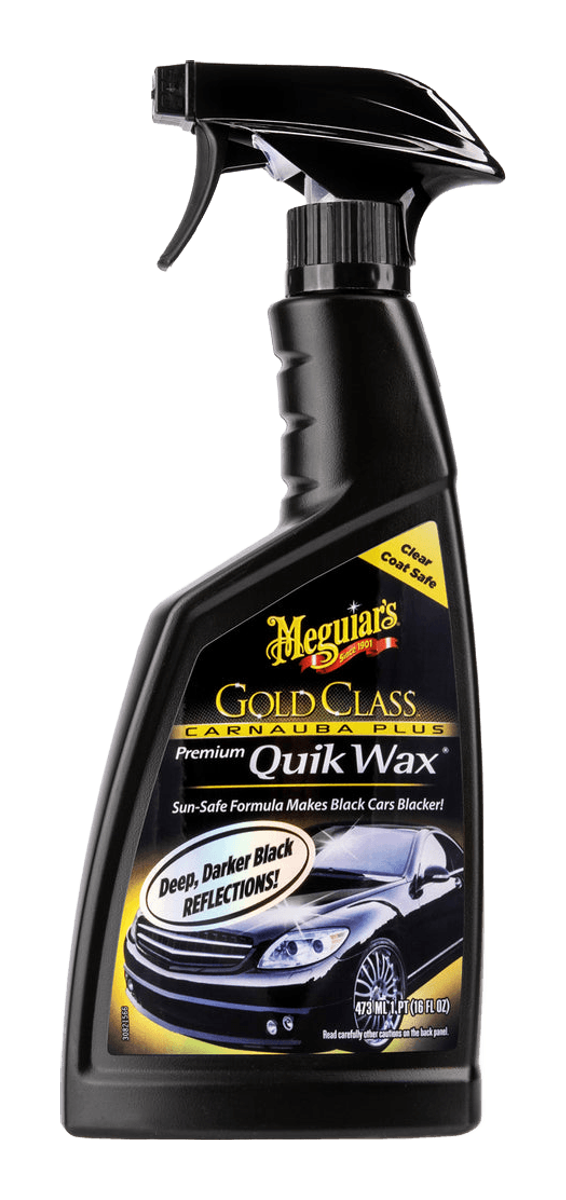
Meguiar's Gold Class Quik Wax is a spray wax that puts carnauba on your paint without the usual paste wax ritual. Mist it on a panel, wipe it off, and you get that warm, deep carnauba glow in about thirty seconds per section. It works on warm surfaces and in direct sunlight, which removes the biggest scheduling headache with traditional wax. No white residue on trim or plastics either, so you can work quickly without taping things off.
The formula emulsifies a carnauba wax blend into a sprayable liquid, which is the core trick here. Carnauba in paste form bonds to paint through heat and pressure during buffing. This emulsion skips that step by suspending the wax in fine enough droplets that it deposits evenly with just a wipe. The near-neutral chemistry keeps it safe on clear coats and lets it flash properly even on sun-warmed panels. Nine ingredients total, and the formula doesn't try to do too much. It delivers carnauba's characteristic warmth through a faster application method. Straightforward engineering, not reinventing anything.
Specifications
| Attribute | Value |
|---|---|
| pH | 6.9 |
| Dilution Ratio | RTU (Ready-to-Use) |
| Key Actives | Carnauba Wax Blend Emulsion |
| Signal Word | None |
| Transparency | excellent |
| Biodegradable | Not disclosed |
Category Context
| Metric | This Product | Category Average | Category Range |
|---|---|---|---|
| pH | 6.9 | 7.1 | 4.8 - 10 |
| Price/oz | $0.75 | $0.60 | $0.27 - $1.35 |
Where It Lands
Gold Class Quik Wax sits squarely in the middle of the spray wax category: a neutral pH 6.9 formulation safe for any surface it touches, including coated paint, trim, and glass. That dead-center positioning means no chemical cleaning action whatsoever. This is pure protection and gloss, not a product that lifts contamination. For weekly maintenance on already-clean paint, that's exactly the right design choice. For neglected surfaces with bonded fallout, it's the wrong tool.
The hybrid carnauba-and-synthetic blend delivers warm optical depth that pure silicone sprays like P&S Spray-It don't match on dark paint, but you pay for it. At $0.75 per ounce, Gold Class runs 25% above the category average and nearly triple the cost of budget options like Mothers California Gold. Full ingredient disclosure and a no-signal-word safety profile partially justify the premium, but the real ask is whether carnauba warmth is worth the markup over capable silicone alternatives. We think the answer is a resounding yes.
How It Compares
Closest Alternatives
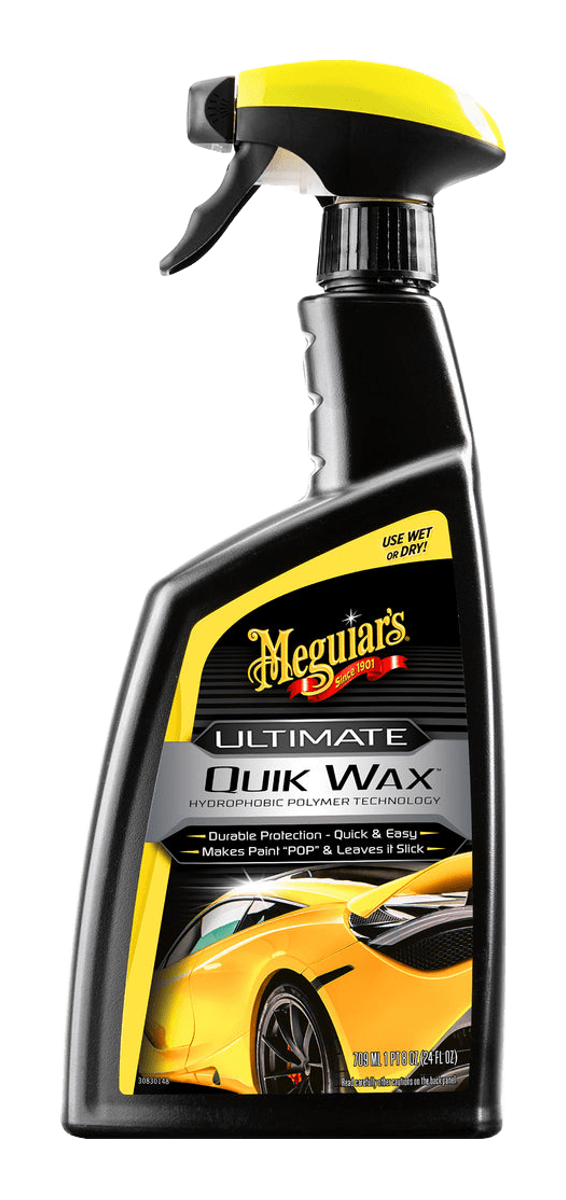
Meguiar's Ultimate Quik Wax is the closest sibling — same brand, same RTU spray format, nearly identical pH. The difference: Ultimate runs a straight wax chemistry rather than a hybrid blend, which typically means a purer carnauba finish with slightly less polymer durability between washes.
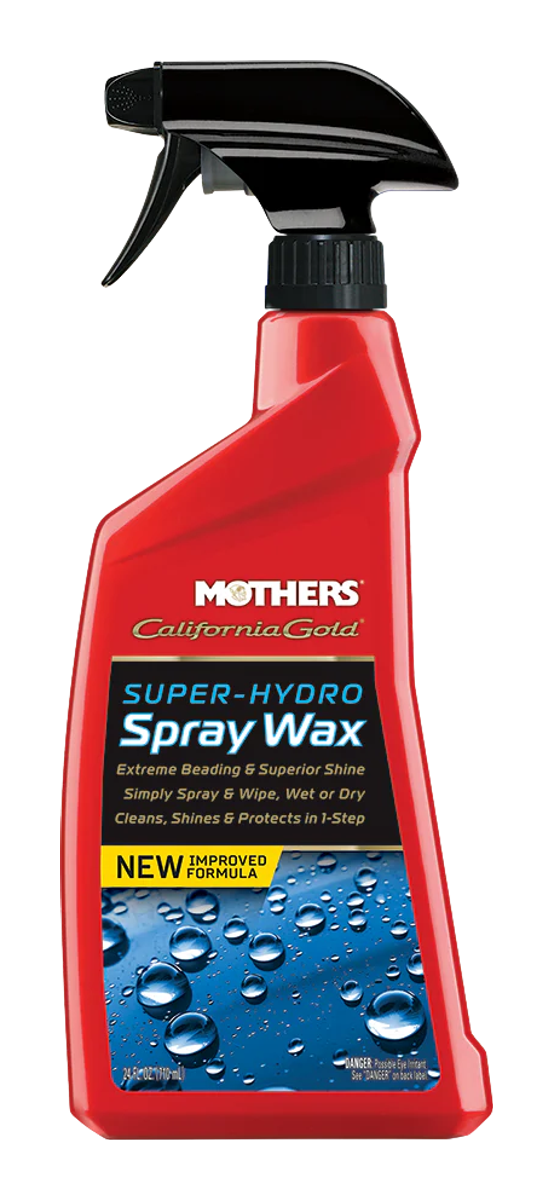
Mothers California Gold Super-Hydro Spray Wax takes a different route to the same warm-glow result. Its undisclosed chemistry at neutral pH suggests a proprietary emulsion system rather than a carnauba-polymer hybrid, so the sheeting behavior and longevity profile will differ.
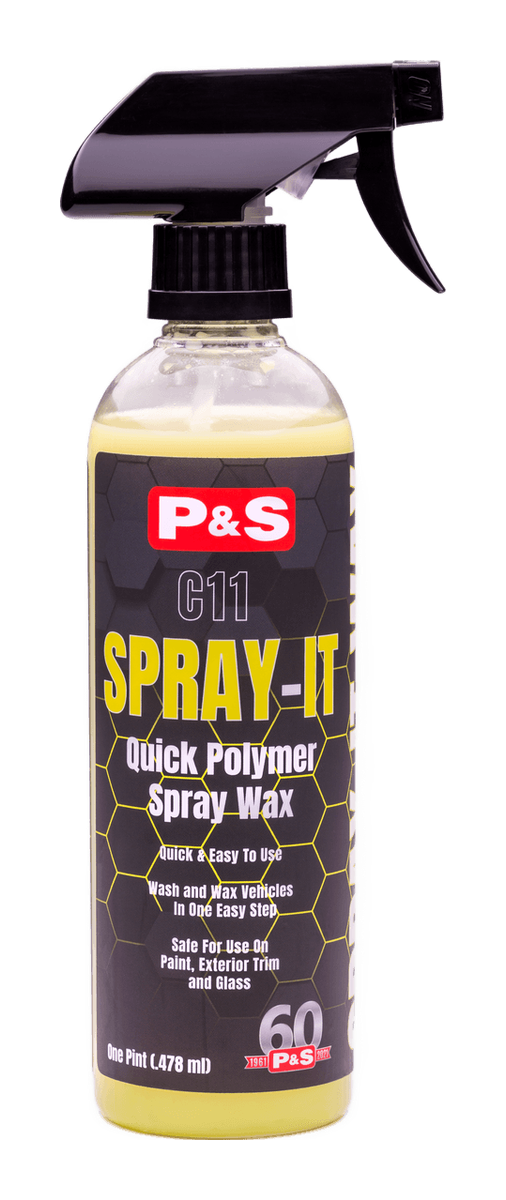
P&S Spray-It leans on silicone chemistry for its slickness and water beading. At roughly the same pH, it delivers a glossy, hydrophobic finish through a fundamentally different mechanism. It's faster to apply but with the slipperier, cooler-toned look silicones produce rather than carnauba's warmth.
Compare These Products


How the Chemistry Works
Two coating technologies do the heavy lifting here, and the formulation's success depends on how they interact. The carnauba wax blend emulsion deposits a thin film of natural wax onto the paint surface, creating that warm, refractive depth carnauba is known for. Simultaneously, dimethicone and a separate organo-modified silicone system lay down a slick, hydrophobic layer that fills micro-imperfections the wax alone can't reach. The result is a dual-layer coating: carnauba provides optical depth and warm tone, while the silicones deliver immediate tactile slickness and water-beading behavior. When you mist this onto a panel and wipe, the water carrier flashes off quickly, the emulsified wax particles collapse onto the surface, and the silicones spread into an even film. That's why the product buffs off so easily and why it won't leave white residue on trim: the silicones act as a lubricating matrix that prevents wax particles from caking into textured surfaces.
The organo-modified silicone system is the more interesting ingredient choice. Standard dimethicone is commodity silicone: cheap and effective but strictly a surface-sitter. Organo-modified silicones have their molecular backbone altered with organic functional groups that improve adhesion to paint and compatibility with the wax emulsion. This is why Meguiar's can run both carnauba and silicone in the same bottle without separation issues, the modified silicone bridges the gap between the water-based carrier and the hydrophobic wax. For the user, this means a spray that stays homogeneous without aggressive shaking and deposits a coating that feels more integrated than layered.
The non-hazardous proprietary blend is doing more work than its vague label suggests. With no surfactants disclosed in a product that contains an emulsified wax, the emulsification system, likely a combination of emulsifiers and co-solvents, lives inside that proprietary bucket. The preservative pair of methylchloroisothiazolinone and methylisothiazolinone confirms this is a water-rich formula vulnerable to microbial growth, standard practice for aqueous emulsions. These biocides work at parts-per-million concentrations, so their presence signals the formula's water content is substantial. The real formulation architecture (how the wax stays suspended, how the silicones co-deposit evenly) is hidden behind that trade secret line.
What We Like
- Sun-safe emulsion chemistry — The carnauba blend stays workable on warm panels in direct sunlight, where most wax sprays flash dry and streak. That means you can detail a black car parked in a driveway at noon without chasing shade or waiting until evening.
- Trim-safe neutral pH — At near-neutral acidity, the formula won't stain or whiten unpainted plastic trim on contact. You can spray full panels without masking tape or careful avoidance around badges, moldings, and rubber seals.
- Nine-ingredient full disclosure — Every component listed, so you can cross-check compatibility with ceramic coatings or PPF before committing a panel.
What to Know
- Carnauba warmth trades away durability — The natural wax chemistry delivers that deep, refractive glow synthetic polymers can't match, but it breaks down faster under UV and detergent exposure. Expect to reapply every one to two weeks to maintain the look, where a synthetic spray sealant might hold three to four.
- No cleaning power is baked in — The near-neutral formulation won't disturb existing coatings, but it also won't cut through water spots, light oxidation, or road film. Dirty paint needs a wash or spray detailer first. Layering this over contaminants just locks them under wax.
- RTU convenience caps your cost efficiency — No mixing or measuring, but you're paying a fixed rate per ounce with no way to stretch the product for lighter maintenance applications. Heavy users covering large vehicles weekly will feel that cost accumulate faster than with a concentrate-based alternative.
Who Should Buy This
If you're maintaining a freshly washed car between full details and want that warm carnauba depth without pulling out a paste tin, this is the format that makes sense. The hybrid emulsion chemistry earns its keep in a specific scenario: detailing in direct sunlight or on heat-soaked panels, where straight synthetic sprays flash and streak but this carnauba blend stays workable long enough to buff clean. It's also the right pick when you're prepping a dark-colored car for a weekend show and want refractive warmth over synthetic gloss. Nothing else in a spray bottle reproduces that look as faithfully.
Want to see how this stacks up? Compare these 3 spray waxes
Frequently Asked Questions
Can I layer Gold Class Quik Wax over a ceramic coating? Yes. The near-neutral formulation won't degrade SiO2 coatings, and the carnauba emulsion adds a warm refractive layer on top of the coating's existing hydrophobics. It won't bond chemically to the ceramic, so it washes off within a week or two, which is fine for a show-day boost.
What makes this a "hybrid" versus a straight wax spray? The formulation pairs carnauba wax with a synthetic polymer component, so you get natural wax warmth plus some of the slickness and water-sheeting behavior synthetics provide. A wax spray like Ultimate Quik Wax skips the synthetic side entirely, giving a slightly warmer tone but less sheeting action.
Why does the product streak on my black car? You're likely using too much per panel. One or two mist passes across a 2×2-foot section is enough. The emulsion is concentrated at RTU strength. Buff with a clean, dry microfiber immediately after misting; switching to a fresh towel every few panels prevents product buildup from causing haze.