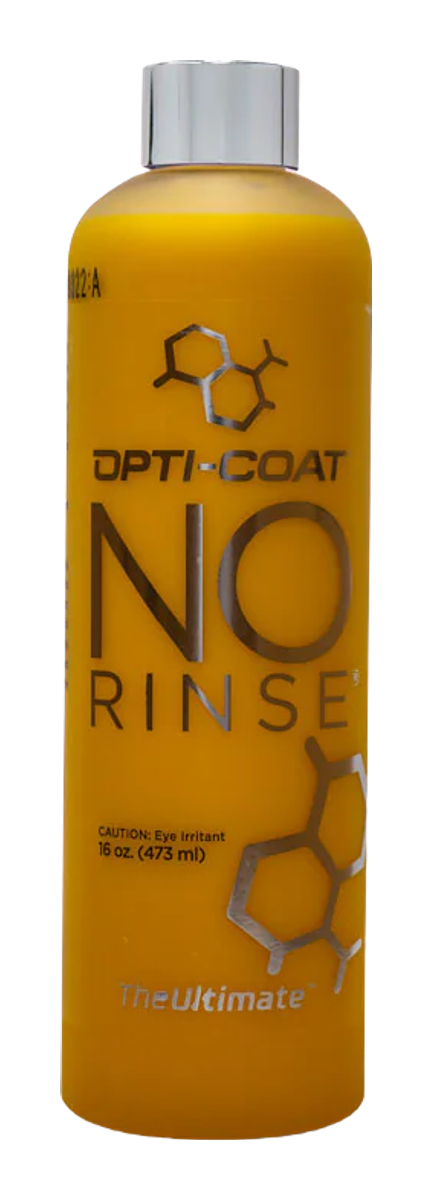
A pH-neutral, polymer-based rinseless wash dosed with SiO2 and UV inhibitors, designed to clean and maintain already-ceramic-coated vehicles using as little as two gallons of water. Optimum Opti-Coat No Rinse ranks #4 among 18 rinseless washes for added protection, depositing a durable layer during the wash rather than transient gloss.
Key Chemistry
pH Level
Active Mechanism
surfactant emulsification with polymer silicone lubrication
Surfactants
3 (anionic, nonionic)
Expert Analysis
The formula combines a low concentration of soya-derived methyl ester surfactants (anionic and nonionic) with an encapsulation polymer system that lifts and suspends dirt away from the surface so it can be safely wiped off with a drying towel rather than rinsed away. SiO2 and UV inhibitors are left behind during the wash to top up existing ceramic protection and add UV resistance. At neutral pH and full ingredient disclosure (18 ingredients), it positions itself as a maintenance wash rather than a prep wash, since the deposited SiO2 layer can interfere with bonding of new coatings, waxes, or sealants.
Key Differentiators
- •Encapsulation-based rinseless approach that drops dirt to the bottom of the bucket rather than only suspending it via surfactants, reducing the risk of reintroducing grit to the wash media
- •Full 18-ingredient disclosure and a neutral pH 7 formulation, which is uncommon transparency for a rinseless wash and reassuring for use on coatings, PPF, and matte paint
- •Built-in SiO2 and UV inhibitors that refresh existing ceramic protection during routine washing, differentiating it from the standard Optimum No Rinse Wash & Shine
Potential Concerns
- ⚠The deposited SiO2 layer makes it unsuitable as a prep wash before polishing, paint correction, wax, sealant, or coating application, since residual silica can interfere with bonding — a dedicated decon or prep wash is needed for those workflows
- ⚠Carries a 'Warning' signal word despite being non-hazardous and neutral pH, so standard handling and eye/skin precautions still apply
- ⚠As a rinseless method, it relies heavily on proper technique (adequate lubrication, clean media, one-panel-at-a-time work) to avoid marring; it is not appropriate for heavily soiled or off-road-grade dirt without pre-rinsing
Ingredients
Source: sds only