Turtle Wax ZipWax: ChemCX Analysis

Ranked Performance
Pricing
Badges
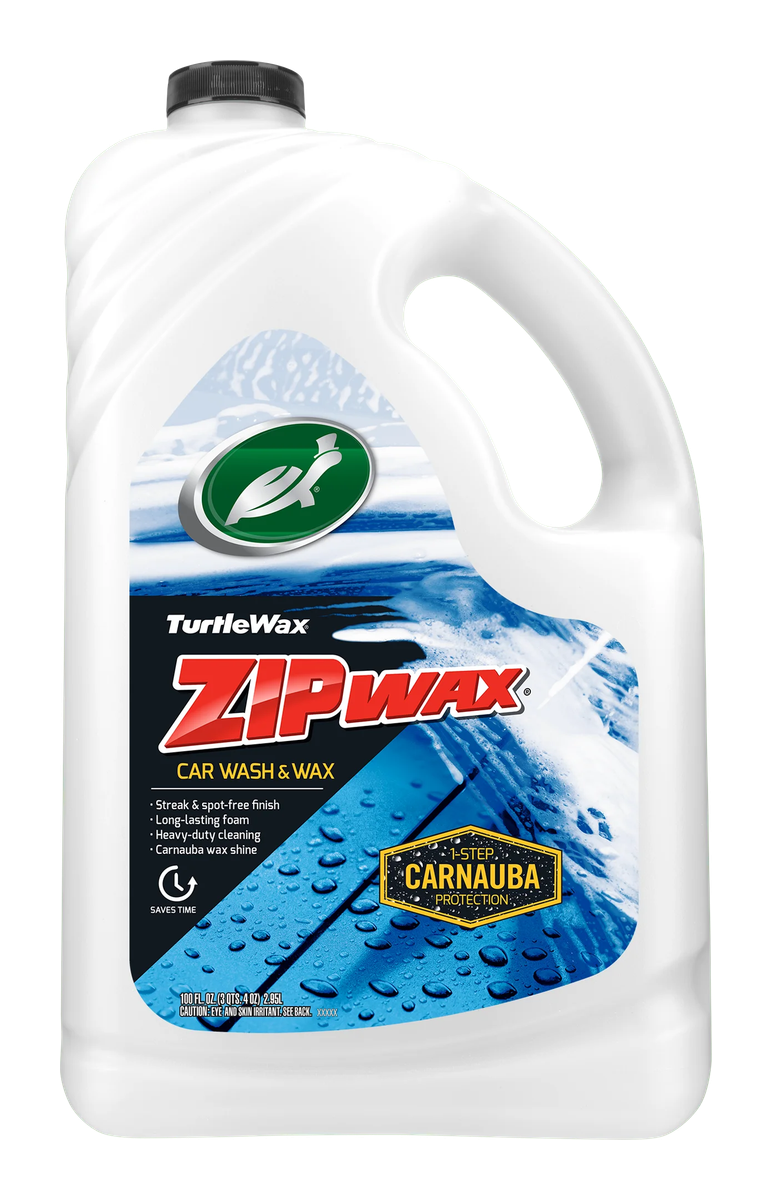
Turtle Wax ZipWax is a wash-and-wax shampoo that foams heavy, clings to the panel, and leaves a slick, glossy surface once you rinse it off. The lather is dense enough to lift dirt without dragging it across the paint, and the wax component deposits during the wash itself. You get a noticeable smoothness to the finish, the kind where water sheets off cleanly instead of beading up and leaving spots. For a one-bucket weekend wash where you want the paint to look freshly waxed without pulling out a separate wax step, it does the job.
Sodium lauryl sulfate drives the foam and cleaning, backed by a mix of anionic, amphoteric, and nonionic surfactants that work together to suspend dirt so it rinses away instead of settling back onto the surface. The carnauba wax is emulsified into the formula, so it deposits as a thin film while you wash. That film is what gives the slick feel and clean rinse. The surfactant blend is thorough and the wax integration works as advertised, though the protection layer is thin compared to a standalone wax. Solid execution of a straightforward idea.
Specifications
| Attribute | Value |
|---|---|
| pH | 8.2 |
| Dilution Ratio | RTU (Ready-to-Use) |
| Key Actives | Sodium lauryl sulfate |
| Signal Word | Warning |
| Transparency | excellent |
| Biodegradable | Not disclosed |
Category Context
| Metric | This Product | Category Average | Category Range |
|---|---|---|---|
| pH | 8.2 | 7.4 | 1 - 14 |
| Price/oz | $0.31 | $0.59 | $0.07 - $1.89 |
Where It Lands
ZipWax sits slightly above the category's center of gravity, alkaline enough at pH 8.2 to handle road film and light grease without needing a pre-soak, but mild enough for weekly washing without stressing modern clear coats. That 0.8-unit gap above the 7.4 category average sounds small, but pH is logarithmic: ZipWax delivers roughly six times the hydroxide-ion activity of a neutral shampoo: enough to matter on a dirty daily driver, not enough to threaten wax layers or ceramic coatings.
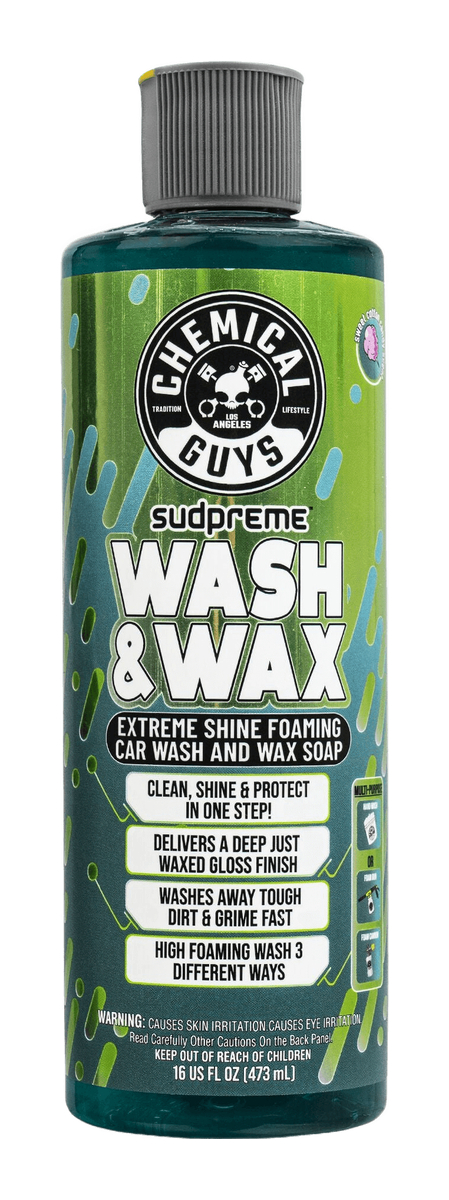
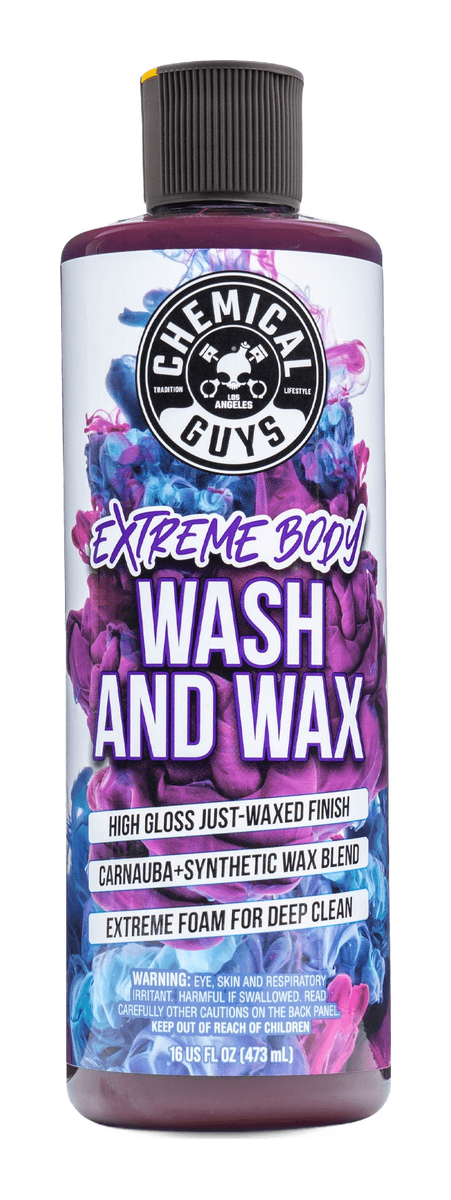
The clearer advantage is cost. At $0.31/oz, ZipWax runs roughly half the category average and matches Chemical Guys Sudpreme Wash & Wax, a product with comparable pH and fewer disclosed ingredients. Against Chemical Guys Extreme Bodywash and Wax, you get the same wash-and-wax format for 28% less. For a maintenance wash where you want some gloss enhancement without fussing over a separate wax step, ZipWax delivers the basics at a price that makes generous application painless.
How It Compares
Closest Alternatives
Chemical Guys Sudpreme Wash & Wax matches ZipWax's pH and wash-and-wax approach at the same per-ounce cost. A near-identical chemistry profile makes this the most direct swap. The differentiation comes down to wax type and foam character rather than cleaning mechanism.
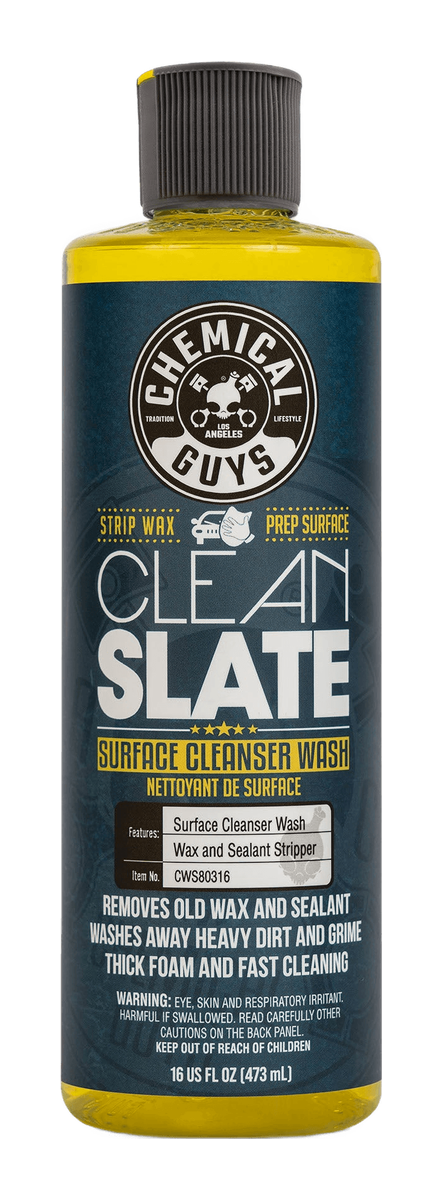
Chemical Guys Clean Slate Surface Cleanser Wash shares the same pH but drops the wax component entirely. That strip-and-clean approach is the better pick before applying a fresh sealant or coating, where residual wax would interfere with bonding.
At 38% more per ounce, Chemical Guys Extreme Bodywash and Wax targets users willing to pay a premium for a heavier wax deposit. The pH lands within a tenth of a point of ZipWax, so cleaning power is functionally identical: the extra cost buys gloss enhancement, not dirt removal.
Compare These Products

How the Chemistry Works
Nine surfactants working in concert is unusual for a car shampoo, and the architecture here is deliberate. Three anionic surfactants (sodium lauryl sulfate, dodecylbenzenesulfonic acid, and a secondary alkylbenzenesulfonate) do the heavy lifting: they lower surface tension, break the bond between road film and paint, and generate the bulk of the foam. Cocamidopropyl betaine and cocamidopropyl dimethylamine stabilize that foam and add density, giving the lather enough structure to cling to vertical panels rather than sheeting off immediately. Sodium chloride thickens the whole system by altering how these surfactant molecules pack together, turning what would be a thin, watery liquid into something with enough body to feel substantial in a wash mitt. The result is a shampoo that foams tall, holds dirt in suspension, and rinses without dragging particulates back across the clear coat.
The notable formulation choice is PEG-4 montanate paired with carnauba wax. Carnauba alone is hydrophobic and difficult to suspend in a water-based shampoo; it tends to clump or settle. PEG-4 montanate, a polyethylene glycol ester of montan wax, acts as an emulsifier that keeps the carnauba dispersed and deliverable. It bridges the gap between the aqueous surfactant system and the hydrophobic wax particles, allowing a thin film of wax to deposit onto the paint surface during the rinse step. That's why ZipWax leaves a slick, water-beading finish rather than just a clean panel. Cocamidopropyl dimethylamine reinforces this deposition: its cationic charge gives it substantivity, meaning it adsorbs onto the negatively charged paint surface and helps anchor the wax layer. The combined effect produces the slickness users feel when running a hand across the dried panel.
With 25 disclosed ingredients, the ingredient list is thorough, and what's absent tells a story. There's no chelating agent, so ZipWax won't soften hard water or prevent mineral spotting in high-TDS tap water. Four separate pH adjusters (sodium hydroxide, morpholine, aminomethyl propanol, and ammonia) manage a complex buffering system, likely because the anionic surfactants and the sulfonic acid precursors pull the formula in different pH directions. Balancing all of those while keeping the wax emulsion stable requires precise control. The dual-preservative system of methylisothiazolinone and benzisothiazolinone is standard for water-rich formulas, ensuring microbial stability across a long shelf life. Dipentene and pine essential oil handle fragrance duties, lending the classic citrus-pine scent that signals "clean" without requiring a separate fragrance blend.
What We Like
- Nine-surfactant blend with three distinct classes — anionic, amphoteric, and nonionic surfactants each contribute different cleaning mechanics, producing a foam structure that lifts particulates more effectively than the single- or dual-surfactant systems common at this price point.
- Carnauba wax deposited during the wash step — the wax emulsion rides behind the surfactant front, so it contacts a freshly cleaned surface rather than bonding over trapped contaminants. That sequencing is why wash-and-wax products either streak or work, and ZipWax's formulation gets the order right.
- RTU format eliminates dilution guesswork — no measuring, no bucket math, and no risk of running too concentrated and leaving residue on coated panels.
What to Know
- The wax deposit is real but thin. Carnauba and synthetic wax polymers leave a slick, hydrophobic layer after rinsing, but it's a maintenance coat, not a standalone protectant. Expect a few days of water beading, not weeks. Anyone relying on ZipWax as their only protection step will be disappointed after the first rain.
- Nine surfactants strip existing protection while adding their own. The multi-class surfactant blend that makes the foam so effective also lifts previously applied sealants and spray waxes. You're effectively resetting the surface each wash, then replacing it with a lighter layer. That's a net downgrade if you've invested in a ceramic coating or dedicated sealant.
- RTU format locks you into one concentration. No option to run a stronger mix for neglected paint or a weaker rinse for lightly dusty panels. Gloves are a good idea during extended use given the mild alkalinity and SLS content.
Who Should Buy This
If your weekend routine is a single-bucket wash and you want the car looking slick without a separate wax step, ZipWax consolidates both into one pass. The nine-surfactant blend generates enough foam diversity to lift road film, brake dust fallout, and tree sap residue without a pre-soak, a real advantage when you're washing a daily driver that accumulates mixed contamination between details. For cars already wearing a ceramic coating or dedicated sealant, a pure shampoo without wax polymers avoids potential compatibility issues. But for maintaining a freshly waxed car between full details, ZipWax's integrated carnauba layer extends that protection exactly when it's starting to fade.
Want to see how this stacks up? Compare these 3 car shampoos
Frequently Asked Questions
Can I use ZipWax on ceramic-coated or PPF-protected panels? Yes. The mild alkalinity won't degrade ceramic coatings or paint protection film. However, the wax polymers in the formula will layer on top of the coating, which can dull the hydrophobic behavior ceramics are designed to provide. Use a wax-free shampoo if you want the coating performing at full potential.
Why does ZipWax foam more than most car shampoos I've tried? Nine surfactants across three chemical classes (anionic, amphoteric, and nonionic) each generate foam with different bubble structures. That blend produces denser, more varied lather than the one- or two-surfactant formulas common in the category. More foam means more lubricity between your mitt and the paint.
How does ZipWax compare to Chemical Guys Sudpreme Wash & Wax for wax longevity? Both leave a thin maintenance coat, not a durable sealant. ZipWax discloses carnauba wax plus PEG-4 montanate as a wax emulsifier; Sudpreme lists fewer total ingredients, suggesting a simpler wax package. Neither replaces a dedicated protectant, but ZipWax's fuller ingredient list hints at a slightly more layered deposit.