Turtle Wax Bug & Tar Remover: ChemCX Analysis

Ranked Performance
Pricing
Badges
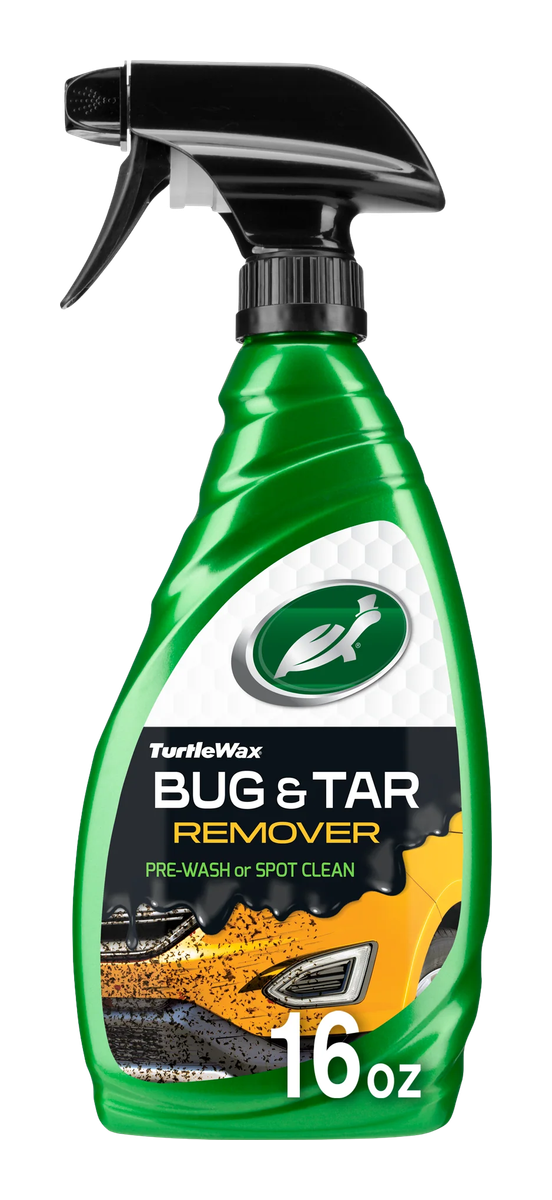
Turtle Wax Bug & Tar Remover handles two jobs that often need separate bottles. It dissolves dried bug residue and lifts tar spots off paint, and it does both without heavy scrubbing. Spray it on, let it dwell, and the contamination softens enough to wipe clean. That two-in-one capability is the main draw: you keep one product on the shelf instead of rotating between a dedicated bug spray and a tar solvent.
The formula runs on a dual surfactant system, pairing anionic and nonionic agents. Anionic surfactants grab onto the protein-based gunk in dried bugs and pull it apart. Nonionic surfactants go after the oily, petroleum-based compounds in tar and road film. Running both types together lets one product handle water-soluble and oil-soluble contamination in the same spray. It's a straightforward approach to covering two contaminant types, and the ready-to-use format keeps things simple. Nothing unconventional here, but the surfactant pairing is well matched to the dual-purpose claim.
Specifications
| Attribute | Value |
|---|---|
| pH | Not disclosed |
| Dilution Ratio | ready_to_use |
| Key Actives | Petroleum distillates, hydrotreated light |
| Signal Word | Warning |
| Transparency | excellent |
| Biodegradable | Not disclosed |
Category Context
| Metric | This Product | Category Average | Category Range |
|---|---|---|---|
| pH | Not disclosed | 11.0 | 7 - 13.5 |
| Price/oz | $0.44 | $0.54 | $0.12 - $1.06 |
Where It Lands
Turtle Wax Bug & Tar Remover takes a surfactant-and-solvent approach in a category where most competitors lean on alkaline chemistry. Without a disclosed pH, it's impossible to place this product on the mild-to-aggressive spectrum that defines most bug removers. What's clear is the formulation strategy: petroleum distillates do the heavy lifting on tar, while surfactants handle bug proteins. That dual-mechanism design targets the user who wants one bottle for both contaminants rather than reaching for separate products.
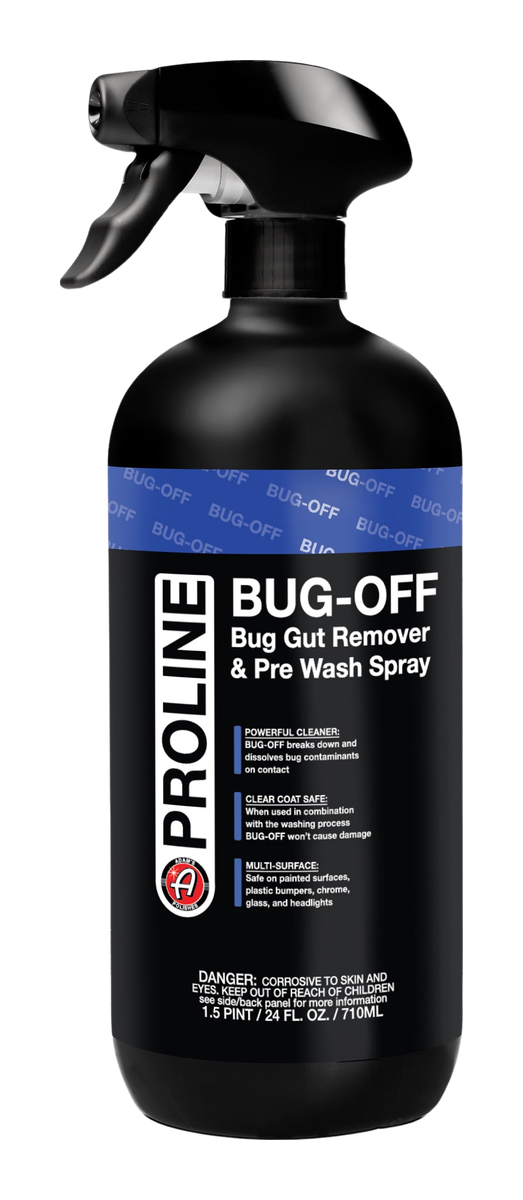
At $0.44/oz, it lands 19% below the category average of $0.54/oz, competitive but not the cheapest option on the shelf. Adam's Polishes Proline BUG OFF undercuts it at $0.39/oz with a similar surfactant approach, and Meguiar's Bug & Tar Remover sits at $0.40/oz using alkaline chemistry instead. The price gap is slim enough that chemistry preference and dwell-time performance matter more than cost differences between these three.
How It Compares
Closest Alternatives
Adam's Polishes Proline BUG OFF shares the surfactant-driven approach and comes in ready-to-use format at a similar price point. For anyone satisfied with the Turtle Wax chemistry but wanting to cross-shop, this is the closest formula analog in the category.
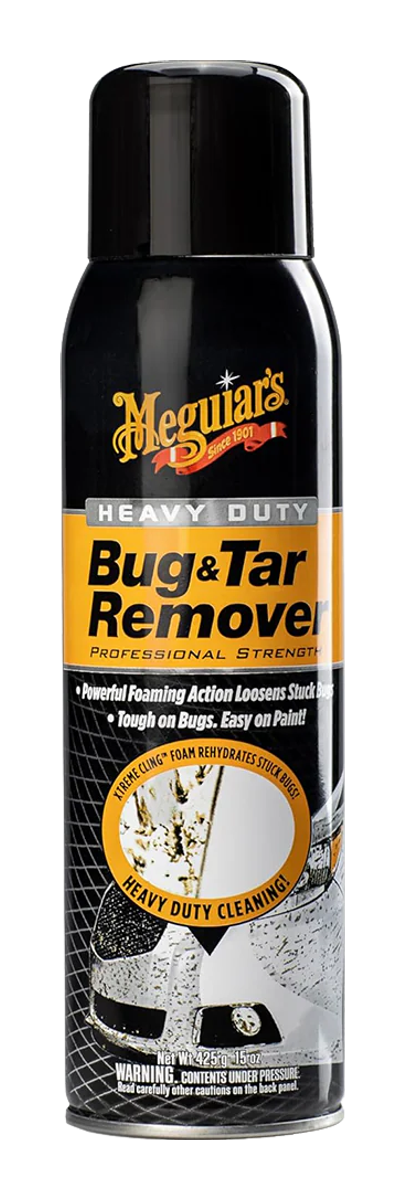
Meguiar's Bug & Tar Remover swaps the surfactant backbone for alkaline chemistry, attacking bug proteins and tar through saponification rather than solvent dissolution. A different mechanism for the same job, worth testing if surfactant-based cleaners leave residue on your paint.
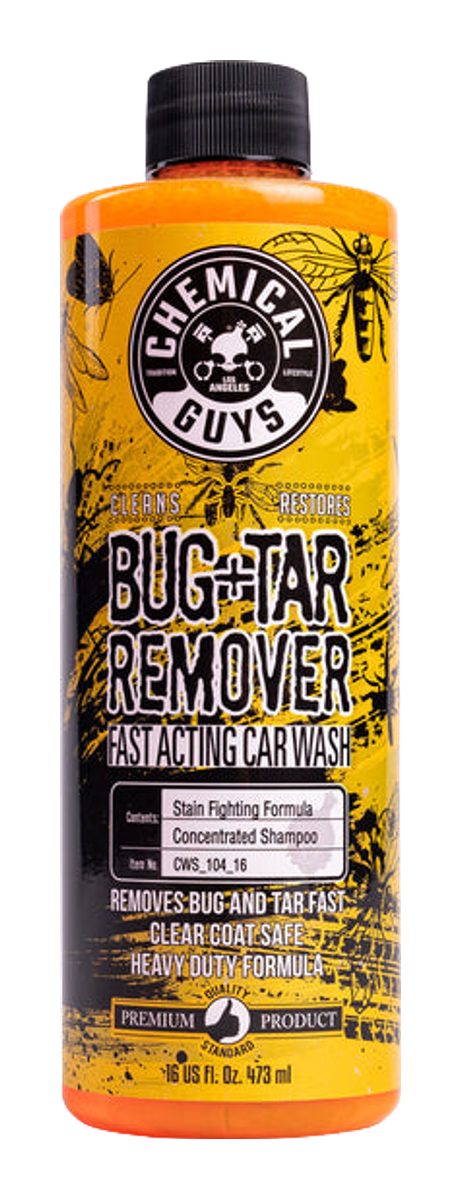
Chemical Guys Bug & Tar Remover also uses alkaline chemistry but comes in about 11% cheaper per ounce. A reasonable option for high-volume users who want alkaline cleaning at a lower per-application cost.
Compare These Products

How the Chemistry Works
This formulation attacks bug and tar contamination through a dual-solvent strategy reinforced by surfactant emulsification. Petroleum distillates dissolve tar, road film, and oily adhesive residues on contact, while a secondary solvent system (including dipentene, isopropyl alcohol, and 2-butoxyethanol) targets the protein and lipid structures in dried insect splatter. The surfactant and emulsifier components handle the follow-up work: tall-oil fatty amides and hydrogenated tallow amines lower surface tension so the solvent blend penetrates under contamination layers rather than pooling on top, while simultaneously emulsifying the dissolved grime into a suspension that wipes or rinses away cleanly. Carnauba wax and polydimethylsiloxane deposit a thin lubricating film behind the cleaning action, which is why the surface feels slick after removal rather than stripped. The terpineol and dipentene together give the product its pine-citrus scent profile, masking the petroleum solvent base.
Dipentene deserves closer attention. A citrus-derived terpene, it pulls double duty as both a functional solvent and a fragrance contributor. Formulators reach for dipentene when they need strong solvency against sticky organic residues, specifically the protein-lipid matrix that makes bug splatter bond so stubbornly to clearcoat, without the harshness or odor penalty of heavier petroleum cuts. It evaporates cleanly and leaves no residue of its own. The other standout is the tall-oil fatty amide emulsifier, a plant-derived ingredient that keeps the petroleum and water phases blended in the bottle and stabilizes the formula so solvents stay evenly distributed during application. Without it, the petroleum distillates would separate from the aqueous phase, and coverage would be inconsistent.
With 19 disclosed ingredients, this is a remarkably complete picture of the formulation. The inclusion of organoclay and quartz at trace levels signals a mild mechanical assist during wipe-off, something most competing bug removers omit in favor of purely chemical action. Diethanolamine and triethanolamine both appear at low concentrations, functioning as pH buffers and emulsion stabilizers rather than primary cleaning agents. The sodium hydroxide content sits under 0.008%, far too little to drive alkaline cleaning, confirming this product relies on solvent dissolution rather than saponification. One gap worth flagging: no chelating agents, which means hard-water mineral deposits won't be addressed. That's a reasonable omission for a product designed around organic contamination, but users in hard-water areas should expect water spotting if they let rinse water dry on the surface.
What We Like
- Dual anionic-nonionic surfactant pairing — the anionic component breaks the electrostatic bond between bug proteins and clearcoat, while the nonionic surfactant lifts and emulsifies the loosened residue into the rinse water. Two mechanisms in one pass instead of scrubbing twice.
- No-drip spray formulation — higher-viscosity delivery clings to bumper faces, mirrors, and grille bars long enough for the solvents to penetrate dried contaminants. Less runoff means less product wasted on the ground.
- RTU at $0.44/oz — undercuts the category average by 19%, and there's no mixing step to get wrong.
What to Know
- Petroleum distillate solvency cuts both ways — the same solvent strength that dissolves tar will soften plastic trim, rubber gaskets, and aftermarket vinyl wraps if left to dwell too long. Keep contact time short on non-paint surfaces and wipe overspray off trim immediately.
- Undisclosed pH makes compatibility a guessing game — without knowing where this sits on the acid-alkaline spectrum, you can't confidently predict how it interacts with ceramic coatings, sealants, or freshly applied wax. A test spot on an inconspicuous panel is the only way to gauge reactivity on protected finishes.
- Ready-to-use convenience locks you into one strength — you get grab-and-spray simplicity, but no option to dilute for light bug splatter or concentrate for baked-on tar. Every job costs the same amount of product regardless of severity.
Who Should Buy This
If your front bumper collects a fresh layer of bug splatter every weekend commute, this RTU format earns its keep. Spray, dwell, wipe, done, no mixing required. The surfactant-and-solvent mechanism also suits tar spot removal on lower panels after highway drives, where petroleum distillates dissolve the adhesive bond that water-based washes can't break. For heavy iron-contaminated brake dust or neglected wheels, an alkaline-chemistry competitor handles that different contamination type more effectively. But for regular removal of organic and petroleum-based road grime from painted surfaces, the dual-action chemistry here matches the task cleanly.
Want to see how this stacks up? Compare these 3 bug removers
Frequently Asked Questions
Can I use this on plastic trim and rubber seals without damage? Yes, but minimize dwell time. The petroleum distillates that dissolve tar will also soften unprotected plastics and rubber if left sitting. Spray, work the area, and wipe within 30–60 seconds on non-paint surfaces.
Why does this product use surfactants instead of alkaline chemistry like most bug removers? Surfactants emulsify bug proteins and lift them into solution, while the petroleum distillates handle tar separately. This dual approach avoids the high-pH chemistry that competitors like Meguiar's and Chemical Guys rely on. The trade-off: gentler on coatings but may need longer dwell times on heavily baked-on splatter.
How does this compare to Adam's Polishes Proline BUG OFF? Both use surfactant-based chemistry in RTU format. The key difference is ingredient complexity: Adam's discloses just 4 ingredients versus Turtle Wax's 19. A shorter ingredient list typically signals a leaner formulation: fewer additives, fewer variables on sensitive surfaces.
Should I rinse or just wipe after application? Rinse. Surfactants are designed to suspend contamination in water for removal. Wiping alone can drag dissolved tar across the clearcoat. A pressure rinse after dwelling gets the emulsified residue off cleanly.