Sonax Polymer Net Shield: ChemCX Analysis
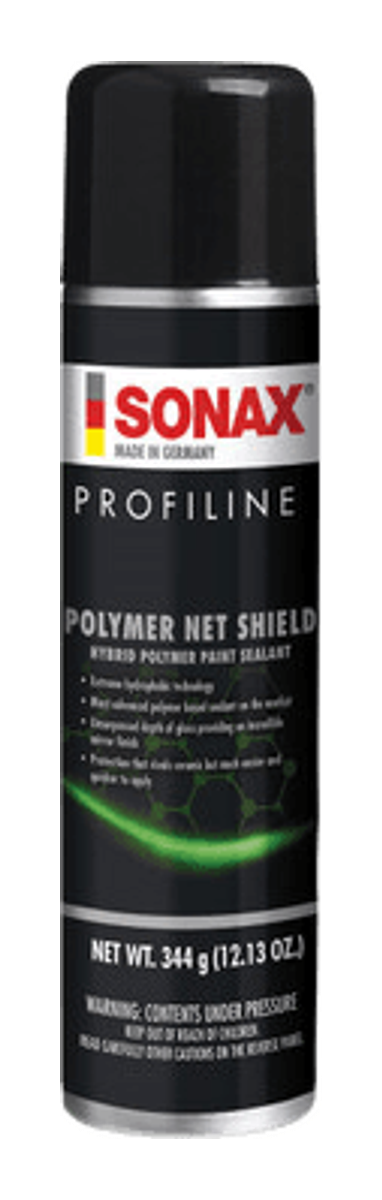
Sonax Polymer Net Shield is an aerosol spray sealant that goes on as a fine, even mist and buffs to a clear, high-gloss finish without the hazy residue you get from most liquid sealants. The aerosol delivery makes coverage consistent in a way that trigger sprayers struggle to match. You spread it with an applicator pad and buff immediately, so the workflow stays quick. No curing haze, no streaky spots, no second pass to clean up missed areas.
Alkyl silicone resin is the protective layer here. The aerosol system does more than just deliver the product: it keeps the resin sealed from oxygen until it hits the paint, where it begins cross-linking on contact with air. That reaction is what builds the durable film and explains why the finish feels slick almost immediately after buffing. Anionic surfactants in the formula help the resin spread and level evenly across the panel rather than pooling in low spots. The formulation is straightforward, built around a single protective chemistry with good delivery engineering to make it work consistently.
Specifications
| Attribute | Value |
|---|---|
| pH | 7.5 |
| Dilution Ratio | RTU (Ready-to-Use) |
| Key Actives | Alkyl Silicone Resin |
| Signal Word | Warning |
| Transparency | excellent |
| Biodegradable | No |
Category Context
| Metric | This Product | Category Average | Category Range |
|---|---|---|---|
| pH | 7.5 | 6.2 | 4 - 9 |
| Price/oz | $2.61 | $1.46 | $0.23 - $7.10 |
Where It Lands
Sonax Polymer Net Shield sits at the alkaline edge of the spray sealant category. At pH 7.5, it runs 1.3 points above the category average of 6.2. Most spray sealants skew mildly acidic, clustering between 5 and 7. That alkaline lean pairs well with the silicone-resin chemistry: a slightly basic carrier helps the resin wet out and bond to paint surfaces that may carry acidic contamination from road film or industrial fallout. For sealants applied after a wash, this pH is functional, not aggressive.
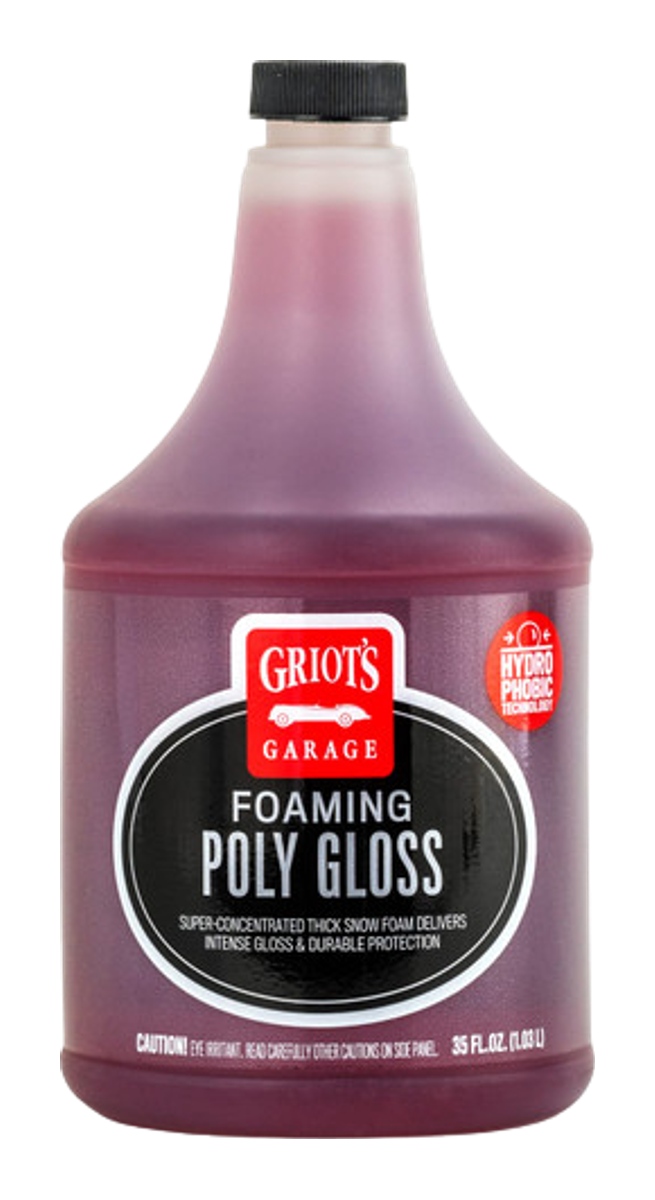
The trade-off is cost. At $2.61 per ounce, this is a premium-tier spray sealant, 79% more expensive than the category average. That gap widens against direct alternatives: Griot's Garage Foaming Poly Gloss matches the same pH at $0.56 per ounce. The aerosol format and German-sourced formulation carry a price premium that suits occasional deep-protection passes, less so for weekly top-ups where you'll burn through the can fast.
How It Compares
Closest Alternatives
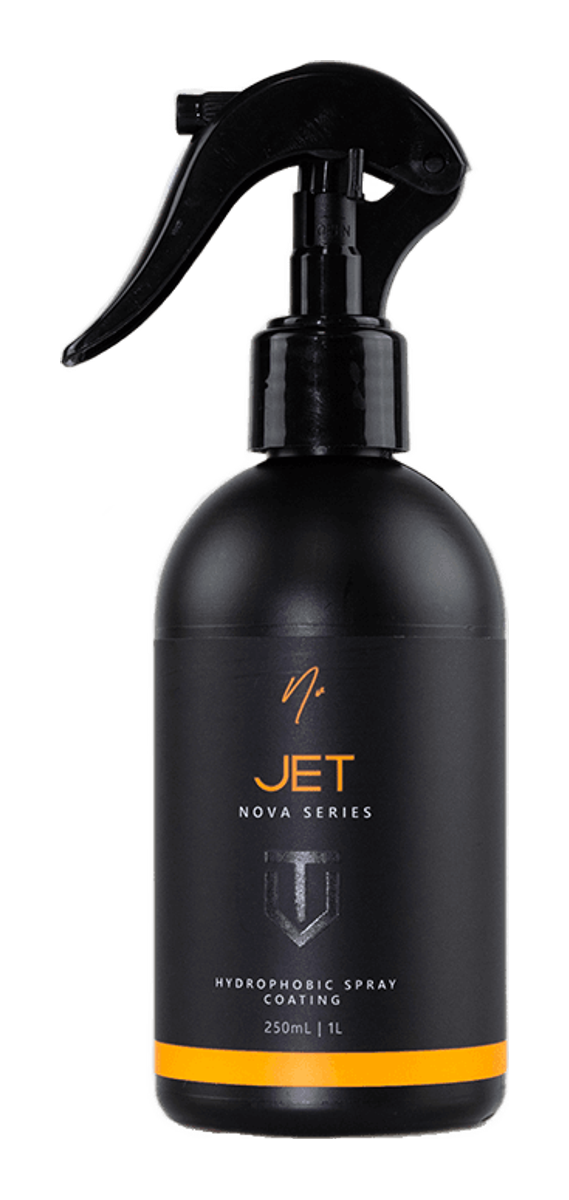
NV Car Care Nova Jet shares the same neutral-pH, silicone-based spray sealant profile at nearly identical cost per ounce. Both products operate through polymer film deposition rather than chemical bonding, making Nova Jet the closest formulation analog in the category.
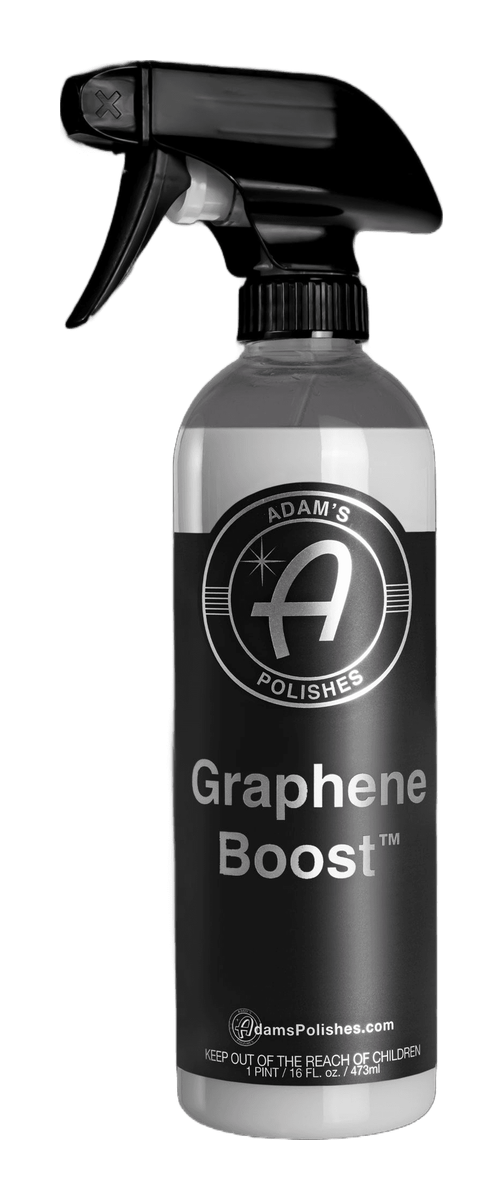
A graphene-infused spray sealant, Adam's Polishes Graphene Boost swaps the silicone resin backbone for graphene oxide chemistry, a different mechanism that builds slickness through platelet layering rather than polymer crosslinking. It matches the neutral pH but takes a fundamentally different path to surface protection.
Griot's Garage Foaming Poly Gloss delivers polymer sealant protection at 79% less per ounce. The foaming application trades aerosol precision for high-coverage volume, favoring full-vehicle passes over targeted panel work.
Compare These Products
How the Chemistry Works
When you press the nozzle, carbon dioxide propellant atomizes a blend of petroleum distillates, heavy naphtha, and synthetic isoparaffin into a fine mist that carries two silicone actives, alkyl silicone resin and dimethicone, onto the paint surface in a thin, uniform wet film. The hydrocarbon solvents keep the silicones fluid long enough to spread and level across the panel, then flash off quickly, leaving the resin and dimethicone behind to coalesce into a single hydrophobic layer. Diethylhexyl sodium sulfosuccinate, the lone surfactant, holds this oil-and-water system together inside the can. It lowers surface tension so the spray wets paint evenly rather than beading on contact, which is why the product spreads so smoothly under an applicator pad. Silica particles reinforce the cured film, adding mechanical structure that pure silicone alone lacks. Triethanolamine nudges the emulsion to neutral territory, keeping the silicone resin stable in storage and preventing acid-catalyzed premature crosslinking. The result for the user: a spray that lands flat, buffs clear in seconds, and leaves behind a slick, glossy surface that sheds water aggressively.
Alkyl silicone resin is the formulation's backbone and the ingredient that separates this from a basic dimethicone spray-and-shine. Where dimethicone delivers immediate gloss and slickness, it sits loosely on the surface and washes away within weeks. Alkyl silicone resin forms a harder, more crosslinked network as its reactive groups condense after application, bonding to itself and partially to the paint's existing clear coat. That crosslinked structure is what makes the six-month durability claim plausible. Dimethicone fills gaps in that network, smoothing the optical surface so light reflects uniformly. Together, they create a two-phase film: a rigid resin scaffold dressed in a slick silicone skin. The user feels this as a surface that stays glossy and slippery long after the initial "just applied" sheen would normally fade.
Full disclosure of all thirteen ingredients shows deliberate restraint. There are no fluoropolymers, no SiO2 boosters beyond the silica thickener, and no amino-functional silicones that would improve chemical bonding to clear coat. The formulator chose simplicity over complexity: two silicone actives, a clean solvent system, one emulsifier, and minimal preservatives (phenoxyethanol and sodium pyrithione handle microbial stability). Acetyl tributyl citrate is an unusual inclusion: a citric acid ester that doubles as a plasticizer, likely there to keep the cured film flexible rather than brittle under thermal cycling. This flexibility matters because a rigid silicone film cracks and peels on panels that expand in summer heat, while a plasticized one stretches with the substrate.
What We Like
- Aerosol atomization delivers uniform film thickness — the CO₂-propelled mist lays down silicone resin in a finer, more consistent layer than pump sprayers can achieve by hand, reducing high spots and the streaking that comes from uneven product distribution across large panels.
- Dual-silicone architecture balances durability and finish — alkyl silicone resin provides the cross-linked protective network while dimethicone fills micro-irregularities in the clear coat, producing optical clarity without a separate glaze step.
- Neutral pH eliminates coating-compatibility guesswork — at 7.5, this won't interact with ceramic coatings, PPF adhesives, or freshly corrected paint the way acidic sealants in this category can.
What to Know
- Aerosol convenience costs you flexibility — the fixed formulation means no dilution adjustments for lighter maintenance washes versus heavier correction prep. You get one concentration, and the pressurized can't be decanted into a foam cannon or spray bottle for alternative application methods.
- The one-hour cure window before moisture exposure is a real scheduling constraint — in humid climates or overcast conditions, you're gambling on dew, unexpected drizzle, or even ambient moisture disrupting film formation. Plan around weather, not around your free time.
- Silicone resin commits you to silicone maintenance — layering a wax or ceramic topper over this film often beads poorly or bonds unevenly. Switching protection strategies later means a full chemical strip with an IPA wipe or polishing step to get back to bare paint.
Who Should Buy This
If you're maintaining a daily driver between seasonal details and want a sealant that goes on fast without streaking, the aerosol format and immediate-buff workflow finish a full car in under fifteen minutes. For panels where you need silicone resin's hydrophobic film — think highway cars exposed to road salt spray and industrial fallout. The dual-silicone deposition mechanism builds a slicker barrier than single-active competitors. The fixed RTU format works against you if you want dilution flexibility for lighter maintenance passes. This product earns its keep with quick, consistent protection on a car that lives outdoors and needs reapplication every few months without fuss.
Want to see how this stacks up? Compare these 3 spray sealants
Frequently Asked Questions
Will the silicone in Polymer Net Shield interfere with future paint correction or ceramic coating? Yes. Dimethicone and alkyl silicone resin leave a hydrophobic film that must be fully stripped before polishing or applying a ceramic coating. Use an IPA wipedown or a dedicated panel prep to remove the silicone layer, or your coating won't bond properly.
Can I layer this over an existing ceramic coating? Yes — the neutral pH won't attack a cured SiO₂ layer. The silicone film sits on top as a sacrificial barrier, adding slickness and temporary hydrophobicity. It won't extend the ceramic's durability, but it refreshes water behavior between maintenance washes.
How does this compare to Adam's Graphene Boost for regular maintenance? Graphene Boost uses graphene oxide chemistry at a lower cost per ounce, making it more economical for frequent application. Polymer Net Shield's aerosol delivery gives more consistent coverage per pass, but that advantage narrows quickly if you're reapplying every few weeks.
Does the Warning label mean this product is hazardous on skin? The concern is inhalation, not skin contact. Aerosolized petroleum distillates and heavy naphtha become respirable when sprayed. Use it outdoors or in a ventilated garage. Gloves are optional but sensible for extended sessions.