SONAX Iron And Fallout Remover: ChemCX Analysis
Ranked Performance
Pricing
Badges
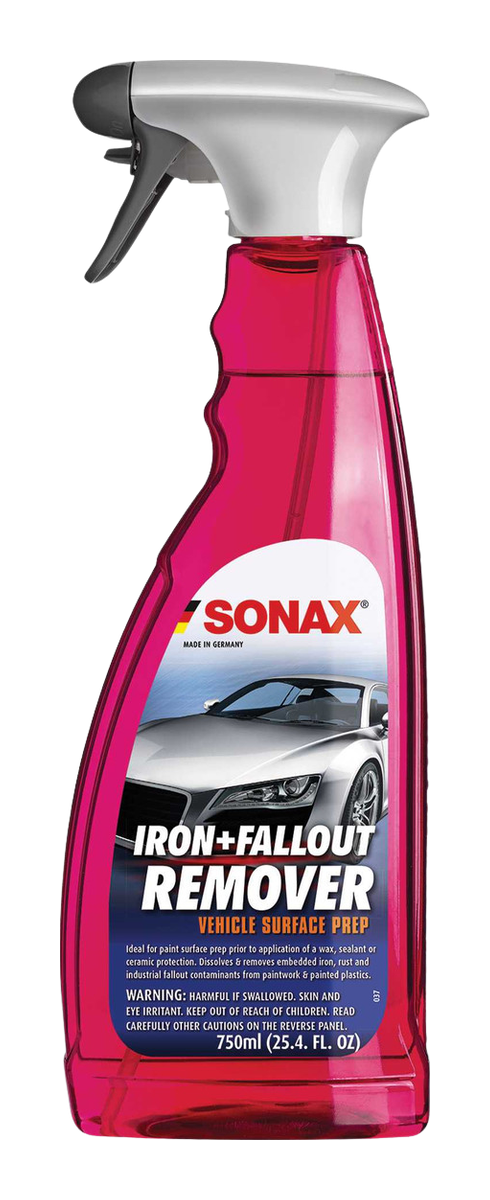
SONAX Iron And Fallout Remover sprays on clear and bleeds purple as it works, so you can see it pulling iron out of your wheels and paint. It also handles lime deposits, which most iron removers leave behind. The color change is the practical part: you spray, wait, and the purple tells you when the contamination has reacted and it's time to rinse. No guessing about dwell time.
Sodium thioglycolate does the work, running at 10 to 30 percent of the formula. It grabs onto the embedded iron particles and bonds with them chemically, which loosens them from the surface so they rinse away. The purple bleed is that reaction happening in real time. What's smart here is the neutral pH approach. Most iron removers lean acidic to dissolve contamination, which puts coatings, trim, and bare metal at risk. This one chelates instead, so it does the same job without the corrosion worry on sensitive surfaces. It sits among several products using this neutral strategy, and the formula executes it cleanly.
Specifications
| Attribute | Value |
|---|---|
| pH | 7.5 |
| Dilution Ratio | ready_to_use |
| Key Actives | Sodium thioglycolate solution 46% |
| Signal Word | Warning |
| Transparency | excellent |
| Biodegradable | Not disclosed |
Category Context
| Metric | This Product | Category Average | Category Range |
|---|---|---|---|
| pH | 7.5 | 6.5 | 3 - 11 |
| Price/oz | $0.99 | $0.79 | $0.35 - $1.36 |
Where It Lands
This sits at the gentler, more versatile end of the iron remover category. Most decontamination sprays run acidic to dissolve metal; the range bottoms out at pH 3. SONAX takes the opposite route at pH 7.5, a full point above the category average of 6.5. That near-neutral chemistry means it won't etch sensitive coatings or stain trim the way low-pH formulas can. The trade-off: on heavily neglected wheels caked with brake dust, an acidic competitor may bite faster.
The lime-deposit removal sets it apart in practice. Few iron removers touch mineral scale, so this earns its place on hard-water-spotted paint where a standard fallout spray would stop short. At $0.99/oz it runs above the $0.79 category average and ahead of Gyeon Q2M Iron Redefined at $0.81/oz. You pay for the dual-action and the visible color bleed, not raw iron-dissolving speed.
How It Compares
Closest Alternatives
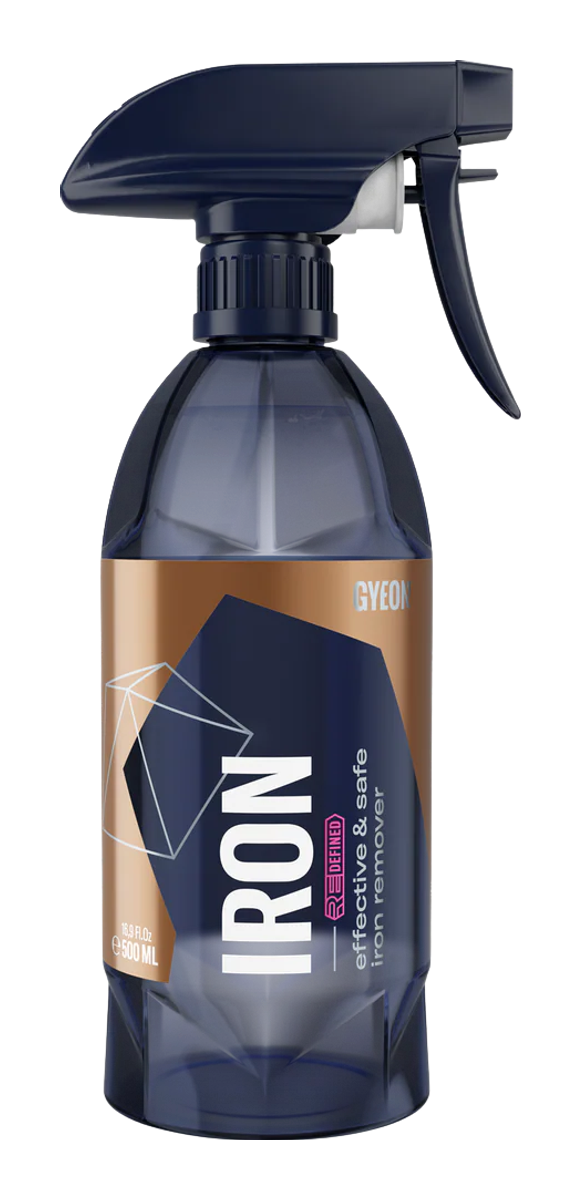
Gyeon Q2M Iron Redefined matches the near-neutral chemistry and the same color-change bleed, so the application experience and surface safety land in the same place. It comes in cheaper per ounce, making it the closest formulation swap.
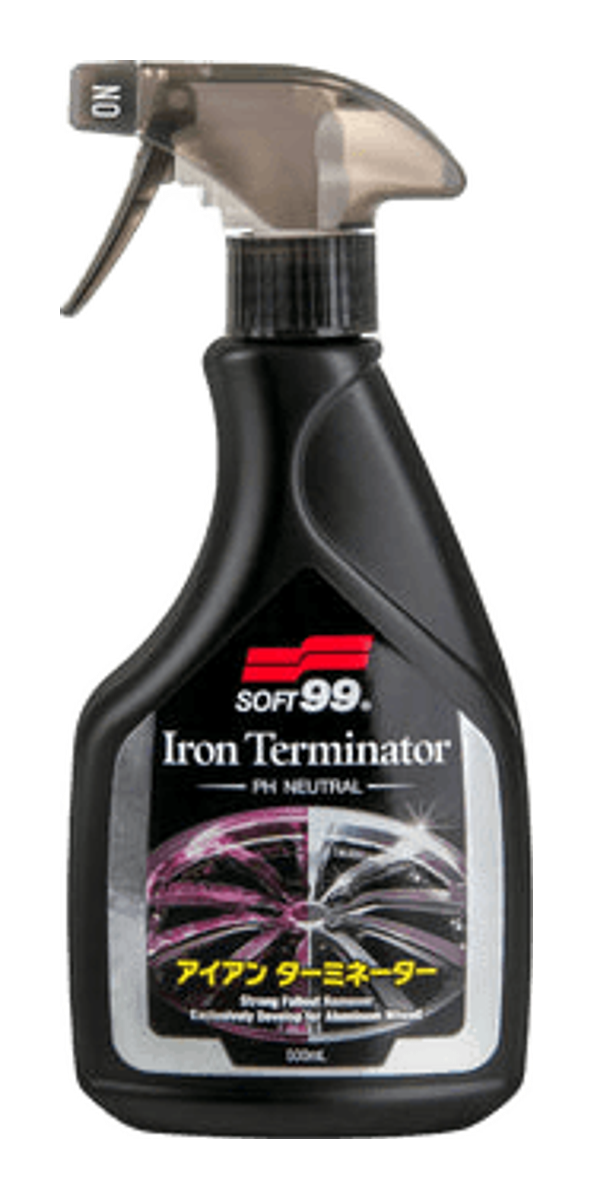
SOFT99 Iron Terminator shares the pH-neutral, thioglycolate-style mechanism but sits at the top of this price tier at $1.18/oz. Reach for it when you want the same gentle decon approach from a different supply chain.
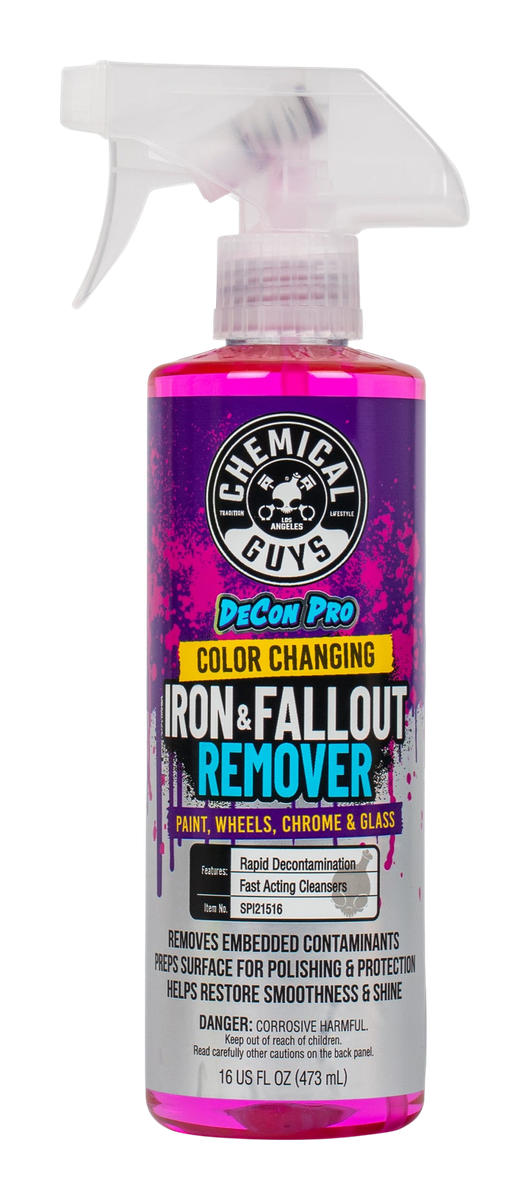
Chemical Guys Decon Pro runs at pH 7.28 and delivers comparable iron-pulling performance. At 20% more expensive, it trades cost for broad availability rather than any chemistry advantage over the SONAX.
Compare These Products

How the Chemistry Works
The bleeding purple reaction is sodium thioglycolate doing the heavy lifting. It grabs onto iron particles embedded in your wheels and paint, forming a soluble iron-thioglycolate complex that rinses away with water. That complex carries the violet color you see develop, so the visual cue is the byproduct of the chemistry, not a dye. Xanthan gum thickens the spray just enough to slow the run-off, giving the thioglycolate time to find and react with metal on vertical surfaces. Two chelators, sodium gluconate and sodium citrate, work the other half of the job. They lock up the calcium and magnesium ions behind lime deposits, which is how this formula clears mineral scale that pure iron removers leave behind.
The sodium thioglycolate at 10-30% is a smart choice for a near-neutral formula. Acidic iron removers dissolve metal aggressively but threaten polished alloys and sealed finishes. Thioglycolate dissolves iron through chelation instead of acid attack, so the formula stays gentle on surfaces while still pulling embedded particles. The trade-off is smell. Thioglycolate carries a sharp sulfur odor, which is why 2-ethylhexanol and d-limonene ride along as fragrance components and co-solvents. The limonene adds a citrus note and helps keep the oily fragrance compounds blended into the water base, so the product smells like oranges instead of rotten eggs when you spray it.
What stands out is the surfactant restraint. The anionic cleaning agents, sodium etasulfate and sodium polyacrylate, sit at 1-5%, low enough that this won't foam up like a wheel cleaner. That's deliberate. Foam would obscure the color change that makes this product useful. Sodium hydroxide is here only to nudge the pH into the mild range, not to add alkaline cleaning power. The formula commits fully to chelation and visual feedback rather than trying to be a general-purpose degreaser.
What We Like
- Lime deposit removal — most iron removers ignore mineral scale, so this saves a separate acid step on wheels fouled with hard-water spotting and brake dust together
- Ready-to-use format — no mixing or dilution math means consistent chelation strength every time, and no risk of over-diluting into a weak solution that leaves iron behind
- Neutral-pH chemistry — safe to leave on coated wheels, polished aluminum, and PPF without the etching or sealant-stripping that acidic decon sprays risk on prolonged contact
What to Know
- The sulfur odor is the cost of near-neutral chemistry — thioglycolate trades acid harshness for a rotten-egg smell that lingers during use, so work outdoors or with the garage door open. Gloves are a good idea given the Warning label.
- Gentler chemistry means slower work — without acid to dissolve metal on contact, heavily fouled wheels need longer dwell time and sometimes a second pass that an aggressive acidic remover would handle in one.
- Ready-to-use convenience caps your cost-per-job efficiency — you can't dilute it down for light maintenance washes, so every application burns full-strength product even when the contamination is minor.
Who Should Buy This
Reach for this when you're decontaminating wheels that show both rust-colored iron bleeding and white hard-water spotting. The thioglycolate chemistry pulls embedded iron particles into a soluble complex, and the formulation tackles lime scale in the same pass so you skip the separate acid step most decontamination workflows require. It also fits maintenance washes on coated or sealed paint, where the near-neutral formula won't attack delicate finishes the way acidic removers can. If you only ever fight iron on bare metal and want the lowest cost per ounce, a leaner formula handles it. But for mixed contamination on protected surfaces, this is the cleaner one-bottle solution.
Want to see how this stacks up? Compare these 3 iron removers
Frequently Asked Questions
How long should I let it dwell before rinsing? Work in two to four minutes, and rinse before it dries. The reaction is visible, so once the purple bleeding stops spreading, the thioglycolate has converted the accessible iron. Letting it dry past that point just leaves residue you'll have to re-wet to remove, so reapply on heavily fouled wheels rather than waiting longer.
Can I use it on ceramic-coated wheels and paint? Yes. The near-neutral chemistry won't attack coatings the way acidic iron removers can. Still, test an inconspicuous spot first — coating quality varies, and a quick patch test costs nothing.
Why is it leaving white spots behind after I rinse? That's likely lime scale, not iron, and this formula does dissolve it. If spots persist, the mineral deposit is heavier than one pass clears. Reapply directly to the white residue and give it a second dwell before the final rinse.