SOFT99 Iron Terminator: ChemCX Analysis
Ranked Performance
Pricing
Badges
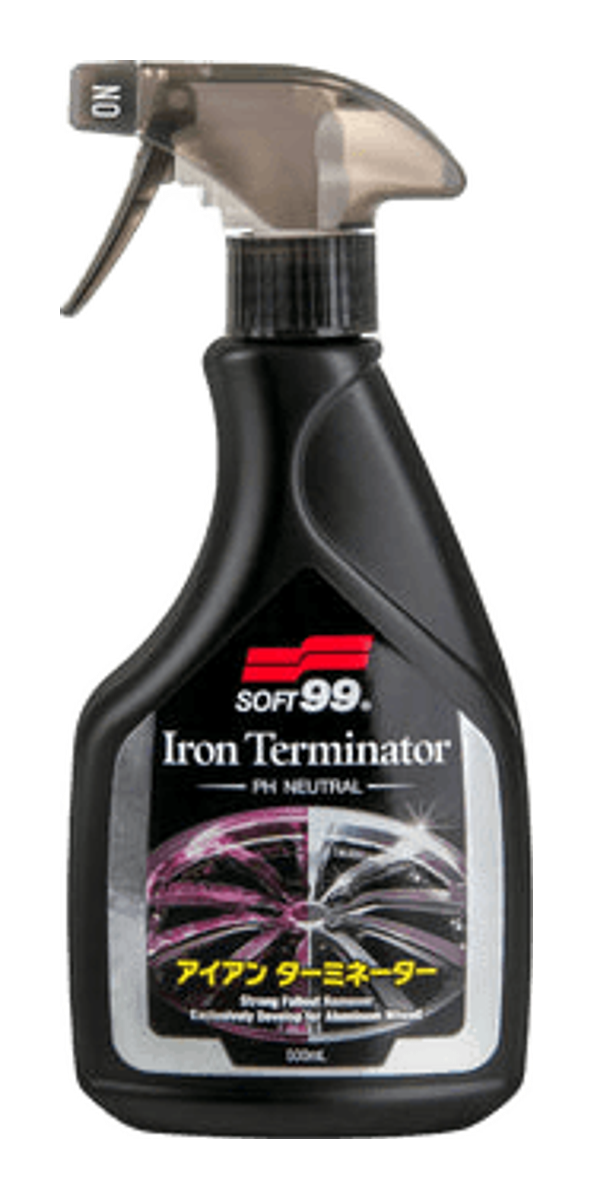
SOFT99 Iron Terminator is a ready-to-use iron remover that sprays on, turns purple where it contacts embedded iron particles, and rinses off clean. Most thioglycolate-based iron removers hit you with a sulfur stench that lingers in your garage for hours. SOFT99 specifically formulated this one for lower odor, which makes decon work on a full car less punishing. It still smells, but noticeably less than the category norm.
Ammonium mercaptoacetate does the work here, present at a relatively high concentration that reacts with iron particles and converts them into a water-soluble compound. That reaction is what produces the purple bleeding you see on the surface. The neutral formulation means it won't etch clear coat or damage wheel finishes the way more acidic iron removers can, so dwell time is more forgiving if you get distracted mid-panel. The disclosed ingredients only cover regulated components, so the full formula likely includes surfactants and other supporting chemistry that aren't listed. What's visible works well for its intended job.
Specifications
| Attribute | Value |
|---|---|
| pH | 7.5 |
| Dilution Ratio | RTU (Ready-to-Use) |
| Key Actives | Ammonium mercaptoacetate |
| Signal Word | Warning |
| Transparency | excellent |
| Biodegradable | Not disclosed |
Category Context
| Metric | This Product | Category Average | Category Range |
|---|---|---|---|
| pH | 7.5 | 6.5 | 3 - 11 |
| Price/oz | $1.18 | $0.79 | $0.35 - $1.36 |
Where It Lands
Iron Terminator lands in the neutral-pH camp of thioglycolate iron removers, safe enough for coated wheels and paint surfaces without the corrosion risk that acidic competitors carry. At 7.5, it sits a full point above the category average of 6.5, though still well within the safe zone for weekly use on sensitive finishes. That neutral positioning makes it a versatile daily-driver iron remover: effective on moderate brake dust and embedded fallout without demanding the caution that pH 3–4 acid-based alternatives require.
The trade-off is cost. At $1.18 per ounce, Iron Terminator sits near the top of the category's price range and 49% above the $0.79 average. That premium is hard to justify against Gyeon Q2M Iron Redefined, which matches the same 7.5 pH at $0.81 per ounce. For heavy decontamination jobs burning through product quickly, the per-ounce gap adds up fast. Iron Terminator's reduced-odor formulation is the differentiator: worth the premium for enclosed spaces like garages, less so for open-air use where smell dissipates on its own.
How It Compares
Closest Alternatives
Chemical Guys Decon Pro runs the same thioglycolate chemistry at a nearly identical neutral pH. The two products are functionally interchangeable in mechanism and surface safety, making this the closest head-to-head match at a comparable price point.
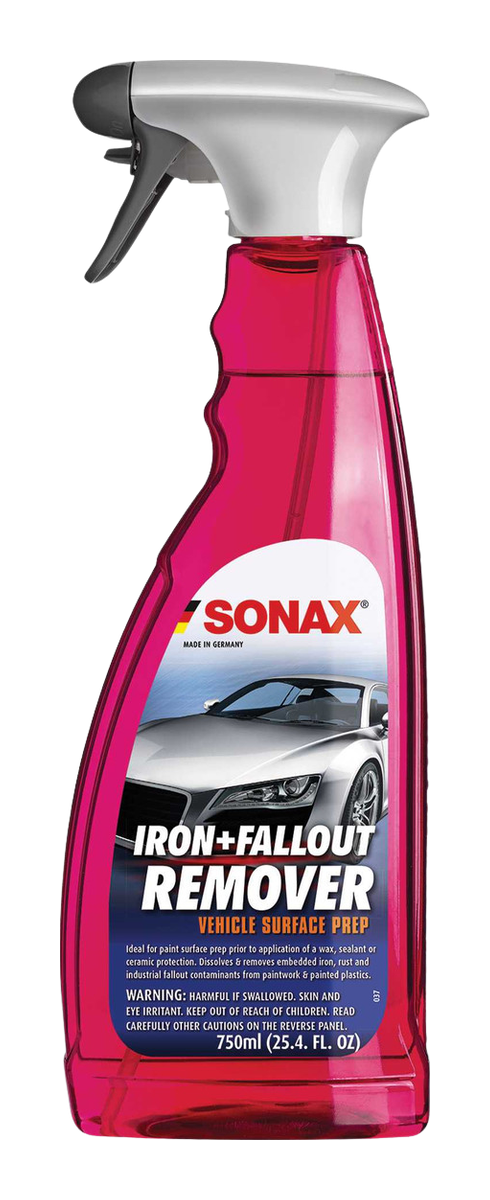
SONAX Iron And Fallout Remover shares the neutral pH but pairs its reactive chemistry with a surfactant package engineered for heavier fallout and brake dust loads. It pulls double duty as a wheel cleaner, which reduces the number of products in your wash workflow.
Gyeon Q2M Iron Redefined delivers thioglycolate iron removal at the same 7.5 pH for 31% less per ounce. Same chemistry class, same surface safety profile. The cost gap is the differentiator.
Compare These Products

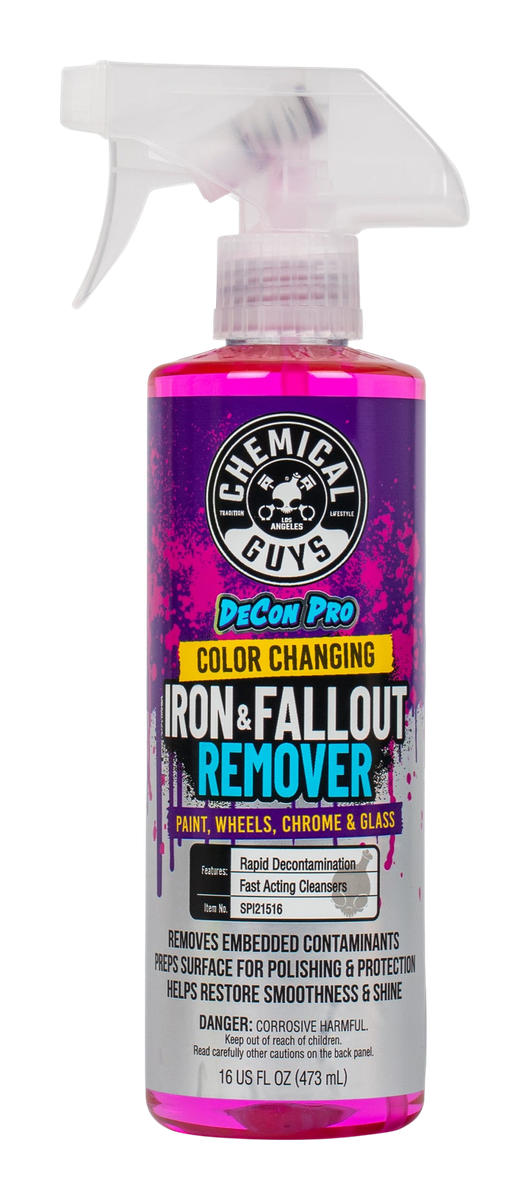

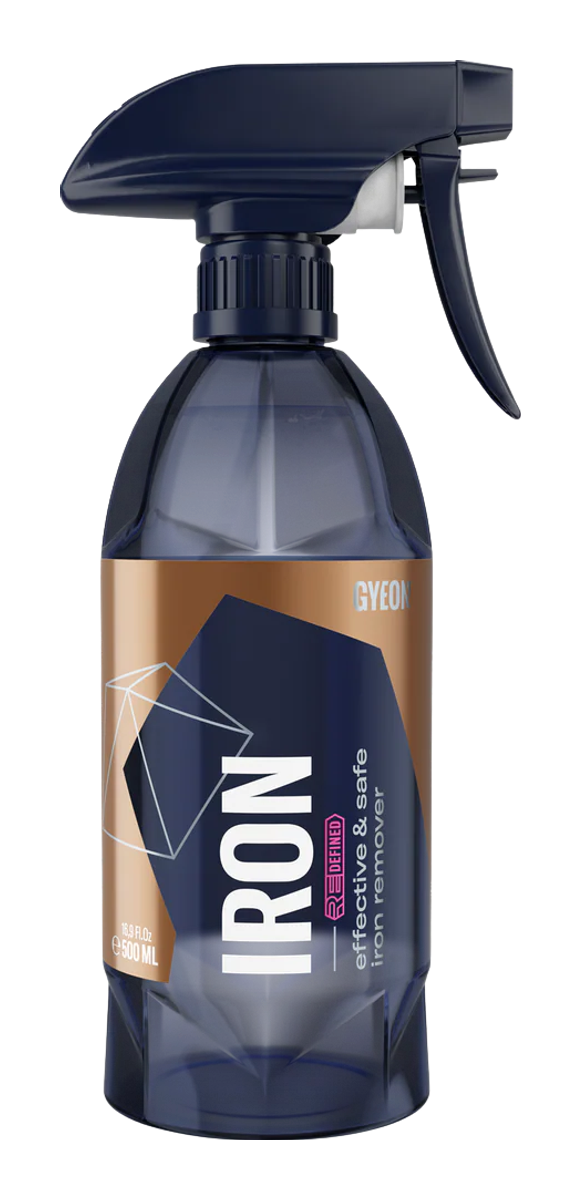
How the Chemistry Works
Ammonium mercaptoacetate drives the entire reaction here. When the spray contacts embedded iron particles, the thiol group on the mercaptoacetate molecule chelates ferric iron, pulling it out of the surface and forming a soluble iron-thioglycolate complex. That complex is what turns purple. The color change is not cosmetic. It is a direct visual indicator of iron dissolution happening in real time. Two alkanolamine pH adjusters, triethanolamine and diethanolamine, hold the solution near neutral so the thioglycolate stays reactive without pushing into alkaline territory that could attack clearcoat or wheel coatings. The ethanol fraction, under 1%, likely accelerates initial wetting so the spray spreads into pitted brake dust deposits rather than beading on contaminated surfaces.
The d-limonene is the formulation choice worth examining. At under 1%, it is not doing meaningful cleaning work. Limonene is an effective citrus solvent at higher concentrations, but at trace levels its primary role is olfactory. SOFT99 markets this product around reduced odor, and d-limonene's strong citrus scent directly masks the sulfur stench that thioglycolate chemistry produces. Most competing iron removers simply accept the rotten-egg smell as the cost of doing business. SOFT99 chose to engineer around it. The triethanolamine is also doing double duty: beyond pH buffering, it functions as an emulsifier, helping the dissolved iron complex and any co-lifted grime stay suspended in the rinse water rather than redepositing on the surface.
Six ingredients on a partial disclosure sheet means the full formula contains more. No surfactants appear in the disclosed list, which is unusual: most iron removers include at least one to generate foam, improve cling on vertical surfaces, and aid rinse behavior. Undisclosed surfactants, corrosion inhibitors, or viscosity modifiers are almost certainly present but fall below hazard reporting thresholds. The absence of any thickener in the disclosed list suggests cling time relies on whatever is undisclosed, or the product is intentionally thin-bodied for fast coverage on wheels. Without full disclosure of those supporting ingredients, it is impossible to evaluate the complete surfactant system or predict how the product handles heavy grease alongside iron contamination.
What We Like
- Neutral pH with high-concentration active — The 5–15% ammonium mercaptoacetate loading delivers aggressive iron chelation without the acidic carrier that forces you to worry about etching aluminum or stripping wheel coatings. You get the reactivity of a strong iron remover with the surface safety of a soap.
- Reduced thiol odor at full strength — Most thioglycolate products at this concentration level smell like rotten eggs in an enclosed garage. SOFT99 engineered this formula for noticeably lower odor, which matters when you're spraying an entire car's painted panels in a home bay without industrial ventilation.
- RTU format at working concentration — No dilution math, no mixing bottles. The spray-on formula is calibrated to deliver the active at its effective concentration straight from the trigger, eliminating the most common user error in iron removal: under-diluting a concentrate and wasting product or over-diluting and getting no reaction.
What to Know
- RTU convenience costs you per-ounce economy. At the highest tier of category pricing, frequent users burning through bottles on multi-car details will pay significantly more over time than they would with a concentrate cut to the same strength. The tradeoff is zero prep time and no risk of botching a dilution ratio.
- Reduced odor doesn't mean no precautions. The ammonium mercaptoacetate still off-gasses thiol compounds. SOFT99 engineered the smell down, not out. Working in a closed garage without airflow still exposes you to irritant vapor. Gloves and ventilation are worth the effort.
- Neutral pH means no etching assist on heavy contamination. Acidic iron removers double as light mineral dissolvers, attacking both iron and water spots simultaneously. Iron Terminator skips that secondary action entirely. Heavily neglected wheels with layered brake dust and mineral deposits will likely need a separate acidic wheel cleaner as a follow-up step.
Who Should Buy This
If you're decontaminating painted surfaces or coated wheels and want to walk away from the car while the product dwells, the neutral pH means you're not racing a clock against acid damage. That matters most on ceramic-coated panels where an acidic iron remover risks etching the coating layer. If you work in an enclosed space like a garage, the reduced-odor formulation tames the sulfur stench that makes most thioglycolate products miserable to use without ventilation. Users running through multiple bottles per month will find better per-ounce economics with concentrates. For occasional whole-car decontamination washes where convenience and surface safety outweigh cost-per-ounce, Iron Terminator earns its shelf space.
Want to see how this stacks up? Compare these 3 iron removers
Frequently Asked Questions
Can I leave Iron Terminator on the surface longer to dissolve stubborn contamination? Yes, but diminishing returns set in fast. The thioglycolate reaction with embedded iron is largely complete within 3–5 minutes — the purple color change shows you when chelation is active. Extending dwell beyond that won't pull more iron; it just lets the product dry, which makes rinsing harder. Reapply a fresh layer instead of waiting longer.
Why does the purple reaction seem weak on my wheels compared to my paint? Your wheels may carry brake dust that's already oxidized into non-ferric compounds the thioglycolate can't chelate. Ammonium mercaptoacetate targets ferric iron specifically. Heavily baked-on or ceramic-compound brake dust often needs an alkaline wheel cleaner first to break down the binder matrix before an iron remover can reach the metallic particles underneath.
How does Iron Terminator compare to Gyeon Iron Redefined on a per-detail cost basis? Gyeon costs roughly 30% less per ounce and uses the same thioglycolate chemistry at a comparable neutral pH. For single-car occasional use, the difference is negligible. For multi-vehicle detailing, Gyeon's price advantage compounds quickly.