NV Car Care Purify Fallout Remover Clay Lubricant: ChemCX Analysis
Ranked Performance
Pricing
Quick Answer
NV Car Care Purify is the only iron remover in the category that doubles as a clay lubricant. Sodium thioglycolate chemically softens embedded iron particles while nonionic surfactants slick the surface for clay work — one spray replaces two bottles. Detailers who clay regularly and want to cut a step from their decontamination routine should pay attention.
What It Is
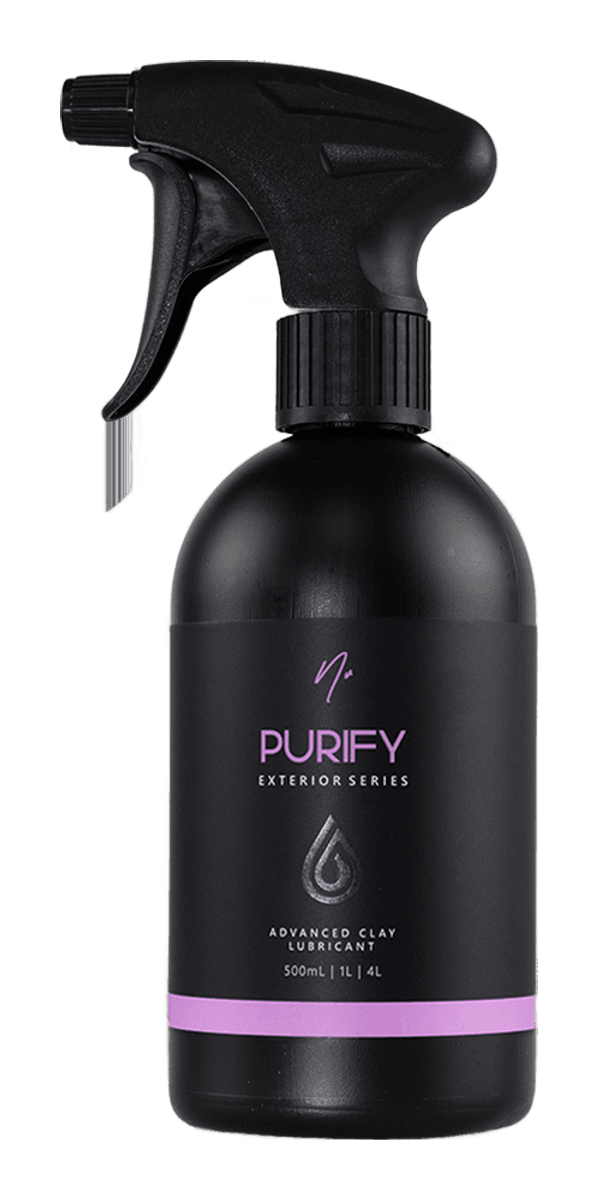
NV Car Care positions as a focused brand with a compact product line. Purify uses sodium thioglycolate — a thioglycolic acid salt that chelates embedded iron particles, turning them purple as it forms a soluble complex you rinse away. The dual-purpose formula also serves as clay bar lubricant, an unusual pairing in the iron remover category but we have to admit, it makes sense to do chemical and mechanical decon in one step. It ships RTU, so grab and spray with no mixing.
Specifications
| Attribute | Value |
|---|---|
| pH | 7 |
| Dilution Ratio | RTU (Ready-to-Use) |
| Key Actives | Acetic acid, mercapto-, monosodium salt |
| Signal Word | Danger |
| Transparency | good |
Category Context
| Metric | This Product | Category Average | Category Range |
|---|---|---|---|
| pH | 7 | 6.7 | 3 - 11 |
| Price/oz | $0.86 | $0.75 | $0.35 - $1.19 |
Where It Lands
Purify sits at pH 7; that's dead neutral and right at the category average of 6.7. That neutrality means it relies entirely on the thioglycolate chemistry to dissolve iron contamination rather than acid or alkaline attack. Surface safety is a non-issue here: clear coats, ceramic coatings, and trim stay unaffected. For embedded brake dust and rail dust, it will do the job, though acidic formulas in the pH 3–4 range dissolve contamination faster on neglected wheels.
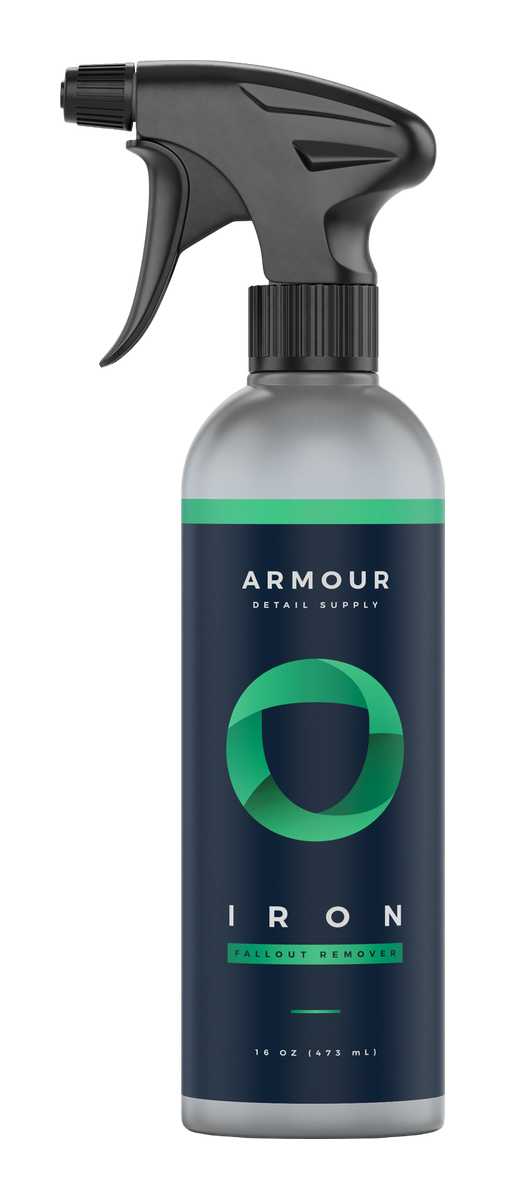
At $0.86/oz, Purify costs 15% more than the category average of $0.75. The dual-purpose pitch of iron remover plus clay lubricant partly justifies that premium if it genuinely replaces a separate product in your workflow. For comparable pH 7 thioglycolate chemistry without the clay-lube angle, Armour Detail Supply Iron runs $0.55/oz.
How It Compares
Closest Alternatives
Armour Detail Supply Iron matches Purify's neutral pH and thioglycolate approach at 36% lower cost. The trade-off: no clay lubricant functionality, so you'll need a separate product for decontamination prep. Budget-conscious detailers who keep clay lube on hand already save meaningfully here.
Griot's Garage Iron and Fallout Remover lands at pH 7.25 and costs 27% less. A straightforward iron remover from a brand with wide retail availability. Easier to restock locally than NV Car Care's direct-sale model.
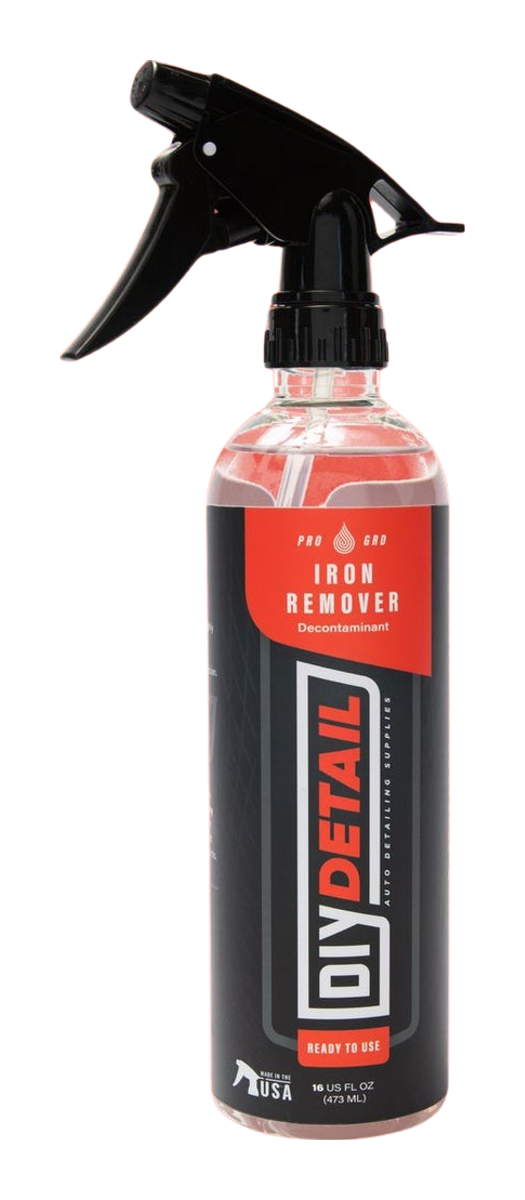
DIY Detail Iron Remover shares the neutral pH but runs 64% more expensive. That premium buys into a transparency-forward brand with detailed ingredient disclosures. Worth the cost only if ingredient documentation matters to your workflow.
Compare These Products
How the Chemistry Works
Sodium thioglycolate at 15% concentration does the heavy lifting. This sulfur-containing compound donates electrons to oxidized iron particles embedded in paint and clearcoat, breaking the Fe³⁺ bond that anchors them to the surface. The dissolved iron forms a soluble complex that turns purple or red on contact, a visual confirmation the reaction is working. That characteristic sulfur smell is the trade-off.
Two nonionic surfactants split the support duties. D-glucose decyl octyl ethers, a plant-derived glucoside, provides gentle cleaning with low foam, ideal for a product meant to lubricate clay bars without leaving sudsy residue. Ethoxylated C9-11 alcohols lower surface tension so the thioglycolate solution wets into pores and contaminant deposits rather than beading on top. Together they ensure even coverage and clean rinsing.
Diethylene glycol monobutyl ether rounds out the formula as a co-solvent, keeping the high-concentration thioglycolate and surfactants uniformly blended in water. D-limonene at under 1% contributes citrus fragrance to offset the sulfur odor, nothing more.
What We Like
- Dual-function formula eliminates a step — iron removal and clay lubrication in one spray means you're not switching bottles mid-decon. Fewer products on the panel also reduces the chance of chemical interactions between layered sprays.
- Neutral pH pairs safely with clay bars — acidic iron removers can degrade clay media and stress fresh paint. A neutral carrier lets you dwell the product longer without worrying about etching, which matters when you're also generating friction with a clay bar.
What to Know
- The 'Danger' signal word on a neutral-pH product points to the thioglycolate itself. The sulfur compound irritates skin and eyes on contact. Gloves and eye protection are smart defaults here.
- Dual-function convenience has a cost. Dedicated iron removers with lower pH or higher acid content will outperform Purify on heavy contamination. Treat it as a maintenance-level iron remover, not a rescue tool for neglected paint.
- RTU format at this price point means no way to stretch the bottle. Budget accordingly if you clay frequently.
Who Should Buy This
Detailers who clay bar regularly will get the most from Purify's dual-function design. One spray handles fallout and lubricates the bar to cut a step from paint decontamination. If you only need a straight iron remover without the clay lubricant angle, Armour Detail Supply Iron delivers comparable chemistry at a lower price per ounce.
Want to see how this stacks up? Compare these 3 iron removers
Frequently Asked Questions
Why does Purify carry a 'Danger' signal word at a neutral pH? Sodium thioglycolate, not the pH, triggers that label. The sulfur compound irritates skin and eyes on contact regardless of acidity. Wear nitrile gloves and eye protection every time you spray.
Why does Purify turn purple on my paint? Sodium thioglycolate donates electrons to embedded iron particles, converting them into a water-soluble iron-thioglycolate complex. That complex absorbs light in the visible spectrum as a deep purple or red. The color change confirms the reaction is working.
How does Purify compare to Armour Detail Supply Iron? Both run pH 7 with thioglycolate chemistry, so decontamination performance should be similar. Armour Detail is 36% cheaper per ounce, but it lacks Purify's clay lubricant function. If you clay bar regularly, Purify consolidates two products into one spray.
Can I use Purify on ceramic-coated wheels? Yes. Neutral pH won't degrade ceramic or graphene coatings. Always test on an inconspicuous area first.