Infinity Wax Tyre Coat: ChemCX Analysis

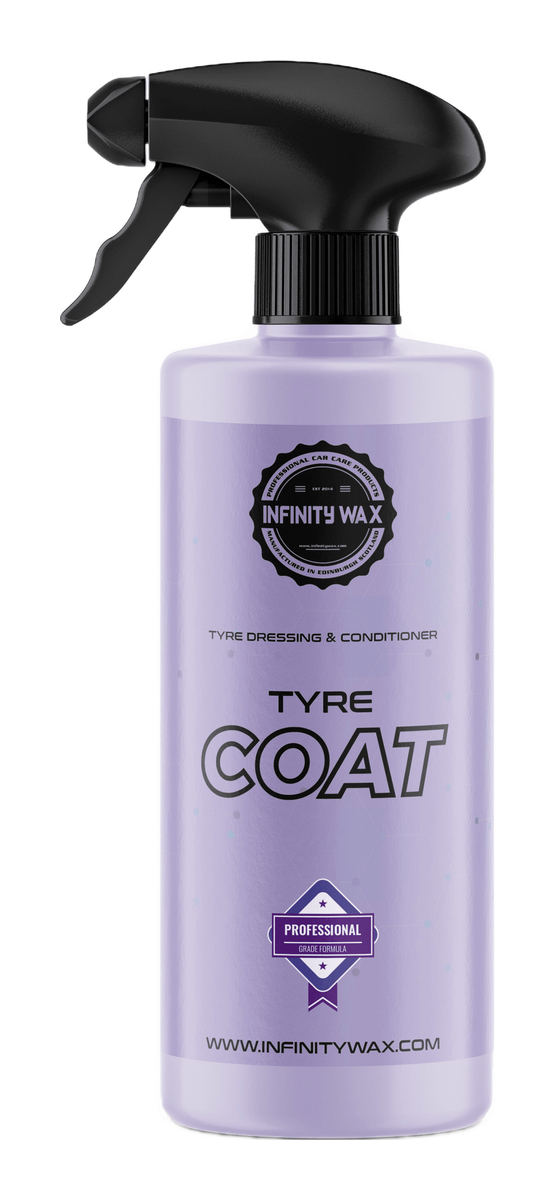
Infinity Wax Tyre Coat is a sprayable silicone dressing that leaves a satin, factory-look finish on tires. You spray it on, spread it with an applicator, and it cures into a coating that repels water and dirt for several weeks. The finish sits in that sweet spot between matte and glossy, closer to how tires look when they roll off the lot. It stays put through rain and road grime better than most spray-on dressings, which typically wash out after the first heavy downpour.
The durability comes from the type of silicone used. Instead of standard dimethyl silicones that sit on the rubber surface, Tyre Coat uses aminosilane, a modified silicone with amino groups that chemically bond to tire rubber. That bonding is why the dressing holds up longer than typical spray-and-forget products. The water-based carrier lets the aminosilane soak into the rubber before it cures, so the coating forms from within the surface rather than just filming over the top. It's a smart formulation choice that gets real durability out of a simple spray application.
Specifications
| Attribute | Value |
|---|---|
| pH | 5 |
| Dilution Ratio | RTU (Ready-to-Use) |
| Key Actives | SILOXANES AND SILICONES, 3-[(2-AMINOETHYL)AMINO]PROPYL ME, DI-ME |
| Signal Word | Danger |
| Transparency | excellent |
| Biodegradable | Yes |
Category Context
| Metric | This Product | Category Average | Category Range |
|---|---|---|---|
| pH | 5 | 7.4 | 4.99 - 11.5 |
| Price/oz | $0.00 | $0.91 | $0.21 - $1.77 |
Where It Lands
Infinity Wax Tyre Coat sits at the mild end of the tire dressing category. At pH 5, it lands well below the 7.4 category average, placing it among a small cluster of acidic silicone dressings that includes Turtle Wax Wet'N Black and Hybrid Solutions Graphene Acrylic Tire Shine. That mildness is deliberate: a slightly acidic carrier helps silicone polymers deposit evenly onto rubber without stripping existing protectants or reacting with wheel sealants on adjacent surfaces. For anyone dressing tires on ceramic-coated wheels, that pH gives real peace of mind.
The product outperforms when you want a no-fuss, spray-on satin finish that mimics OEM rubber, not a wet, glossy look. Its four-week durability claim is competitive for an RTU silicone dressing at this price tier. Where it falls short: heavily browned or neglected tires need a dedicated cleaner first, because nothing at this pH is cutting baked-on road film. Price data is unavailable for direct comparison because they don't seem to sell in the US.
How It Compares
Closest Alternatives
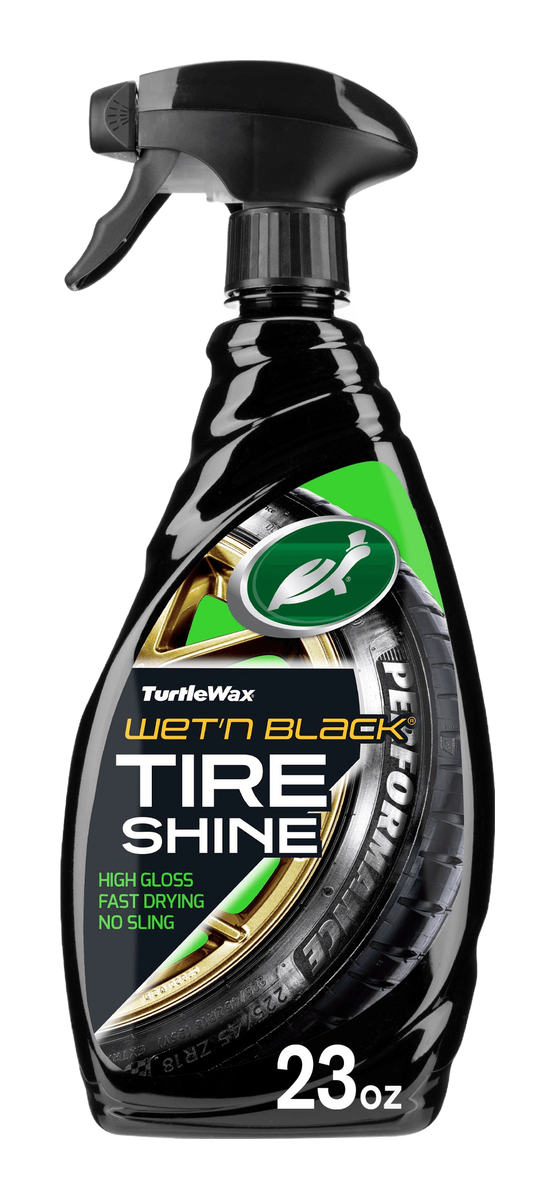
Turtle Wax Wet'N Black Tire Shine shares the same pH and silicone-based mechanism, making it the nearest formulation match. Both cure to a water-repellent film, though Wet'N Black skews toward a glossier, wetter finish rather than the satin OEM look.
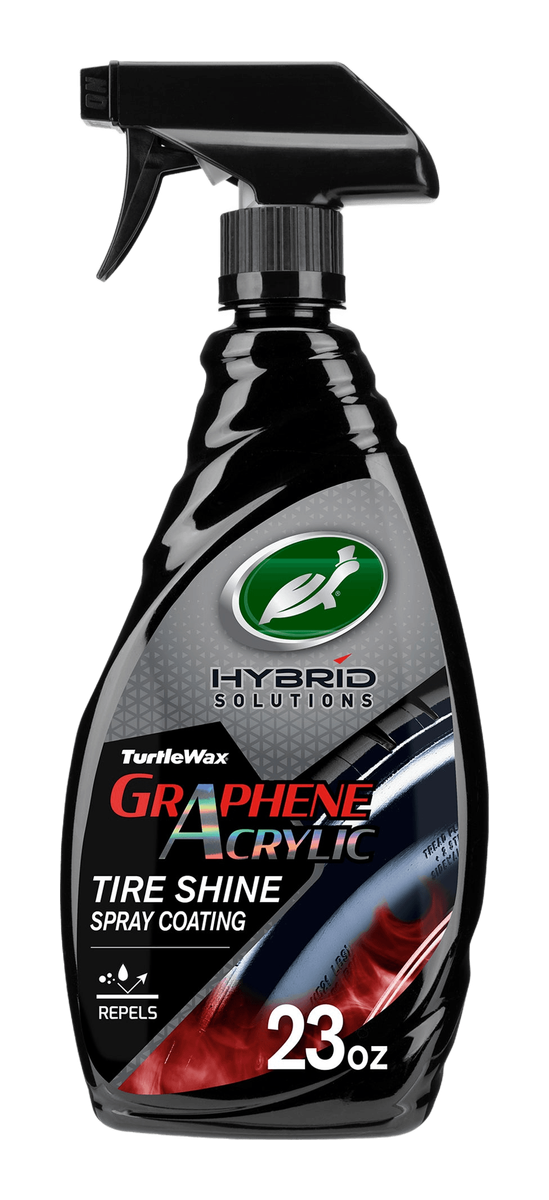
Turtle Wax Hybrid Solutions Graphene Acrylic Tire Shine Spray Coating swaps the pure silicone approach for a graphene-acrylic hybrid matrix. That chemistry trades the typical silicone sling-off risk for a harder, more rigid film, a meaningful difference if durability matters more than a natural finish.
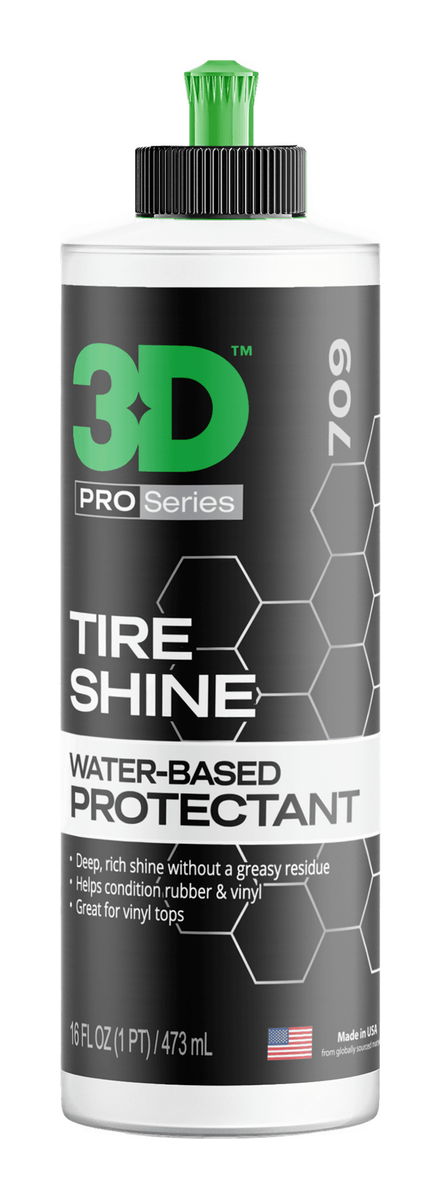
3D Tire Shine delivers silicone-based dressing at a pH of 5.5, functionally equivalent mildness. At a lower cost per ounce, it covers similar ground for budget-conscious users.
Compare These Products


How the Chemistry Works
When sprayed onto a tire, this formulation deposits an amino-functional silicone onto the rubber surface while a water carrier evaporates. The amino groups on the primary silicone, a 3-[(2-aminoethyl)amino]propyl methyl dimethyl siloxane, carry a slight positive charge at the formula's mildly acidic pH. Rubber surfaces carry a slight negative charge, so the silicone is electrostatically attracted to the tire rather than just sitting on top. That charge-driven adhesion is the mechanism behind the claimed multi-week durability: the coating resists rain and rinse water because it's bonded, not merely deposited. A single nonionic surfactant, an ethoxylated C9-11 alcohol, acts as the emulsifier holding this silicone dispersed in the water phase. Without it, the silicone would phase-separate in the bottle. Once applied, the surfactant breaks down as water evaporates, leaving the silicone film behind with minimal residue that could interfere with the satin finish.
The amino-functional silicone deserves a closer look. Standard polydimethylsiloxane (PDMS), the workhorse of most tire dressings, forms a glossy but loosely adhered film that washes off within a week or two. By grafting amine groups onto the silicone backbone, the formulator gets a molecule that chemically interacts with the substrate. The trade-off is finish level: amino-functional silicones produce a lower, more natural sheen compared to high-molecular-weight PDMS. That's a deliberate decision aligned with the satin, OEM-look positioning. The trace amount of octamethylcyclotetrasiloxane (D4) listed in the SDS at trace levels is almost certainly a residual impurity from silicone manufacturing rather than a functional additive. D4 is a volatile cyclic silicone under increasing regulatory scrutiny in Europe, so its presence at trace levels suggests it couldn't be fully removed during synthesis.
The disclosed ingredients likely account for a small fraction of the formula by concentration. The rest is unlisted, which is expected for a partial-disclosure SDS that only flags hazardous components. The water carrier, any co-solvents that aid silicone film leveling, and any fragrance are all absent from the ingredient list. A thickener or rheology modifier is also likely present, since a water-thin spray wouldn't cling to a curved tire sidewall long enough for the silicone to deposit evenly. The three-preservative system, MIT, BIT, and trace formaldehyde, tells you this is a water-heavy formula susceptible to microbial growth, reinforcing the idea that water constitutes the vast majority of the bottle.
What We Like
-
Aminosilane backbone bonds to rubber, not just sits on it — the amino-functional silicone in this formula reacts with polar sites on the tire surface, forming covalent-like adhesion rather than relying on physical film deposition. That's why the claimed four-week durability is plausible where conventional dimethicone dressings wash off in one or two rain cycles.
-
Mildly acidic carrier complements rubber chemistry — at the mild end of the category pH range, this formulation avoids alkaline exposure that can accelerate oxidation and sidewall browning over repeated applications. A smart match for a product designed for regular reapplication.
-
RTU spray format eliminates the guesswork — no dilution ratios, no mixing, no risk of hot spots from uneven concentration. Spray onto an applicator pad, spread, walk away. The format suits the product's positioning as a maintenance dressing you reapply every few weeks without fuss.
What to Know
- Aminosilane bonding demands clean surfaces — the reactive chemistry that gives this dressing its durability only works if the tire is free of old dressings and road film. Skip the prep and the coating bonds to the contaminant layer, not the rubber. Durability drops and you get uneven curing.
- The "Danger" signal word is unusually aggressive for a tire dressing — most competitors in this category carry "Warning" or no signal word at all. Gloves and eye protection are worth wearing during application, and overspray on skin should be rinsed promptly.
- Satin-only finish locks you into one look — there's no dilution pathway to adjust gloss level. If you want high-shine wet tires, this isn't the product. The tradeoff for that natural OEM appearance is zero flexibility.
Who Should Buy This
If your tires sit behind ceramic-coated wheels and you want a dressing that won't sling onto that coating during rain, the amino-functional silicone here bonds to rubber rather than pooling as a loose film, producing less migration than conventional silicone oils. If you dress tires monthly and want to stretch that to every four to six weeks, the covalent-style adhesion mechanism outlasts physical-film dressings that wash off after a couple of highway drives. And if you prefer the factory satin look over wet-gloss shine, this delivers an OEM finish without the greasy residue that attracts dust.
Want to see how this stacks up? Compare these 3 tire dressings
Frequently Asked Questions
Can I apply Tyre Coat over an existing tire dressing? No. The amino-functional silicone in this formula needs direct contact with the rubber's polar surface sites to bond properly. Layering it over old dressing means it adheres to that residue instead. Strip previous products with an APC or dedicated tire cleaner first, then apply to bare rubber.
How does Tyre Coat compare to 3D Tire Shine? 3D Tire Shine uses a simpler four-ingredient formula and fully discloses everything in the bottle. Tyre Coat's amino-functional silicone creates a reactive bond to rubber rather than a conventional film, which should translate to better sling resistance and durability. However, 3D's full transparency makes it easier to troubleshoot compatibility issues.
Why does a tire dressing carry a Danger signal word? The aminosilane active (3-[(2-aminoethyl)amino]propyl methyl dimethyl siloxane) is a skin and eye irritant in liquid form before it cures. Once dried and crosslinked on the tire, the hazard is negligible. Wear nitrile gloves during application.