Infinity Wax APX All Purpose Cleaner: ChemCX Analysis
Ranked Performance
Pricing
Contact retailer
Badges
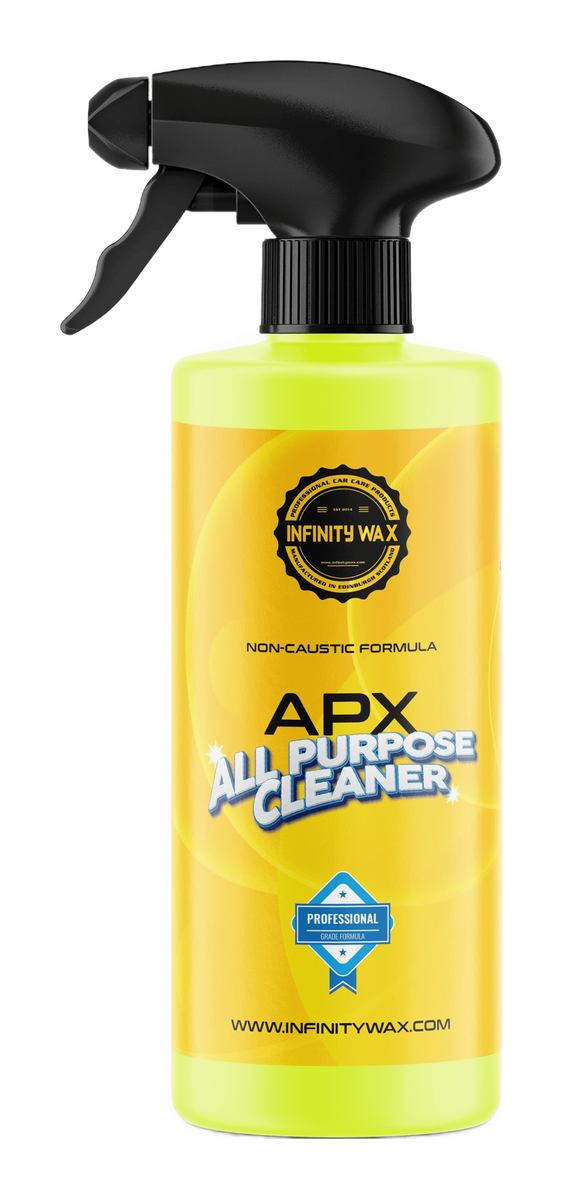
Infinity Wax APX is a super-concentrate APC that you dilute anywhere from 1:1 for heavy degreasing down to 1:10 for light interior wipes. The concentrate ratio is the standout here: a single bottle covers a wide range of jobs without needing separate products for engines, door jambs, and fabric. It leaves no residue or film behind, which matters when you're prepping a surface for coating or dressing. The water-based formula also means no solvent smell lingering in an enclosed garage.
Sodium laureth sulfate does the bulk of the cleaning. It's a workhorse anionic surfactant that cuts grease by pulling oily contamination off surfaces and suspending it in water so you can rinse it away. A second surfactant system, nonionic, works alongside it to handle the stuff that anionic agents miss, like certain particulate soils and lighter organic films. The combination means APX handles a broader range of dirt types than a single-surfactant formula would. It's a straightforward surfactant-driven cleaner without solvents or silicones propping it up, which keeps the formula honest.
Specifications
| Attribute | Value |
|---|---|
| pH | 9.8 |
| Dilution Ratio | 1:1 to 1:10 |
| Key Actives | SODIUM LAURETH SULFATE |
| Signal Word | Danger |
| Transparency | excellent |
| Biodegradable | Yes |
Category Context
| Metric | This Product | Category Average | Category Range |
|---|---|---|---|
| pH | 9.8 | 11.3 | 7 - 13.6 |
| Price/oz | $0.00 | $0.52 | $0.09 - $1.18 |
Where It Lands
Infinity Wax APX lands at the mild end of the APC category. At pH 9.8 neat, it is 1.5 full points below the category average of 11.3. This is a surfactant-driven cleaner, not an alkaline stripper. Diluted to working strength, the pH settles around 8.8, barely above neutral. That's gentle enough for leather, plastics, and coated surfaces where stronger APCs would cause damage, but it also means APX relies almost entirely on its surfactant package to do the lifting rather than raw alkalinity.
That positioning makes it a strong daily-driver for interior detailing, light exterior pre-wash, and any surface where you want cleaning without chemical aggression. For baked-on engine grime or heavily soiled wheel wells, the math works against it. You'd need to go neat at 1:1 and still won't match the cut of an APC sitting at pH 12+. The super-concentrate format does stretch the bottle across a wide dilution range, which offsets the mild chemistry by letting you tune strength to the task.
How It Compares
Closest Alternatives
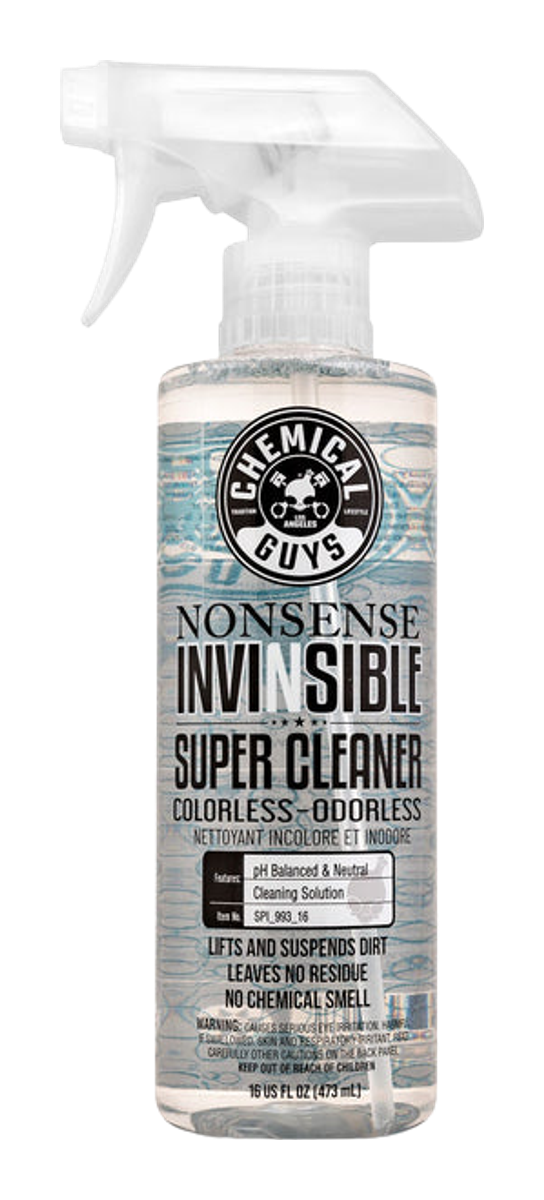
Chemical Guys Nonsense Invinsible Super Cleaner sits closest in pH territory at 9.32, making it a near-neutral APC that leans on alkaline builders rather than a surfactant-forward approach. The colorless, odorless formula works well where fragrance contamination matters — leather seats, headliners, microfiber pre-wash.
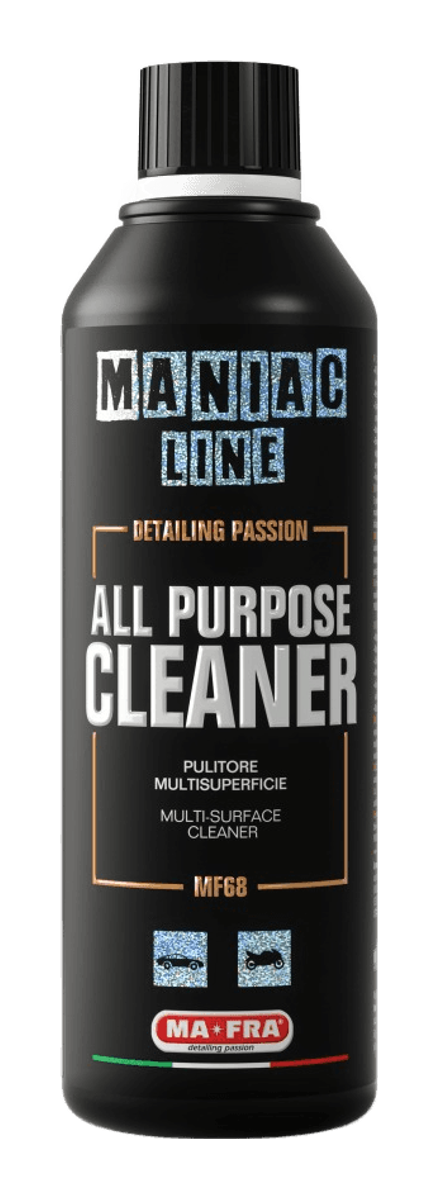
Maniac Line All Purpose Cleaner steps up to pH 10, pushing into genuinely alkaline territory. That extra alkalinity adds real cutting power on greasy engine bays and wheel wells without reaching for solvents — a different path to the same degreasing result.
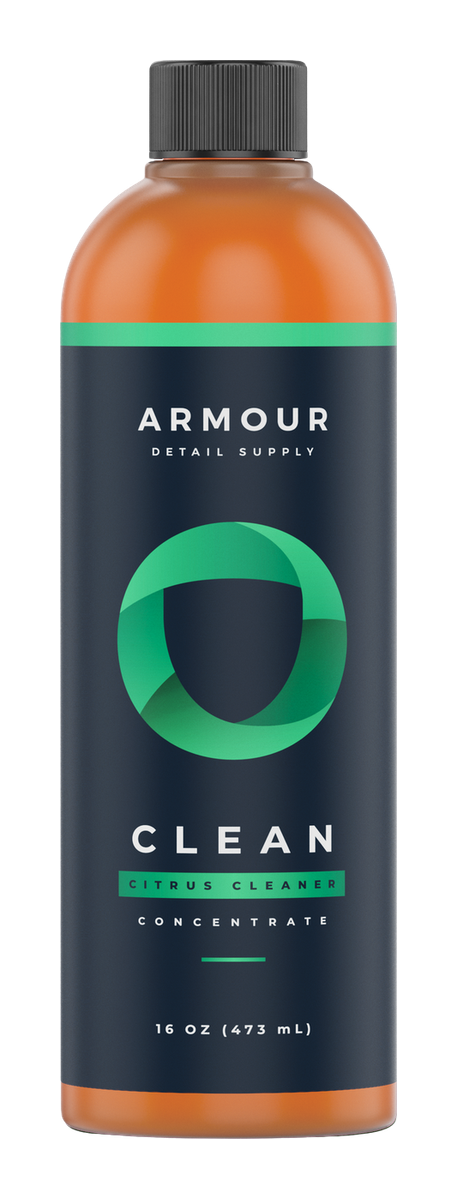
Armour Detail Supply CLEAN All Purpose Cleaner runs pH 10.5 at $0.39/oz, splitting the difference between mild surfactant cleaners and aggressive alkaline strippers. A solid middle-ground APC for detailers who want more bite from a single dilutable concentrate.
Compare These Products


How the Chemistry Works
Two surfactant classes do the heavy lifting here, and they're chosen to complement each other. Sodium laureth sulfate (SLES), the anionic component, generates foam and pulls greasy contamination off surfaces by reducing water's surface tension. The ethoxylated C9-11 alcohols, a nonionic surfactant, work the flanks: they penetrate into layered grime, road film, and organic residue without the charge-sensitivity issues that anionic surfactants face on certain surfaces. Running both together gives the formula broader cleaning reach than either surfactant alone. Tetrasodium EDTA binds the calcium and magnesium ions in hard water that would otherwise deactivate the surfactant system, keeping cleaning power consistent regardless of your water supply. Sodium xylenesulfonate acts as a hydrotrope, preventing the surfactant-rich concentrate from separating in the bottle. The trace amount of sodium hydroxide nudges pH upward just enough to assist saponification of light oils, while citric acid provides a buffering counterpoint. The result for the user: stable foam that clings, rinses clean, and works across a wide dilution window.
The dual-chelator setup is the interesting formulation decision. Tetrasodium EDTA is a generous inclusion for an APC, and the formulator added trisodium NTA at trace levels as a secondary chelator. NTA is cheaper and biodegrades faster than EDTA, but it's classified as a possible carcinogen at higher concentrations, which explains why it appears at trace levels. This pairing suggests the formula is engineered to perform in hard water regions where a single chelator might not sequester enough mineral content. For the user, this translates to fewer water spots after rinsing and more consistent cleaning whether you're on well water or city supply.
Twenty-three disclosed ingredients sounds comprehensive, but this is an SDS-driven partial disclosure, meaning only components with hazard classifications are listed. The surfactant system almost certainly includes co-surfactants or foam boosters that fall below hazard thresholds. Fragrance components account for nearly half the listed ingredients (twelve terpenes and esters), which tells you the scent profile was carefully constructed, not an afterthought. DMDM hydantoin as the preservative is a formaldehyde-releasing agent, effective at very low concentrations but relevant for users with skin sensitivities. Wear gloves during interior work or any prolonged contact.
What We Like
- Solvent-free, silicone-free formulation — eliminates the two most common causes of streaking and residue on interior plastics and glass, so you can clean dashboards and trim without a follow-up wipe-down to chase haze.
- Wide dilution window with a mild base pH — at 9.8 neat, even the strongest 1:1 mix stays well below the category's alkaline ceiling, making it safe for repeated use on leather, vinyl, and factory clear coats where a pH 12+ APC would cause cumulative damage.
- Dual-surfactant system pairs anionic and nonionic cleaners — the combination delivers stable foam on vertical panels at strong dilutions while rinsing clean at weaker ratios, giving one bottle genuine range from engine bay degreasing to interior detail work.
What to Know
- Mild pH trades away heavy-duty cutting power — The surfactant-forward chemistry cleans well on organic grime, but it won't touch baked-on brake dust or heavy oxidation the way a pH 12+ alkaline APC would. For those jobs, you need a dedicated wheel cleaner or degreaser alongside this bottle.
- "Danger" signal word at a modest pH signals concentrated surfactant irritation — Neat concentrate can cause serious eye and skin damage despite not being strongly alkaline. Gloves are a good idea when mixing, and dialing in your dilution ratio matters more here than with a ready-to-use spray.
- Concentrate savings disappear if you default to strong ratios — The flexibility to mix from light to heavy is a genuine advantage, but reaching for near-neat dilutions on routine tasks burns through product fast and delivers diminishing cleaning returns on anything that isn't heavy grease.
Who Should Buy This
If you're maintaining coated or waxed interiors and exteriors on a weekly or biweekly schedule, APX's surfactant-forward chemistry lifts fresh organic grime like fingerprints, food splatter, road film without stripping protection underneath. The solvent-free, silicone-free base makes it a strong pick for pre-coating surface prep on trim and plastics where residue contamination would kill adhesion. If your contamination is protein- or oil-based (kitchen grease on fleet interiors, bug splatter on paint), the dual-surfactant system emulsifies it more effectively than a single-surfactant alkaline APC at the same dilution. The concentrate format rewards high-volume use across multiple dilution ratios.
Want to see how this stacks up? Compare these 3 all purpose cleaners
Frequently Asked Questions
Can I use APX on ceramic-coated paint without degrading the coating? Yes. The surfactant-forward chemistry lifts contamination by emulsifying it rather than chemically attacking the surface underneath. At working dilutions (1:5 or weaker), there's no alkaline bite strong enough to compromise a cured ceramic coating. Rinse thoroughly after cleaning.
What dilution should I use for engine bay degreasing versus interior wipe-downs? Use 1:1 or 1:2 for engine bays where you're fighting baked-on grease and road grime. For interior plastics and leather, 1:8 to 1:10 is sufficient — the surfactant blend still foams and lifts fingerprints at those ratios without leaving residue.
How does APX compare to Chemical Guys Nonsense for interior cleaning? Nonsense discloses its full six-ingredient formula and runs a slightly lower pH, but it's sold ready-to-use at a fixed strength. APX's concentrate format lets you dial strength per task, and its dual-surfactant system (anionic plus nonionic) generates more foam for agitation on textured surfaces like carpet and fabric.
Why does APX carry a Danger signal word if the pH is relatively mild? The signal word comes from GHS classification of specific concentrate-level ingredients — primarily the surfactant package at full strength — not from extreme alkalinity. Once diluted to working strength, skin and surface risk drops substantially. Wear gloves when handling the concentrate.