Griot's Garage Iron and Fallout Remover: ChemCX Analysis
Ranked Performance
Pricing
Badges
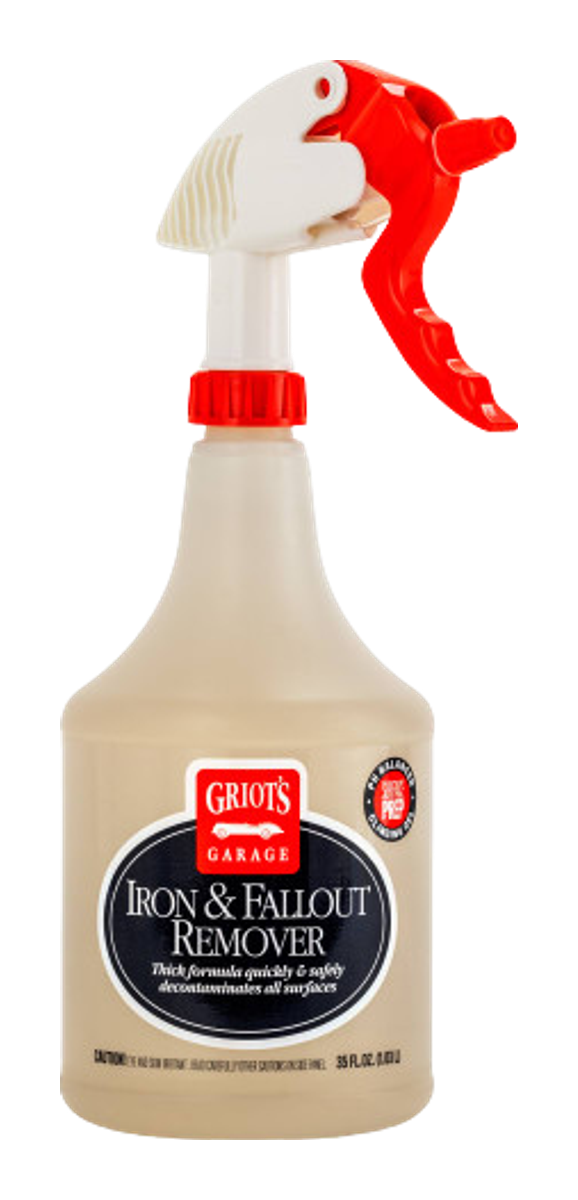
Griot's Garage Iron and Fallout Remover is a gel-format iron remover that clings to vertical panels instead of running off before it finishes working. Spray it on a wheel face or a rocker panel, and the gel stays put long enough to turn purple as it reacts with embedded brake dust. That extra dwell time on vertical surfaces is where it pulls ahead of thinner liquid iron removers that sheet down the panel and lose contact with the contamination they're supposed to dissolve.
Sodium thioglycolate does the work. It bonds with embedded iron particles and pulls them out of the clear coat chemically, no abrasion involved. The purple color change is that reaction happening in real time, so you can see where contamination is heaviest and whether the product needs more dwell. Anionic surfactants lift the dissolved iron into suspension so it rinses clean instead of redepositing. A citrus scent offsets the sulfur smell that comes with every thioglycolate formula, though it doesn't eliminate it entirely. The gel viscosity is the real formula decision here, and it solves a problem most iron removers ignore.
Specifications
| Attribute | Value |
|---|---|
| pH | 7.25 |
| Dilution Ratio | ready_to_use |
| Key Actives | Sodium Thioglycolate |
| Signal Word | Warning |
| Transparency | excellent |
| Biodegradable | Not disclosed |
Category Context
| Metric | This Product | Category Average | Category Range |
|---|---|---|---|
| pH | 7.25 | 6.5 | 3 - 11 |
| Price/oz | $0.63 | $0.79 | $0.35 - $1.36 |
Where It Lands
Griot's sits slightly alkaline of center in a category that skews mildly acidic. It lands 0.75 points above the 36-product category average, a modest offset, but meaningful because most thioglycolate iron removers cluster near neutral or dip acidic to accelerate the chelation reaction. The near-neutral working strength makes it safe for weekly use on coated wheels and ceramic-coated paint without the corrosion risk that comes with the sub-pH-4 acid-based competitors at the other end of the range.
It outperforms on contamination that's had a few weeks to bond like daily drivers parked near rail lines, cars returning from a cross-country trip where the gel format buys dwell time that runny competitors waste. For baked-on, months-old rail dust, a more aggressive acid-based product will work faster. At $0.63/oz, it's about 20% below the category average and undercuts the similarly formulated Gyeon Q2M Iron Redefined at $0.81/oz.
How It Compares
Closest Alternatives
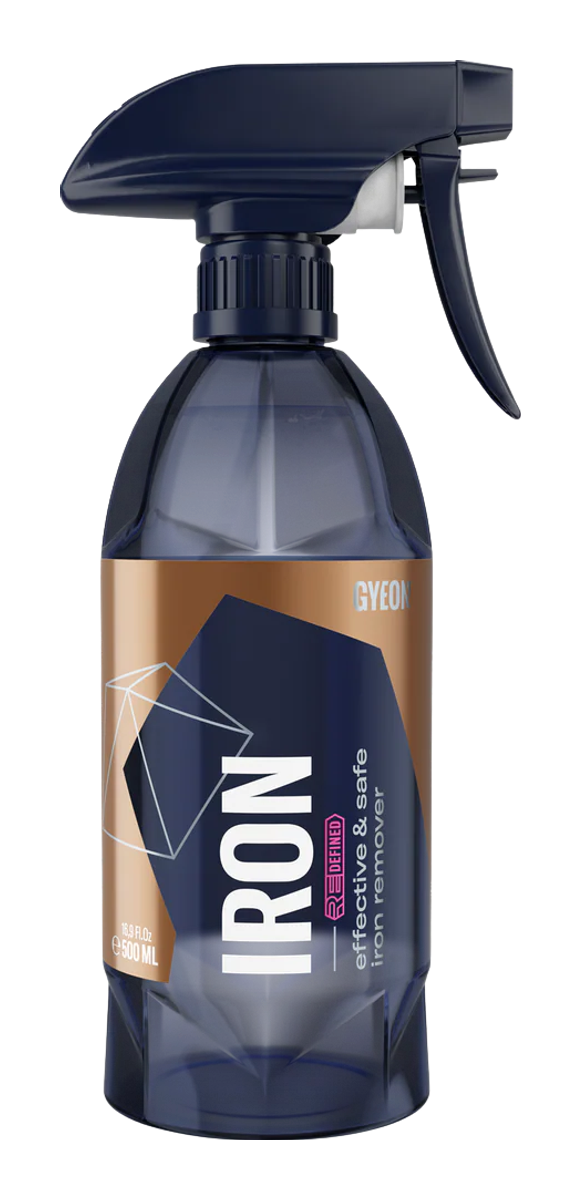
Gyeon Q2M Iron Redefined shares the same thioglycolate backbone and nearly identical neutral pH, making it the closest chemical twin in the category. The main separation is format. Gyeon runs a thinner liquid viscosity rather than a clinging gel, which trades dwell time on vertical surfaces for faster coverage on flat panels.
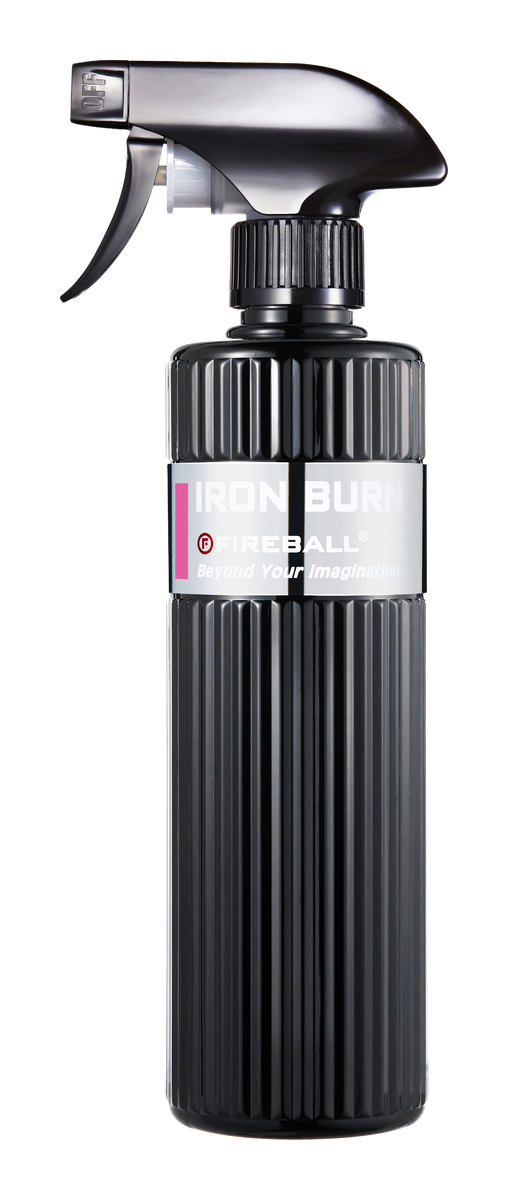
Fireball Iron Burn also operates at pH 7.5 with thioglycolate chemistry, but pairs it with a different surfactant package tuned for faster bleeding action. At $0.43/oz, it undercuts the Griot's by a third, a meaningful gap for anyone burning through bottles on multi-car maintenance days.
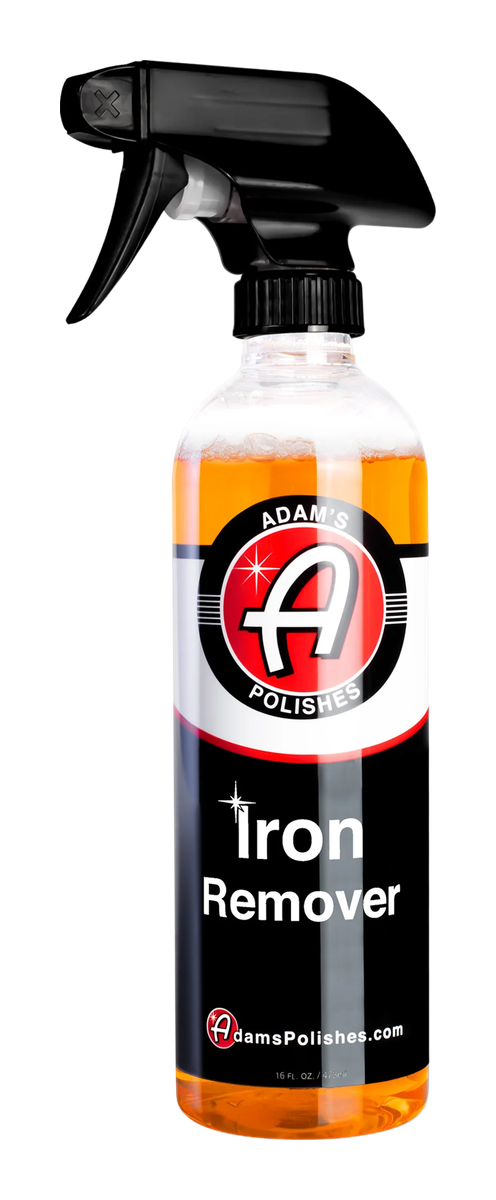
Adam's Polishes Iron Remover delivers the lowest cost per ounce of the three at $0.41/oz. A straightforward thioglycolate RTU at neutral pH, it handles routine iron removal without the gel format's extended dwell advantage.
Compare These Products
How the Chemistry Works
Sodium thioglycolate does the heavy lifting here, breaking the iron-oxygen bonds in embedded brake dust and converting ferric iron into a soluble thioglycolate complex, the purple bleed users see on the surface. But a reactive agent alone doesn't make a usable product. The formulation pairs that chemistry with xanthan gum, a polysaccharide thickener that converts the liquid into a clinging gel. On a vertical wheel spoke or a rocker panel, the gel holds the thioglycolate against contamination long enough for the reaction to complete instead of sheeting off in seconds. Dual anionic surfactants, sodium lauryl sulfate and sodium C10-18 secondary alkyl sulfonate, then emulsify the dissolved iron complexes and any co-present road film so everything rinses clean. The citrus fragrance serves a functional purpose too: sodium thioglycolate carries a sulfur odor that most people find unpleasant, and the scent blend masks enough of it to make extended dwell times tolerable in a garage.
Tetrasodium iminodisuccinate is the formulation choice worth pausing on. This chelator, derived from aspartic acid, binds calcium and magnesium ions in hard water that would otherwise deactivate the surfactant system and leave hazy mineral deposits on the surface. Most iron removers skip a dedicated chelator entirely, relying on the thioglycolate itself to handle metal ions. Adding one here means the product should perform consistently regardless of local water hardness, a real advantage for users who don't rinse with deionized water. The product's eco claims reference a biodegradable chelator, and tetrasodium iminodisuccinate fits that description, though no broader biodegradability data is disclosed for the formula as a whole.
Thirteen disclosed ingredients is unusually transparent for this category. Sodium xylenesulfonate appears as a hydrotrope, keeping the concentrated surfactant-and-thioglycolate blend from separating in the bottle, while sodium sulfate acts as a viscosity co-modifier alongside the xanthan gum. Two glycol ether solvents, propylene glycol butyl ether and its 2-butyl isomer, handle organic residues like tar micro-deposits that thioglycolate ignores. The inclusion of both isomers suggests the formulator tuned evaporation rate: the standard ether flashes off faster while the 2-butyl variant lingers, extending the solvent's contact time to match the gel's dwell window. Every ingredient has a visible job here. No obvious padding.
What We Like
- Xanthan gum gel matrix — holds the thioglycolate payload against vertical surfaces like wheel barrels and rocker panels, buying 2–3× the effective dwell time of liquid-format competitors that sheet off within seconds.
- Dual glycol ether solvent system — Propylene glycol butyl ether and its 2-butyl isomer cut through road film and tar haze ahead of the thioglycolate, so the active reaches embedded iron faster instead of sitting on top of organic contamination.
- Neutral pH with iminodisuccinate chelation — lets you spray painted panels and ceramic coatings without the alkaline or acidic bite that limits many iron removers to wheel-only duty.
What to Know
- Gel cling trades for rinse effort — the xanthan matrix that buys extra dwell time on vertical surfaces also resists sheeting off during the rinse step. Budget extra water pressure and time to flush residue from intricate wheel spoke patterns and barrel crevices. Leaving gel behind invites water spotting.
- RTU format locks you into one strength — no option to run a lighter dilution for weekly maintenance or a heavier hit for neglected wheels. Every spray costs the same per ounce whether the contamination is light or severe.
- Thioglycolate sulfur odor persists under the citrus masking agent — the active concentration means the characteristic egg smell breaks through, especially in enclosed garages. Gloves are worth wearing given the signal word rating.
Who Should Buy This
If your wheels accumulate heavy iron fallout in spoke crevices and barrel surfaces, the gel format earns its keep; it clings where liquid iron removers drain away before the thioglycolate complex finishes dissolving embedded deposits. Same logic applies to rocker panels and lower bodywork behind the wheels, where vertical surfaces punish thin formulas. For routine weekly maintenance on easy-access flat faces, a liquid-format alternative stretches further and rinses faster. But for any vertical or recessed surface where dwell time decides whether contamination actually dissolves, this is the format that stays put and finishes the job.
Want to see how this stacks up? Compare these 3 iron removers
Frequently Asked Questions
Can I use this on ceramic-coated wheels? Yes. The neutral pH won't attack ceramic or sealant layers the way acidic iron removers can. Sodium thioglycolate targets iron oxide selectively, leaving the coating intact. Rinse thoroughly. The gel formula needs more water pressure to clear than a liquid would.
Why does the purple reaction seem slower than other iron removers I've used? The gel matrix limits how fast thioglycolate migrates to the iron particles. Expect full color change in 3–5 minutes rather than the 1–2 minutes typical of thin liquid formulas. That slower spread is the trade-off for vertical cling.
How does Griot's compare to Adam's Iron Remover? Both use thioglycolate at a similar neutral pH, but Adam's runs a standard liquid format at roughly 35% lower cost per ounce. Griot's gel cling justifies the premium on vertical surfaces and intricate spoke patterns where liquids drain before the chemistry finishes working.
Do I need gloves when using this product? Yes. Thioglycolate penetrates skin readily and can cause irritation even at neutral pH. Wear nitrile gloves.