Fireball Iron Burn: ChemCX Analysis
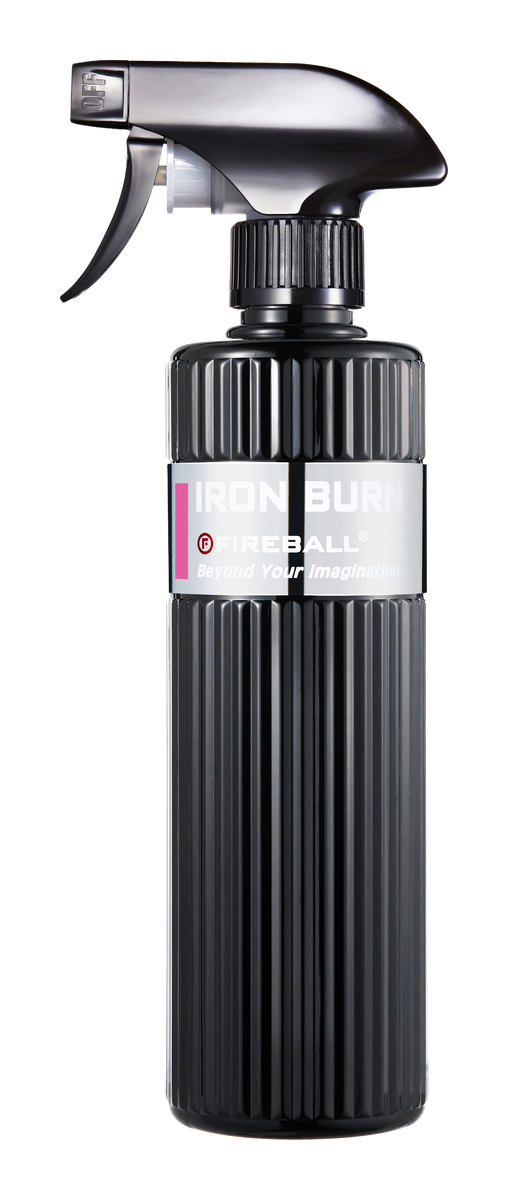
Fireball Iron Burn sprays on clear and turns purple as it reacts with iron contamination embedded in your paint. The color change is genuinely useful: you can see exactly where the contamination is heavy, where it's light, and when the product has finished working. Spray it on, wait a few minutes, and the purple bleeding tells you what's happening before you touch the surface.
Ammonium thioglycolate does the work. It bonds to iron particles stuck in your clear coat and converts them into a water-soluble compound, which is the purple runoff you're rinsing away. The formula runs at a neutral pH, so it sits in a safe range for coatings and paint protection film during normal dwell times. The disclosed concentration of ammonium thioglycolate is high, in the 10-30% range, which puts real chemical muscle behind each application. Straightforward iron removal chemistry, executed with enough active ingredient to handle serious contamination.
Specifications
| Attribute | Value |
|---|---|
| pH | 7.5 |
| Dilution Ratio | RTU (Ready-to-Use) |
| Key Actives | AMMONIUM THIOGLYCOLATE |
| Signal Word | Warning |
| Transparency | excellent |
| Biodegradable | Yes |
Category Context
| Metric | This Product | Category Average | Category Range |
|---|---|---|---|
| pH | 7.5 | 6.5 | 3 - 11 |
| Price/oz | $0.43 | $0.79 | $0.35 - $1.36 |
Where It Lands
Fireball Iron Burn lands in the neutral-pH camp of iron removers, sitting a full point above the category average at 7.5. That matters because most iron removers skew acidic, designed to dissolve contamination aggressively but carrying more risk to trim, rubber, and sensitive coatings. The neutral approach trades raw dissolving speed for surface safety, making it a better fit for routine decontamination on coated or film-protected vehicles where you'd rather not stress the surface chemistry.
For heavy contamination on neglected paint, an acidic formula will work faster. But for quarterly maintenance washes or pre-coating prep where you want thorough iron removal without babysitting dwell times near trim, this neutral profile earns its place. At $0.43/oz, it sits well under the category average and nearly matches Adam's Iron Remover at $0.41/oz, making liberal application on full vehicles financially painless.
How It Compares
Closest Alternatives
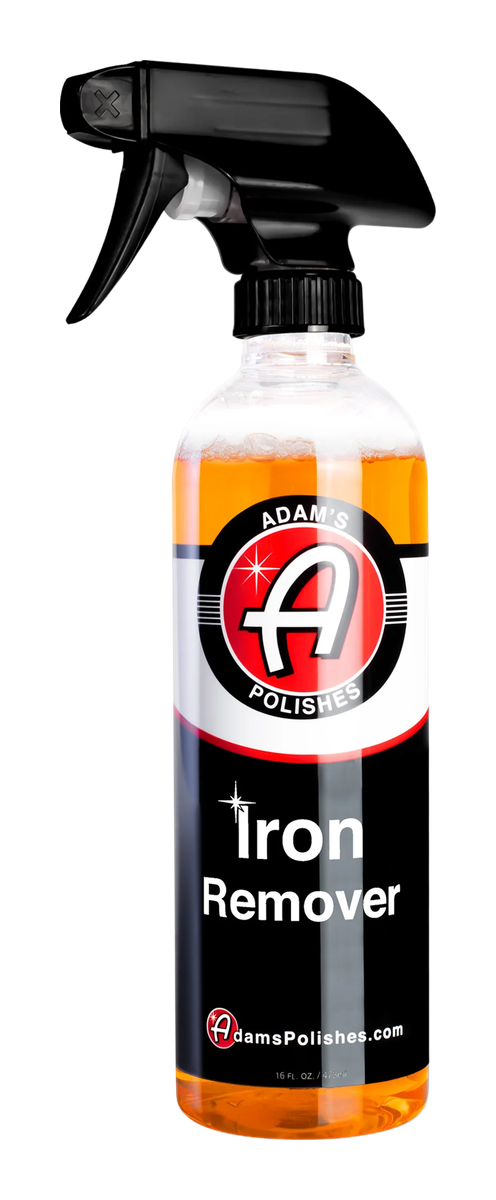
Adam's Polishes Iron Remover shares the same neutral pH and thioglycolate chemistry, making it the closest formulation match in the category. At $0.41/oz, it runs nearly identical in cost — the decision between these two comes down to surfactant package and dwell behavior rather than any fundamental chemistry difference.
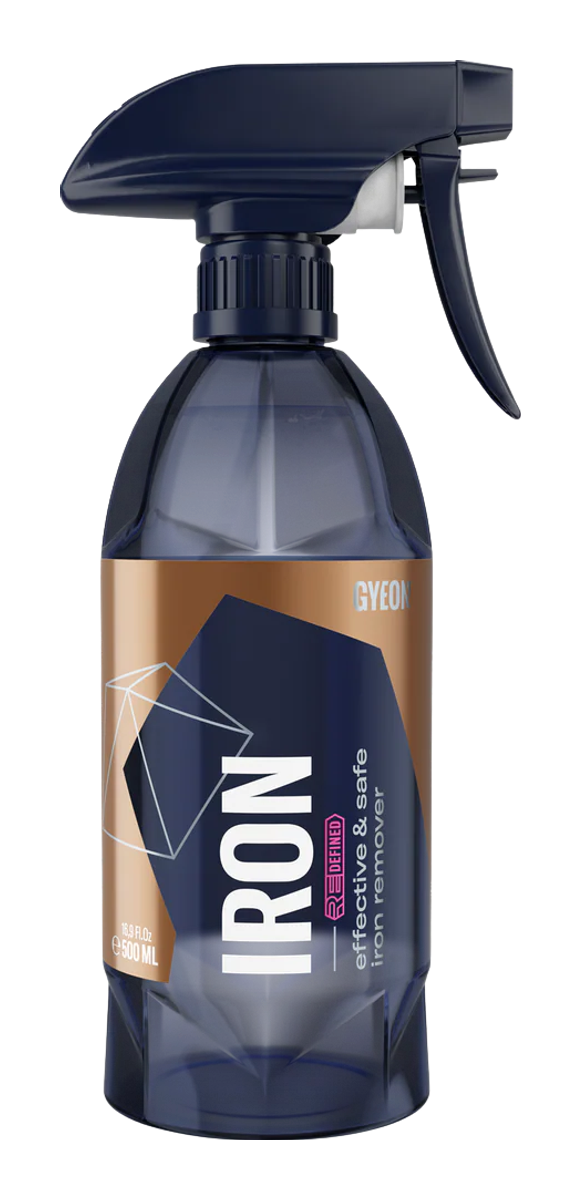
Gyeon Q2M Iron Redefined takes a different tack. Despite matching on pH, Gyeon's formulation is built around a more refined surfactant and chelation system designed for coated surfaces, prioritizing safe interaction with ceramic coatings over raw decontamination speed. That engineering costs nearly double per ounce.
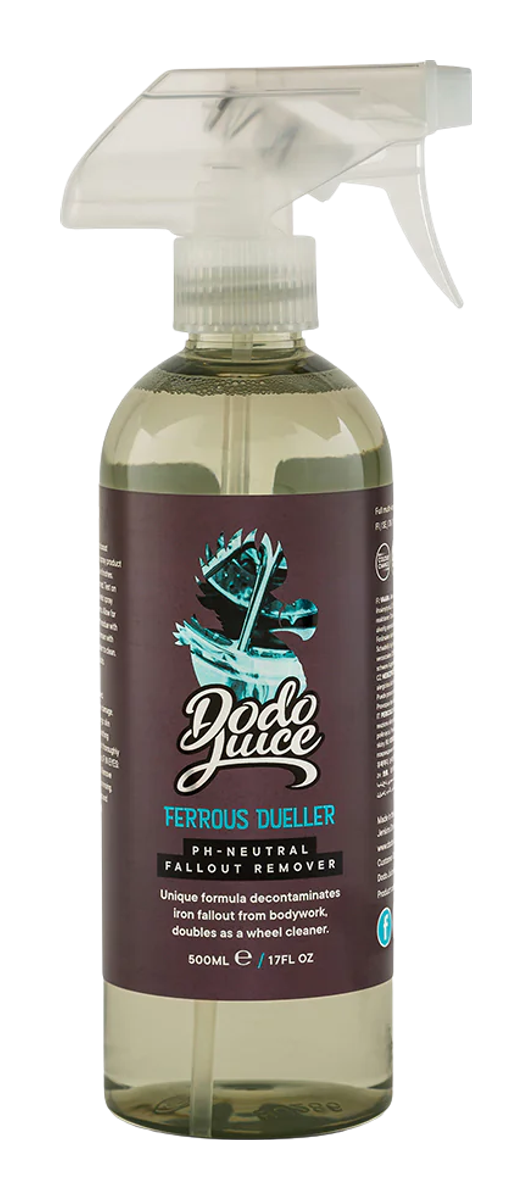
At effectively zero cost per ounce, Dodo Juice Ferrous Dueller operates at the same neutral pH but represents a concentrate-driven value play — a stark price gap that makes it worth investigating for high-volume users.
Compare These Products
How the Chemistry Works
Ammonium thioglycolate drives the reaction you see on the surface. The sulfur-containing molecule cleaves iron oxide bonds through a reduction reaction, converting insoluble ferric iron (Fe³⁺) into soluble ferrous iron (Fe²⁺). That conversion is what produces the purple bleed: the thioglycolate-iron complex is visibly colored, giving you real-time feedback on where contamination is concentrated. Tetrasodium EDTA then chelates the liberated iron ions, wrapping them in a soluble molecular cage that prevents redeposition onto the paint. These two chemistries work in sequence: the thioglycolate breaks the bond, and the EDTA carries the debris away at rinse. Lauramine oxide handles the physical side of the equation, lowering surface tension so the solution wets paint evenly and generating stable foam that holds the active chemistry against vertical panels instead of sheeting off immediately. The result is a system where dwell time translates to contact time.
Lauramine oxide is a smart surfactant pick for this application. Classified as amphoteric, it performs well across a wide pH range, which matters here because the reaction itself shifts local pH as iron dissolves. More practically, lauramine oxide builds thick, clingy foam without requiring a co-surfactant. That foam structure keeps the thioglycolate in contact with embedded particles long enough for the reaction to complete, which is why you'll notice the purple color deepening over 3–5 minutes of dwell rather than appearing all at once. The characteristic sulfur smell intensifies in parallel — that's the thioglycolate breaking bonds, and it's a reliable indicator that the chemistry is still working.
The disclosed ingredients cover the core reaction system, but this is a partial SDS disclosure limited to hazardous and regulated components. Undisclosed ingredients almost certainly fill functional gaps — fragrance masking agents to temper the sulfur odor, corrosion inhibitors to protect trim and metal brightwork, and possibly additional wetting agents or viscosity modifiers. Dipropylene glycol appears at under 1%, likely serving as a cosolvent to keep the thioglycolate and surfactant uniformly blended in solution. From the disclosed portion, Fireball committed the formulation budget to the working chemistry rather than spreading it across a complex surfactant system, pairing a high-concentration active with a chelator that ensures clean rinse behavior.
What We Like
- High thioglycolate loading at neutral pH — The 10-30% ammonium thioglycolate concentration delivers aggressive iron dissolution without the acidic pH that most competitors rely on. You get strong decontamination capability without risking etching on clear coats, PPF, or ceramic coatings during normal dwell times.
- Visual reaction feedback — The purple color change maps contamination density in real time, letting you identify heavy deposits that need a second pass and confirming complete removal before you rinse. That eliminates guesswork on a process where under-treatment leaves iron behind and over-treatment wastes product.
- Below-average cost for RTU convenience — At roughly half the category average price per ounce, Iron Burn removes the dilution step without the price penalty concentrates typically offset. No mixing errors, no wasted product from incorrect ratios.
What to Know
- The 120-second dwell window is tight for a full-vehicle decontamination. You get a surface-safe neutral pH, but the tradeoff is strict timing. Miss your window and the high thioglycolate concentration can stain or damage trim and glass. Working in sections rather than spraying the whole car at once is the practical workaround, but it adds real time to the job.
- Sulfur smell is the cost of thioglycolate chemistry. The reaction that turns purple and dissolves iron also releases sulfur compounds that linger on hands and in enclosed spaces. Gloves and outdoor use help, but the smell is unavoidable.
- RTU format locks you into one concentration. No option to dilute lighter for maintenance washes or run stronger for heavy contamination. You use the same strength on a daily driver and a neglected track car, which means you're overapplying on light jobs and potentially underperforming on severe ones.
Who Should Buy This
If you're decontaminating painted surfaces or PPF where acidic chemistry is off the table, this is the right tool. The thioglycolate mechanism dissolves embedded iron without the acid-driven corrosion risk that lower-pH removers carry, a meaningful advantage on ceramic coatings, wraps, and film. It also fits well as a pre-coating prep step: clearing ferric contamination before a coating goes down ensures nothing reactive sits under your protection layer. The tight dwell window demands attention, so full-vehicle passes on large SUVs or neglected daily drivers are harder to manage than focused panel-by-panel work. For targeted decontamination on surfaces where chemistry has to be gentle but effective, Iron Burn delivers.
Want to see how this stacks up? Compare these 3 iron removers
Frequently Asked Questions
Can I use Iron Burn on glass or chrome trim? Be cautious with this application. Thioglycolate at the concentration in this formula (10-30%) can stain glass and discolor chrome if left beyond the 120-second dwell window. Rinse glass overspray immediately and mask chrome trim before application. Always test on an inconspicuous area first.
Why does it smell so strong? That's the sulfur in ammonium thioglycolate doing its job. The odor intensifies as the molecule breaks iron oxide bonds — a stronger smell generally tracks with heavier contamination on the surface. Work outdoors or in a well-ventilated bay.
How does Iron Burn compare to Gyeon Iron Redefined? Both run neutral-pH thioglycolate chemistry, but Gyeon discloses its full formula at five ingredients while Fireball's five represent only partial disclosure. Gyeon costs nearly twice as much per ounce. If full ingredient transparency matters to you, Gyeon wins; if cost efficiency matters more, Iron Burn delivers equivalent chemistry for less.