Ethos Car Care Iron and Fallout Remover: ChemCX Analysis

Ranked Performance
Pricing
Ethos Car Care Iron and Fallout Remover pulls embedded iron particles out of paint and wheels, and it bleeds red as it works so you can watch the contamination lift. That color change is the useful part: you spray it on, it goes purple-red where iron sits, and you know the fallout is dissolving without guessing. It applies with almost no smell, which is a break from the usual rotten-egg funk these products carry. It rinses off clean and doesn't need scrubbing to do its job.
The active is (2-hydroxyethyl)ammonium mercaptoacetate, a thioglycolate that grabs onto iron particles and dissolves them into solution. That reaction is what turns the product red on contact. Nonionic surfactants help it sheet across the surface and rinse away without leaving residue behind. It's a pH-neutral build, like most iron removers, so it stays safe on coatings, trim, and sensitive finishes while it works. Nothing unusual in the chemistry, but the low-odor application and clean rinse make it easier to live with than most.
Specifications
| Attribute | Value |
|---|---|
| pH | 7 |
| Dilution Ratio | RTU (Ready-to-Use) |
| Key Actives | (2-hydroxyethyl)ammonium mercaptoacetate |
| Signal Word | Warning |
| Transparency | excellent |
| Biodegradable | Not disclosed |
Category Context
| Metric | This Product | Category Average | Category Range |
|---|---|---|---|
| pH | 7 | 6.5 | 3 - 11 |
| Price/oz | $1.06 | $0.79 | $0.35 - $1.36 |
Where It Lands
This sits squarely in the mainstream of the iron remover category. It's a neutral formula built for regular decontamination rather than emergency rescue work. At pH 7, it lands right at the category average of 6.5 and steers clear of the acidic outliers that drop to pH 3. That neutrality is a deliberate trade-off: it won't strip wax or etch trim the way an aggressive acid can, but it also won't chew through the worst rail dust in a single pass. This is a maintenance decontaminator, not a heavy hitter for years of neglect.
Consider this product for routine paint prep and moderate fallout, especially on coated or sealed finishes you don't want to gamble on. It's overkill for a lightly driven car and underpowered for severe industrial contamination. At $1.06/oz it runs premium — well above the $0.79 average, though it undercuts DIY Detail's $1.41.
How It Compares
Closest Alternatives
DIY Detail Iron Remover matches the neutral-pH thioglycolate approach almost exactly — same color-change mechanism, same clean rinse. At $1.41/oz it runs 33% more expensive, so you pay for the closest formulation match.
Chemical Guys Decon Pro tackles the same job but bundles it with clay-lube functionality, letting you decontaminate and clay in one pass. At pH 7.28 and $1.19/oz, it's a hybrid rather than a dedicated iron remover.
NV Car Care Purify Fallout Remover Clay Lubricant delivers comparable neutral-pH decontamination at $0.86/oz. The lower cost per ounce makes it the value pick when you're treating multiple vehicles or full wheel sets.
Compare These Products
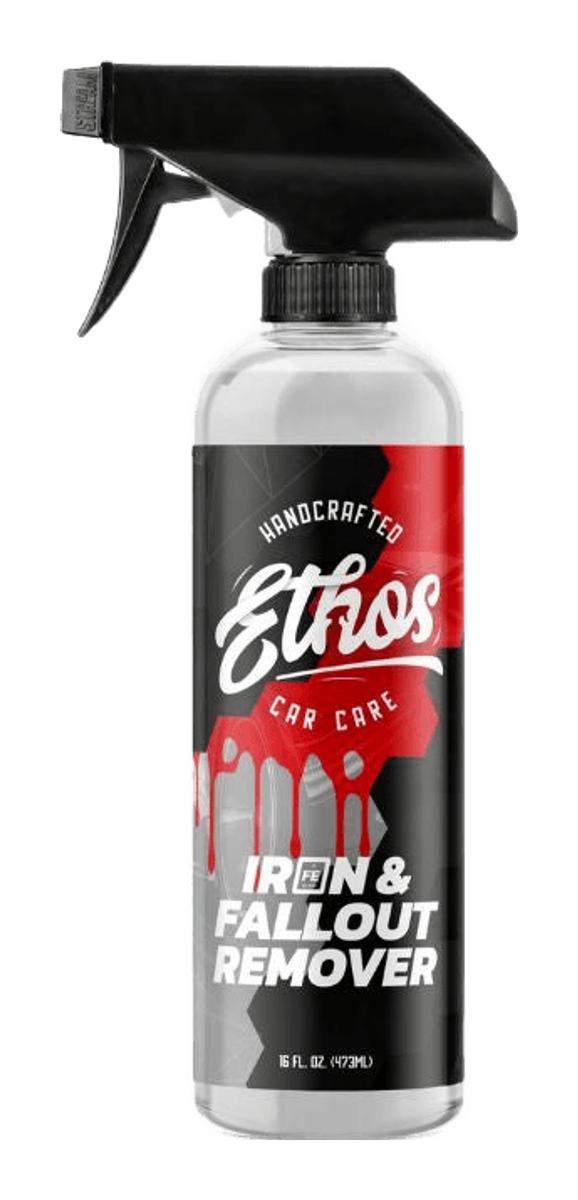
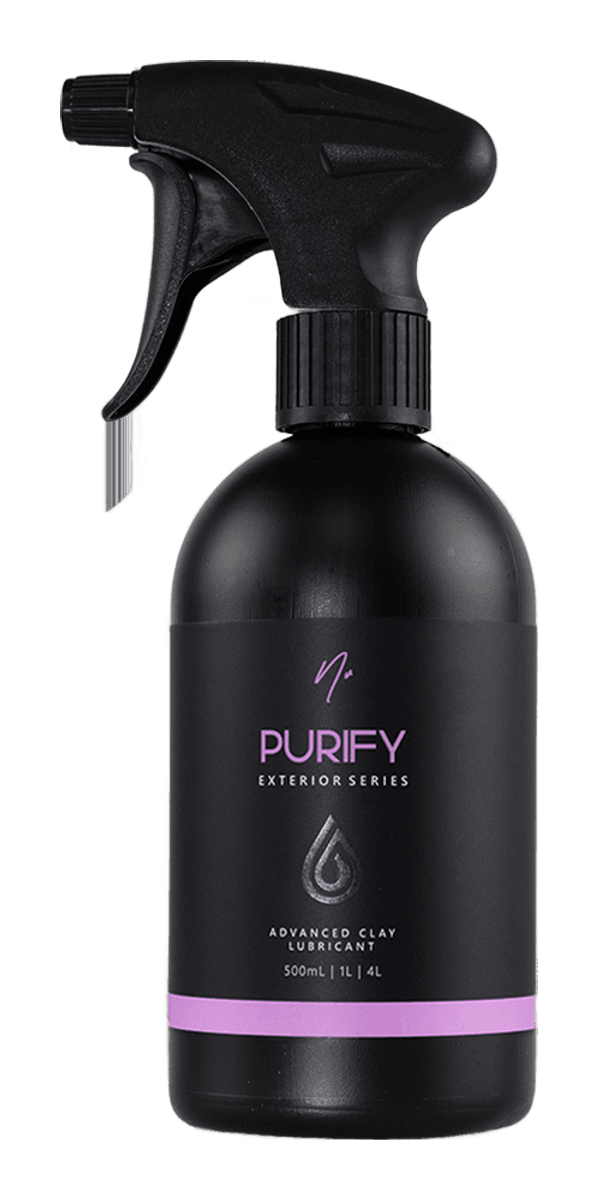
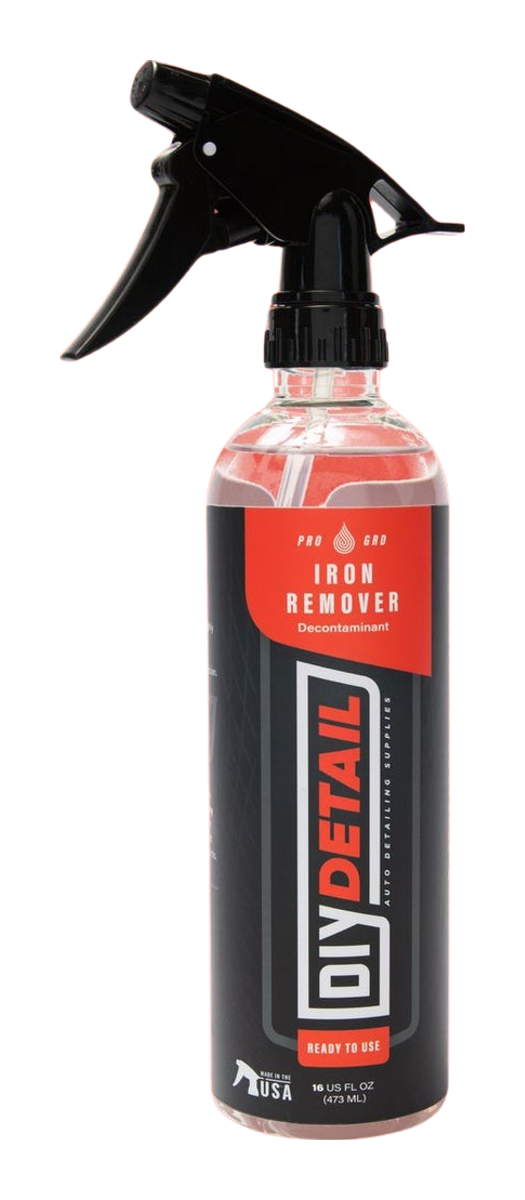

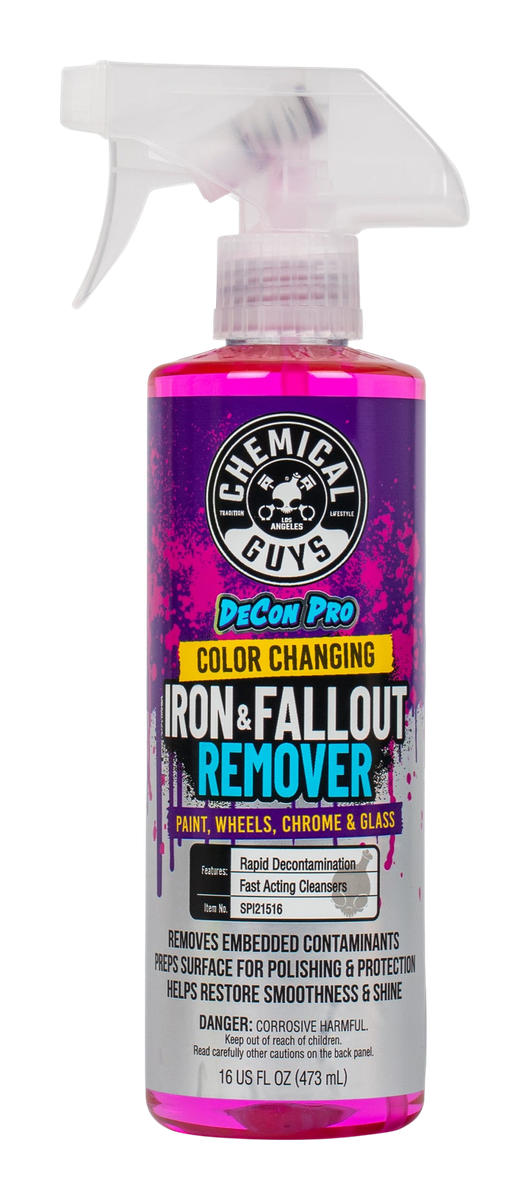
How the Chemistry Works
The color change is a chemical reaction, not a dye. The thioglycolate active carries a sulfur-based group that grabs onto iron atoms embedded in your paint and forms a soluble iron-sulfur complex. That complex is what bleeds red. As the reaction proceeds, the bound iron lifts off the surface and stays suspended in the liquid, ready to rinse away. A single nonionic surfactant, ethoxylated C11-15 secondary alcohols, wets the surface so the thioglycolate reaches every particle and keeps the loosened contamination emulsified until you rinse. This is why the product works without aggressive agitation: the chemistry does the pulling, and the surfactant handles the carrying. The clean rinse and lack of residue trace back to that surfactant staying nonionic, which sheets off cleanly rather than leaving an ionic film.
The formulator paired the thioglycolate with disodium 4,5-dihydroxybenzene-1,3-disulphonate, a chelator built specifically to sequester iron and heavy metals. This is a smart division of labor. The thioglycolate does the reactive heavy lifting, and the chelator mops up free iron ions that would otherwise re-deposit or blunt the reaction. The result is a more thorough decontamination than thioglycolate alone would manage. The minimal odor comes down to fragrance choice: citral, alpha terpineol, benzyl benzoate, and a muguet-type fragrance alcohol soften the sulfur smell that plagues cheaper iron removers. You still catch a whiff, but it reads clean rather than rotten-egg.
The disclosed list covers hazardous and regulated components only, so treat it as part of the formula, not the whole. A trace of 1,4-dioxane at 0.0000043% shows up as an expected byproduct of manufacturing ethoxylated surfactants, not an added ingredient, and the vanishingly small number tells you it is well controlled. The co-solvent 2-(2-butoxyethoxy)ethanol adds grease-cutting muscle, useful on wheels carrying brake grime alongside iron.
What We Like
- Neutral pH on a decontaminant — most iron removers lean acidic to boost speed, but this one skips the acid entirely, so you can decon a ceramic-coated hood or a freshly sealed panel without stripping the protection you paid for.
- Low-odor thioglycolate — sulfur-based iron removers usually reek; this one tones down the rotten-egg smell, which matters when you're working in a closed garage or reapplying to a full set of wheels.
- Ready-to-use format — no mixing, no dilution math, no guessing the ratio. Spray, watch it bleed red, rinse. That consistency makes the color-change indicator actually reliable.
What to Know
- The gentle chemistry trades speed for safety — the thioglycolate active runs at a moderate concentration, so heavily contaminated wheels need a longer dwell and possibly a second pass. You skip the acid burn on your coatings, but you wait for it.
- Ready-to-use means no ratio guesswork, but no cost savings either — every ounce you buy is working strength, so you carry more product and pay more per treated panel than a concentrate would cost. Convenience is the whole pitch here.
- Neutral pH still earns a Warning label — the sulfur chemistry is skin-irritating despite the friendly pH. Gloves are a smart call during longer decon sessions.
Who Should Buy This
Reach for this when you're decontaminating a ceramic-coated or freshly sealed panel and can't risk an acid stripping the protection. The neutral thioglycolate chemistry dissolves iron without touching your coating. It also earns its place on a monthly maintenance wash, where the color change lets you confirm every embedded particle lifts before you clay or seal. RTU means no mixing, so it fits a quick wheel-and-arch decon between full details. If you're rescuing wheels neglected for months, an acidic remover will move faster. For routine decon that keeps your paint safe, this is the tool that does the job cleanly.
Want to see how this stacks up? Compare these 3 iron removers
Frequently Asked Questions
Can I use this on wheels while they're hot? No. Spray it on cool wheels out of direct sun. Heat evaporates the product before the thioglycolate can bond with the iron, so the reaction stalls and you waste product. Let brakes cool fully after a drive.
Why did my spray barely turn red on heavily contaminated wheels? Heavy iron deposits often need a longer dwell or a second application. The active runs at a moderate strength, so it dissolves iron steadily rather than instantly. Give it several minutes, then reapply if the color stops developing before the fallout is gone.
How does this differ from Chemical Guys Decon Pro? Both use the same color-change decontamination mechanism at a neutral pH. Ethos discloses more of its formula. Decon Pro is a touch cheaper per ounce. Performance is comparable; pick on transparency or price.
Does it stink? Minimal odor, unlike many sulfur-based iron removers. Still work in ventilation and wear gloves — always test an inconspicuous spot first.