Detail Co. B.D.E: ChemCX Analysis

Pricing
Badges
Quick Answer
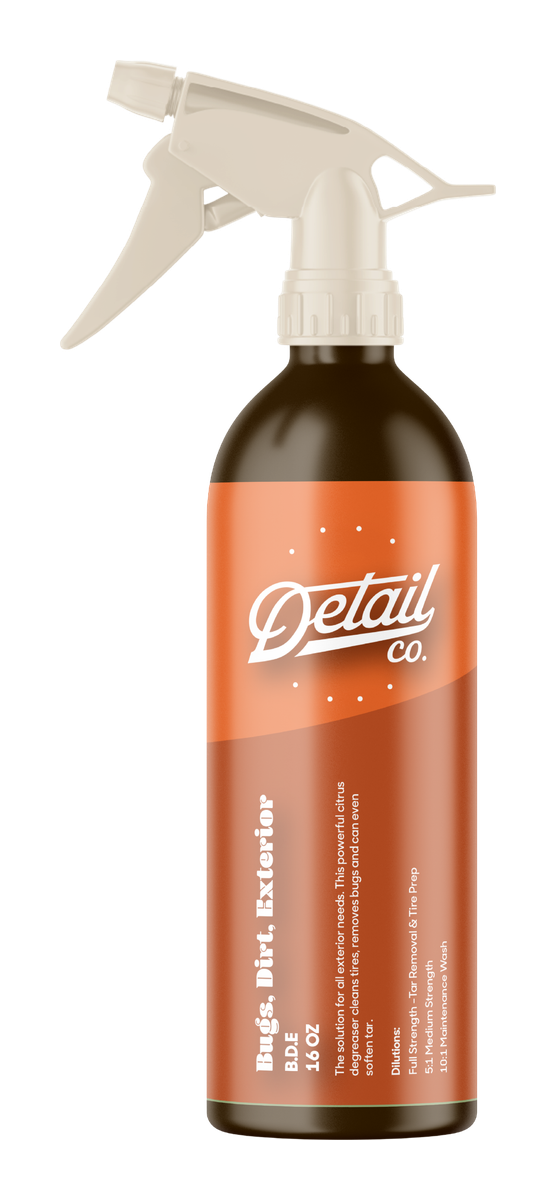
Detail Co. B.D.E combines bug removal, tar dissolution, and tire preparation into a single alkaline concentrate — a multi-role approach that most dedicated bug removers skip. The citrus-augmented alkaline formula sits among several products at the same moderate-alkaline level, but the flexible dilution range from 5:1 to 10:1 lets detailers dial intensity per task.
What It Is
Detail Co. markets B.D.E as a multi-purpose alkaline concentrate aimed at bug removal, tar breakdown, and tire prep. The alkaline chemistry works by saponifying organic residues like bug splatter, road film, oily grime, and loosening them for rinse-off rather than requiring heavy agitation. Sold as a concentrate at 5:1 to 10:1 dilution, a single bottle stretches across multiple washes and lets users dial strength to the task.
Specifications
| Attribute | Value |
|---|---|
| pH | 11.5 |
| Dilution Ratio | 5:1 to 10:1 |
| Key Actives | Silicic acid (H4SiO4) |
| Signal Word | Danger |
| Transparency | excellent |
Category Context
| Metric | This Product | Category Average | Category Range |
|---|---|---|---|
| pH | 11.5 | 11.1 | 8 - 13 |
| Price/oz | $0.28 | $0.45 | $0.12 - $0.95 |
Where It Lands
B.D.E's neat pH of 11.5 sits right at the category average of 11.1 for bug removers. Diluted 5:1 to 10:1, working pH drops to roughly 10.8 — enough alkalinity to soften splattered insects and light tar, but not so aggressive that it threatens coatings or trim on contact. For fresh bug splatter and routine decon, that working strength handles the job. Caked-on lovebugs baked in summer sun may need the stronger 5:1 mix or a brief dwell.
At $0.28/oz neat, B.D.E already undercuts the category average of $0.45/oz by 38%. Diluted 5:1, effective cost drops to roughly $0.05/oz of working solution. That's meaningful savings against Chemical Guys Bug & Tar at $0.39/oz neat, or Gtechniq W8 at $0.47/oz.
How It Compares
Closest Alternatives
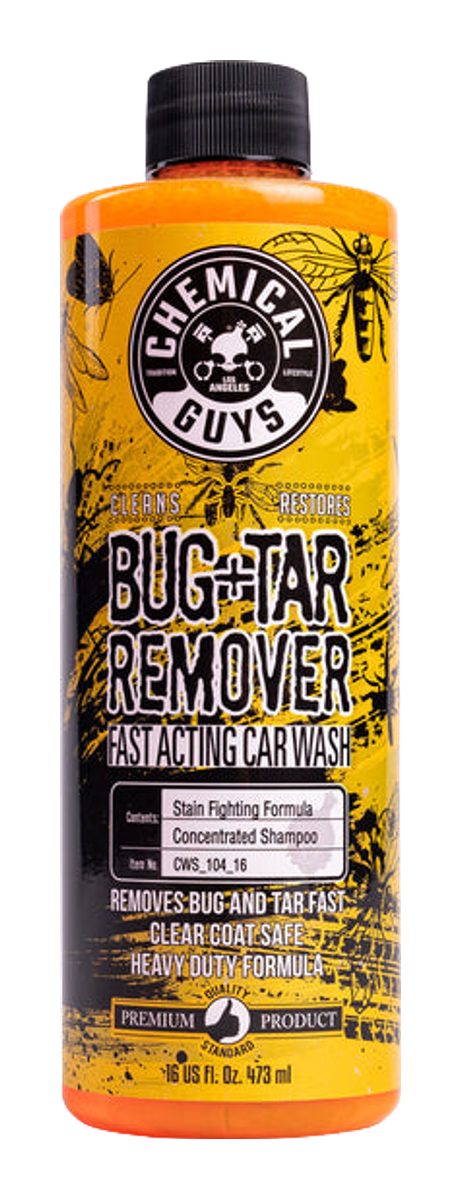
Chemical Guys Bug & Tar Remover runs nearly identical chemistry at pH 11.4 but costs 39% more per ounce. It arrives ready-to-use, which suits detailers who want grab-and-spray convenience over concentrate economics.
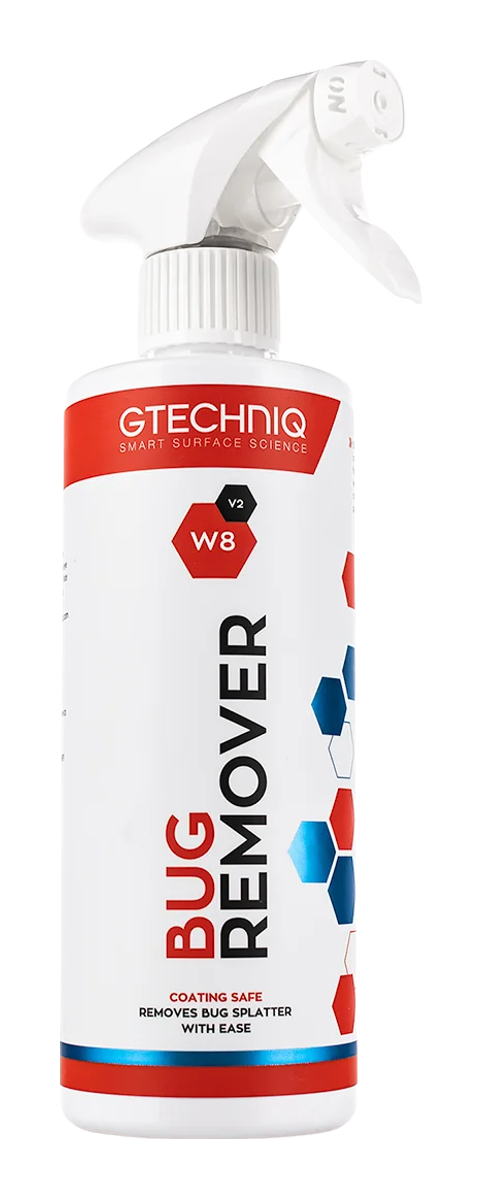
Gtechniq W8 Bug Remover sits at pH 11.6, functionally the same alkalinity, but carries a 68% price premium. The trade-off buys into Gtechniq's coated-vehicle ecosystem, where cross-compatibility with their protection products matters.
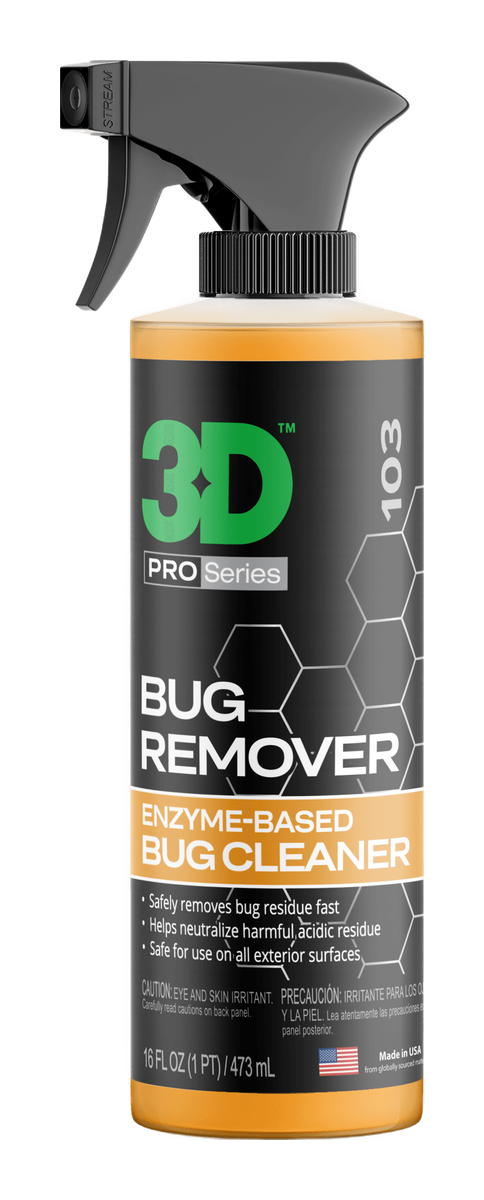
3D Bug Remover steps up to pH 12, a half-unit stronger. That extra alkalinity hits dried-on bug proteins harder, making it a better match for neglected or sun-baked impacts where a milder formula needs more dwell time.
Compare These Products



How the Chemistry Works
Silicic acid (H4SiO4) at 2.5–5% drives the cleaning here. In solution it generates an alkaline environment that saponifies the oily binders in bug splatter, turning lipid-based residues into water-soluble soaps that rinse clean. It also provides mild silicate buffering, keeping the working pH stable as the product encounters acidic contamination on the surface.
A single anionic surfactant, a C14-16 alkane hydroxy/alkene sulfonic acid, handles the mechanical lifting. It foams on contact, encapsulates loosened debris, and keeps it suspended so it doesn't redeposit. Tetrasodium EDTA works alongside as a chelating agent, sequestering calcium and metal ions from hard water and from the bug residue itself. That lets the surfactant perform at full efficiency regardless of your water supply.
Two smaller additions round out the formula. Butoxyethanol at 1–2% dissolves both oil-based and water-based grime in one pass. D-limonene, a citrus-derived solvent, adds degreasing power while glycerine keeps the product from flash-drying on hot panels, giving the actives more dwell time to work.
What We Like
- Three jobs, one bottle — Bug removal, tar dissolution, and tire prep from a single concentrate eliminates redundant products from your shelf and simplifies inventory for mobile detailers
- Citrus-enhanced alkaline system — Citrus solvents boost degreasing beyond what the alkaline base achieves alone, giving the formula an edge on road film and oily bug residue that straight alkaline cleaners can leave behind
- Wide dilution range — Running 5:1 for heavy bug strikes or 10:1 for light maintenance lets you match strength to the task and stretch effective cost well below the concentrate price
What to Know
- "Danger" signal word means this product contains caustic actives that can burn skin and eyes on contact. Gloves and eye protection are strongly recommended, especially when handling the concentrate.
- Citrus components in the formula can stain paint or unpainted trim if the product dries on the surface. Work in shade, keep panels wet, and rinse within two minutes of application.
- As a concentrate, B.D.E requires dilution before use. That means keeping spray bottles on hand and measuring ratios. The upside: one gallon stretches into several gallons of working solution, which offsets the per-ounce cost.
Who Should Buy This
Detailers who rotate through bug removal, tar work, and tire prep will cut shelf clutter by consolidating three jobs into one concentrate. Road-trippers and anyone in bug-heavy climates benefit from the wide dilution range; stronger for baked-on splatter, lighter for fresh hits.
Want to see how this stacks up? Compare these 3 bug removers
Frequently Asked Questions
Is Detail Co. B.D.E safe on paint and coated surfaces? Yes, when diluted. At 10:1 the working pH drops well below the neat 11.5, putting it in a range most clear coats and ceramic coatings tolerate for short dwell times. Rinse within a few minutes and avoid letting it dry on the surface. Always test on an inconspicuous area first.
What dilution ratio should I use? 10:1 for routine bug removal on fresh splatter. 5:1 for baked-on bugs, tar spots, or tire prep where you need the extra alkalinity. Start weaker and step up only if needed.
Why does an alkaline formula work on bugs? Silicic acid at pH 11.5 breaks the protein bonds in dried insect residue, softening it for easy wipe-off. The same alkalinity emulsifies tar and road film, which is why one formula covers all three tasks.