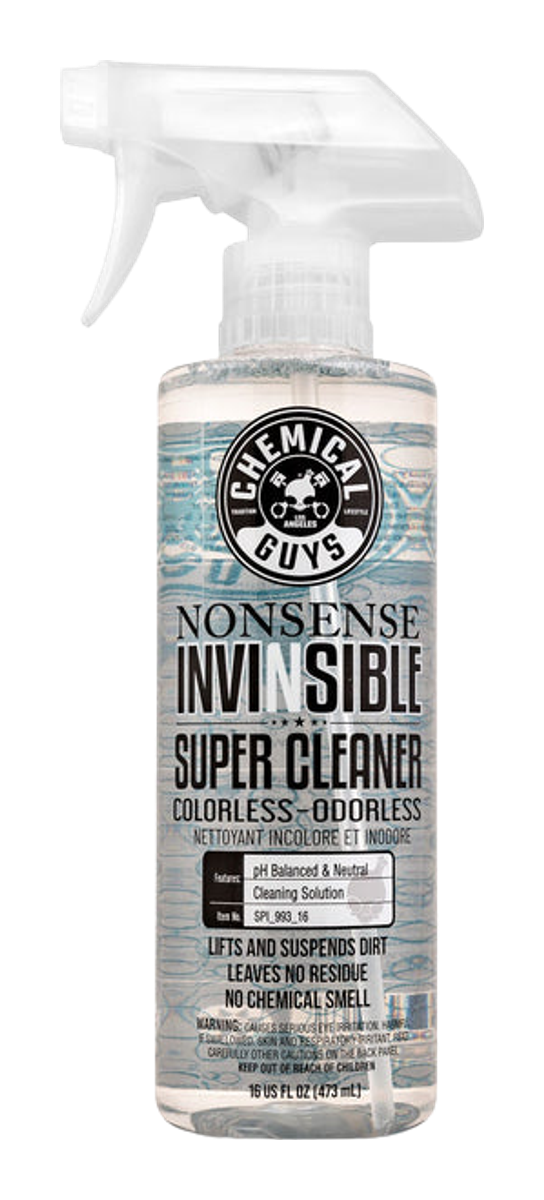
Chemical Guys Nonsense Invinsible Super Cleaner: ChemCX Analysis

Ranked Performance
Pricing
Badges
Chemical Guys Nonsense is a colorless, odorless all-purpose cleaner that tackles coffee, grease, wine, pet, and food stains. The best part is the dilution flexibility. You buy one gallon of concentrate and stretch it to 20 ready-to-use gallons at 1:20, then dial the strength up or down depending on whether you're hitting a greasy engine bay or wiping down door panels. Run it strong for stubborn soils, cut it thin for interior surfaces.
2-butoxyethanol is the primary active, a solvent that cuts through grease and oily films by dissolving them off the surface. The mildly alkaline base loosens everyday soils so they release instead of smearing. A pair of anionic and nonionic surfactants does the wetting and emulsifying, lifting dirt and holding it in suspension so it wipes away clean. The colorless, odorless build means no dye stains on light interiors and no fragrance to fight with. It's a conventional APC formula, but the wide dilution range makes it more versatile than most.
Specifications
| Attribute | Value |
|---|---|
| pH | 9.32 |
| Dilution Ratio | 1:20 (makes 20 ready-to-use gallons from 1 gallon concentrate) |
| Key Actives | 2-Butoxyethanol |
| Signal Word | Warning |
| Transparency | excellent |
| Biodegradable | Yes |
Category Context
| Metric | This Product | Category Average | Category Range |
|---|---|---|---|
| pH | 9.32 | 11.3 | 7 - 13.6 |
| Price/oz | $0.37 | $0.52 | $0.09 - $1.18 |
Where It Lands
This lands on the mild end of the all-purpose category, where most cleaners reach for caustic strength. pH 9.32 sits nearly two full points below the 11.3 average, and that's the working strength — Nonsense ships ready to use rather than diluted to a target pH. That mildness is the point. It lifts coffee, wine, grease, and pet messes without the saponifying punch of a pH 13 cleaner, which means it won't haze trim, strip wax, or etch sensitive surfaces on contact.
For weekly interior wipe-downs and light exterior detailing, this outperforms harsher options by being safe on nearly everything. For neglected wheels caked in brake dust or heavy degreasing, it's underpowered — reach for an alkaline cleaner instead. At $0.37/oz it undercuts the category average, and the milder Maniac alternative costs nearly triple for similar pH.
How It Compares
Closest Alternatives
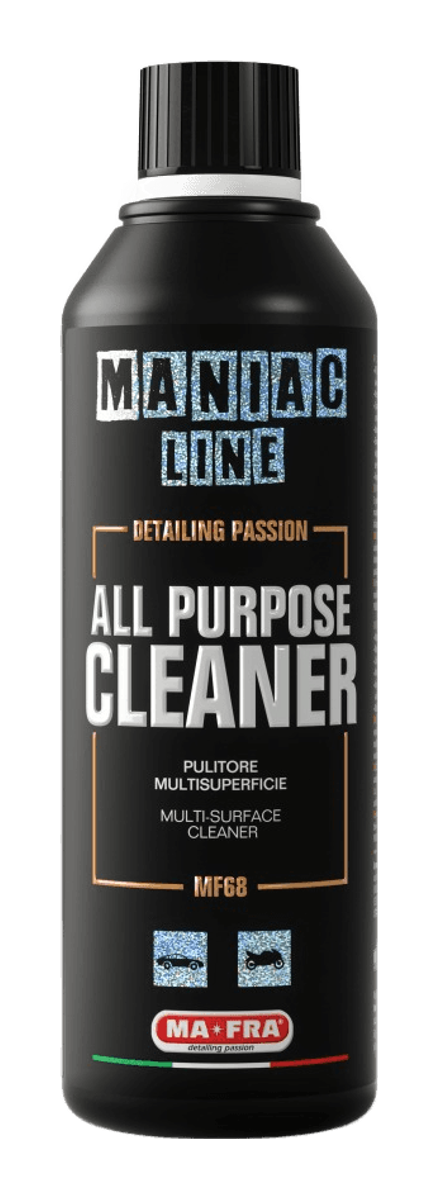
Maniac Line All Purpose Cleaner sits at pH 10, the closest formulation match to Nonsense in mechanism and gentle alkalinity. At $1.00 per ounce, it costs 170% more for similar working strength.
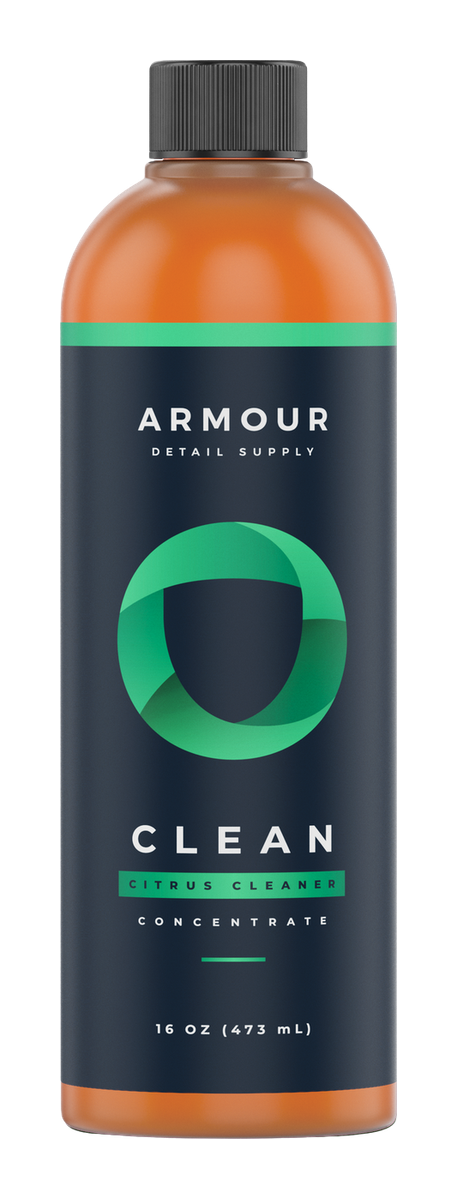
Armour Detail Supply CLEAN All Purpose Cleaner pushes harder with pH 10.5, trading some surface safety for more cutting power on baked-on grime. Priced at $0.39 per ounce, it costs nearly the same while delivering a more aggressive clean.
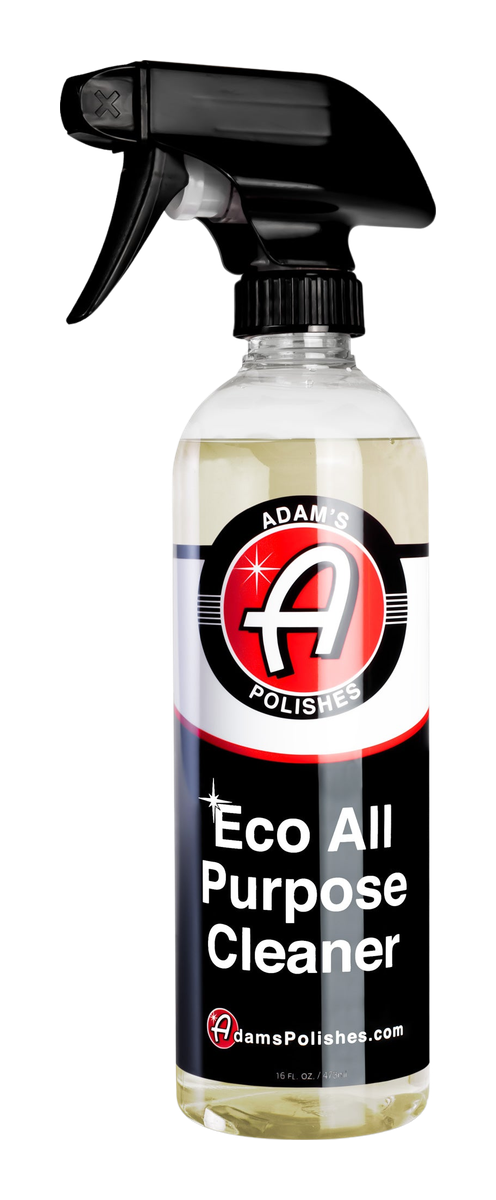
Adam's Polishes Eco All Purpose Cleaner also runs more alkaline at pH 10.5, but lands at $0.62 per ounce. You pay a premium over the Armour for comparable strength, making it the weaker value of the alkaline-heavy options.
Compare These Products

How the Chemistry Works
Three surfactants do the heavy lifting here, and they split the work by chemistry. Sodium C14-16 olefin sulfonate and a laureth sulfate handle the anionic side, lifting and suspending grime into foam that rinses clean. The C10-16 alketh, a nonionic surfactant, lowers surface tension so the cleaner wets out and spreads evenly instead of beading on contact. Behind them, the mild alkalinity drives saponification, converting greasy soils into soluble soaps the surfactants can carry away. The result is a cleaner that grabs coffee, wine, and food stains through dissolution and emulsification rather than brute caustic strength. Colorless and odorless because nothing here adds dye or fragrance.
2-butoxyethanol is the choice that makes this formula punch above its gentle pH. This glycol ether dissolves both oil-based and water-based grime in a single pass, so it loosens grease and food residue that surfactants alone would struggle to break. At 1 to under 2.5 percent it works at low concentration, which is why a mild cleaner still cuts through stains in seconds. An inorganic salt acts as the quiet partner, helping the surfactants work more efficiently in hard water so cleaning power stays consistent whether you fill from soft tap water or hard.
DMDM hydantoin and formaldehyde appear together because the former is a formaldehyde-releasing preservative, a standard pairing that keeps a water-based formula stable for months. The two impurities, acetaldehyde and 1,4-dioxane, are not added on purpose. 1,4-dioxane forms as a byproduct of making ethoxylated surfactants like the laureth sulfate, and reputable manufacturers monitor and strip it down to trace levels. Listing them is a transparency call, not a formulation flaw.
What We Like
- Colorless, odorless concentrate — no dye to leave streaks on glass or stain porous trim, and no fragrance to clash with interior detailing or trigger sensitivity in enclosed cabins
- Mild working alkalinity — gentle enough to use daily on coated surfaces and sensitive plastics without the saponification risk that comes with caustic APCs, so one bottle covers interior and exterior duty
- High dilution flexibility — stretching a single gallon across 20 means you can mix weak for upholstery and strong for engine bays from the same jug, tuning strength to the mess instead of buying separate products
What to Know
- Mild alkalinity trades muscle for safety — the gentle working strength that protects coatings and trim also means baked-on grease and neglected surfaces need dwell time or a second pass. Caustic competitors clear that in one hit.
- Concentrate economics demand prep work — stretching one gallon into twenty ready-to-use gallons saves money, but you handle measuring, mixing, and storing dilutions yourself. Get the ratio wrong and you either waste product or lose cleaning power.
- 2-butoxyethanol earns the Warning label — it boosts grease cutting, but the solvent calls for ventilation and gloves during extended use, especially in enclosed cabins.
Who Should Buy This
Reach for Nonsense when you're wiping interior plastics, glass, and porous trim where dye and fragrance cause problems. The colorless, odorless formula won't streak or stain, and it won't fill an enclosed cabin with a chemical smell that lingers. The mild working strength also makes it a smart daily-driver cleaner: dashboards, door panels, and light grime that don't need caustic muscle. If your contamination is fresh food, coffee, or pet stains, the triple-surfactant system lifts and suspends them fast without risking coated or sealed surfaces. And one gallon stretches a long way, so high-volume cleaning stays cheap.
Want to see how this stacks up? Compare these 3 all purpose cleaners
Frequently Asked Questions
What dilution should I use for interior plastics versus heavy grease? For everyday interior wipe-downs, dilute heavier than the 1:20 maximum — try 1:30 or 1:40, since the formula already cleans without caustic muscle. Reserve full strength for greasy engine bays or neglected door jambs. Test on an inconspicuous spot first, especially on coated trim.
Is it safe on car paint and ceramic coatings? Yes. The mild alkalinity won't strip coatings or sealants at working strength, which is why it suits frequent use. Rinse promptly and avoid letting it dry on hot panels in direct sun.
Why isn't it cutting baked-on grease in one pass? The gentle chemistry trades brute force for surface safety. Let it dwell 60 seconds to give the surfactants time to break down heavy soil, then agitate and re-apply if needed.
How does it compare to Armour Detail Supply CLEAN? Armour runs slightly more alkaline at $0.39/oz, so it hits stubborn grime faster. Nonsense stretches further per gallon and stays gentler on delicate surfaces.