Armor All Extreme Bug & Tar Remover: ChemCX Analysis
Ranked Performance
Pricing
Contact retailer
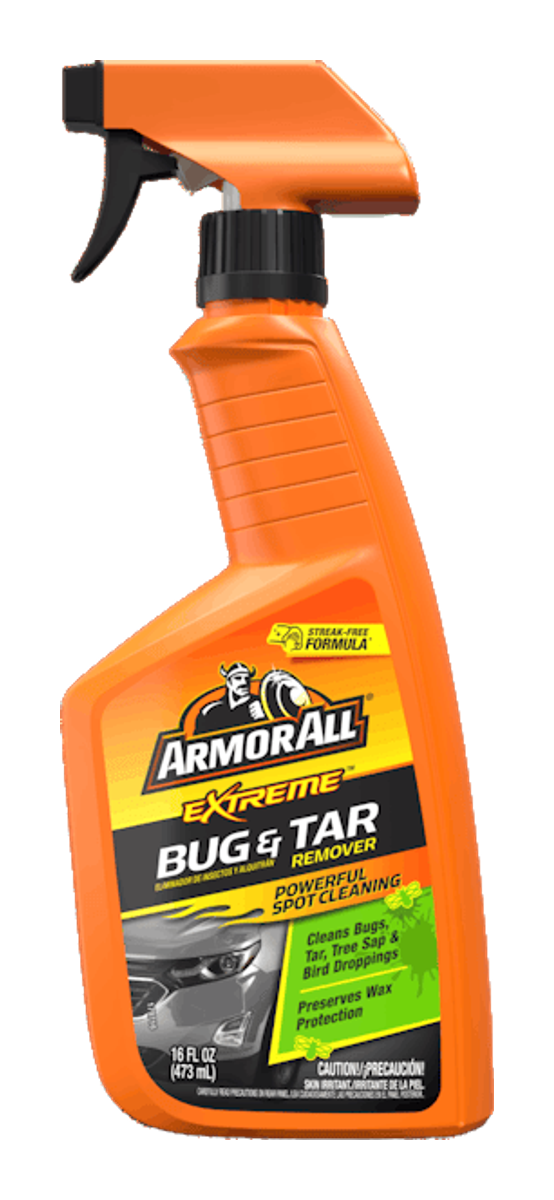
Armor All Extreme Bug & Tar Remover handles three of the most stubborn organic contaminants on a car's surface: dried bugs, road tar, and bird droppings. The standout quality is that it cleans without stripping your existing wax layer, so you're not trading a clean bumper for a bare one. It also dries streak-free, which means you skip the follow-up wipe-down that most solvent-based removers demand.
Naphtha is the primary solvent here, and it dissolves tar and bug residue through direct chemical dissolution. Petroleum distillates like naphtha are naturally effective against organic gunk because they speak the same chemical language: nonpolar dissolves nonpolar. That's why tar spots soften on contact instead of requiring heavy scrubbing. The nonionic surfactant package then emulsifies everything the naphtha loosens, keeping it suspended so it wipes away clean rather than smearing across the panel. The wax-safe claim tracks with this approach. Nonionic surfactants are gentler on wax layers than their ionic counterparts, and naphtha at ready-to-use dilution isn't aggressive enough to cut through a cured wax coat. A straightforward formula that pairs its pieces logically.
Specifications
| Attribute | Value |
|---|---|
| pH | Not disclosed |
| Dilution Ratio | ready_to_use |
| Key Actives | Naphtha (petroleum), hydrotreated heavy |
| Signal Word | Warning |
| Transparency | excellent |
| Biodegradable | Not disclosed |
Category Context
| Metric | This Product | Category Average | Category Range |
|---|---|---|---|
| pH | Not disclosed | 11.0 | 7 - 13.5 |
| Price/oz | Not available | $0.54 | $0.12 - $1.06 |
Where It Lands
Armor All Extreme Bug & Tar Remover is a surfactant-based RTU formula in a category where most competitors lean on alkaline chemistry to do the heavy lifting. That distinction matters: the category average pH sits at 11.0, meaning most bug removers rely on caustic strength to break down insect proteins and tar. Armor All doesn't disclose its pH, so direct comparison on that axis isn't possible, but the formulation's reliance on petroleum distillates and surfactants rather than high-alkaline builders suggests a solvent-driven approach to dissolving tar and softening bug residue.
This positions it as a safer bet for coated and waxed surfaces where alkaline cleaners carry risk. It handles the trifecta of bugs, tar, and bird droppings without requiring multiple specialty products. For heavily neglected surfaces with baked-on contamination, a high-pH competitor like 3D Bug Remover at $0.27/oz offers more chemical muscle for less money. Armor All's edge is convenience and surface compatibility, not raw cleaning force.
How It Compares
Closest Alternatives
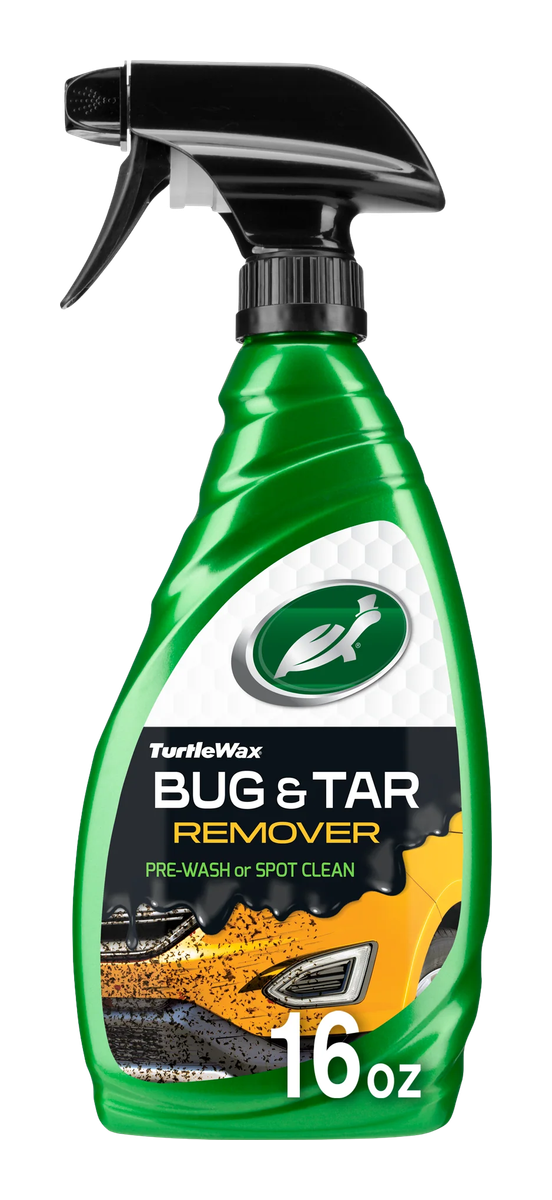
Turtle Wax Bug & Tar Remover shares Armor All's surfactant-driven approach to dissolving bug proteins and tar without relying on high alkalinity. Both land in the same chemistry lane, a direct swap if you want the same cleaning mechanism from a different bottle.
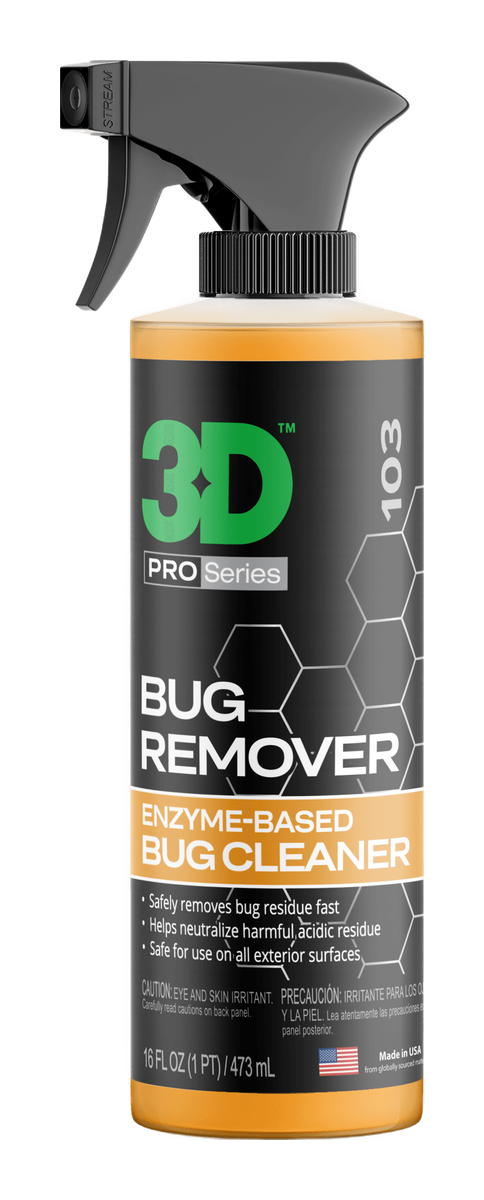
3D Bug Remover takes an alkaline route instead, using pH to break down insect residue rather than solvent action. That shift in mechanism means faster dwell-time performance on heavy bug splatter but carries more risk around coatings and trim.
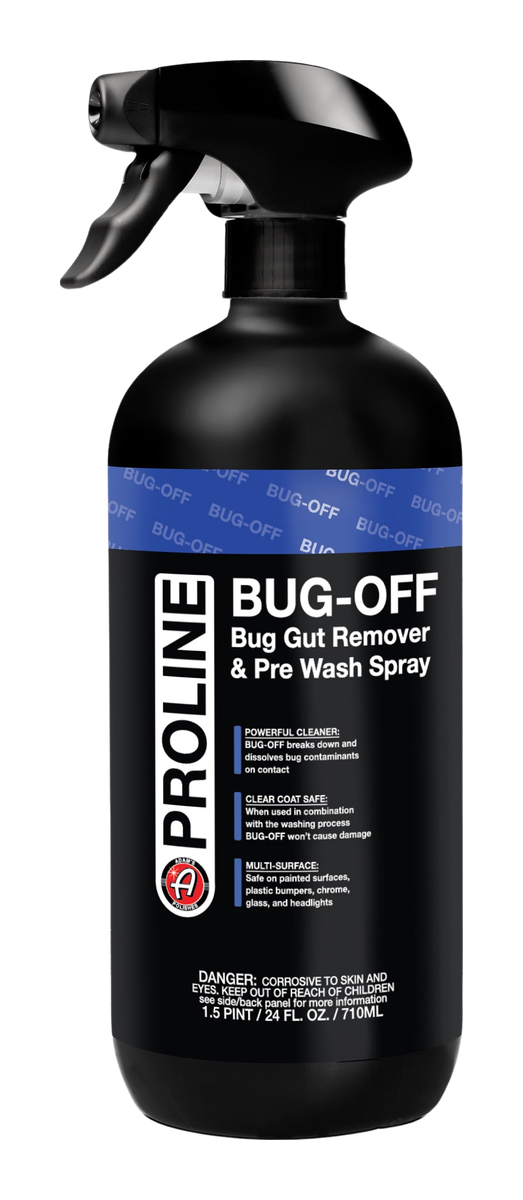
Adam's Polishes Proline BUG OFF is another surfactant-based RTU formula with a comparable ingredient strategy. At $0.39/oz, it sits well below the category average of $0.54/oz, a meaningful gap for high-volume users.
Compare These Products

How the Chemistry Works
This formula attacks bug splatter and tar through a two-phase solvent system rather than the alkaline hydrolysis most bug removers rely on. Hydrotreated heavy naphtha dissolves the lipid and resin components of tar and bug residue, while lighter aromatics like xylene and 1,2,3-trimethylbenzene penetrate the protein matrix of dried insect impacts, softening them from within. Polyalkoxylated heptamethyltrisiloxane, a silicone-based nonionic surfactant, lowers surface tension so the solvent blend spreads into crevices and textured paint instead of beading up and rolling off. Triethanolamine balances the system's pH and doubles as an emulsifier, letting the petroleum solvents and water phase stay blended in the bottle and helping lift dissolved contaminants into a wipe-away suspension. The user experience follows from this architecture: the product sprays flat and thin rather than foaming, clings long enough for the solvents to work, and wipes clean without streaking because the dissolved grime stays emulsified rather than redepositing.
The polyalkoxylated heptamethyltrisiloxane is the ingredient that separates this formula from commodity solvent sprays. Organosilicone surfactants reduce surface tension far below what conventional nonionic surfactants achieve, often to 20–22 mN/m versus 30+ mN/m for standard ethoxylates. That gap is why the product wets out across a panel almost instantly and creeps under dried-on splatter instead of sitting on top. The formulator also included a proprietary acrylates/acrylamide copolymer alongside a separate acrylic polymer system. Together these film-formers encapsulate loosened contaminants and leave a thin protective layer after wiping, which is how the product delivers its streak-free, wax-safe finish. Mineral oil contributes residual lubricity so a microfiber towel glides during removal rather than dragging partially dissolved tar across the clear coat.
With 19 disclosed ingredients, the transparency here is solid for a mass-market product. What stands out is the inclusion of titanium tetraisopropylate, a reactive metal alkoxide more commonly found in industrial coatings than consumer bug removers. It likely crosslinks with the acrylic polymers on evaporation, hardening the protective film left behind. That's an unusually sophisticated choice for this price tier. The ingredient list also flags naphthalene as a nonfunctional contaminant and cumene as a nonfunctional constituent, both trace carryovers from the petroleum distillate refining process rather than intentional additions. Their presence at trace levels is expected given the heavy naphtha base, but their disclosure is a transparency win that most competitors skip.
What We Like
- Wax-safe solvent system — The naphtha-and-surfactant approach dissolves tar and bug residue without the alkaline bite that strips carnauba or synthetic sealants. You can spot-treat a bumper mid-detail and skip the re-wax step.
- Dual-use flexibility — Formulated to work as both a targeted spot treatment and a pre-wash soak across full panels. That eliminates a separate pre-wash product from the workflow for road-trip recovery days.
- Glass-compatible chemistry — Solvent-forward formulas risk streaking on glass, but Armor All engineered this one for windshield use. One product handles bug strikes on paint and glass without switching bottles.
What to Know
- Naphtha solvents dissolve tar fast but demand ventilation. The petroleum-based actives that make this formula effective on heavy tar also produce volatile fumes. Using it in a closed garage turns a quick spot treatment into an exposure risk. Work outdoors or with airflow, and gloves are a good idea given the solvent load.
- Solvent strength has a surface tolerance ceiling. The same naphtha system that's safe on cured clearcoat can soften fresh paint, vinyl wraps, and certain plastic trim pieces. If a panel has been recently resprayed or wrapped, this formula is the wrong tool.
- RTU convenience means you absorb the dilution cost. No concentrate option exists. For heavy-use scenarios like front bumpers after highway trips, you'll burn through bottles faster than a concentrate user diluting to the same strength.
Who Should Buy This
If you're spot-treating tar splatter or dried bugs on a waxed or sealed vehicle and need the contamination gone without redoing your protection layer, this formula's solvent-based approach dissolves those deposits while leaving sealants intact which is an advantage over alkaline alternatives that strip wax on contact. It also handles fresh bird droppings on painted surfaces where you want a grab-and-go RTU rather than mixing a dilution. For heavy, baked-on contamination across full panels, an alkaline-based option like 3D Bug Remover attacks protein bonds more aggressively at a lower cost per ounce. But for targeted, protection-safe spot work, this is the right tool.
Want to see how this stacks up? Compare these 3 bug removers
Frequently Asked Questions
Can I use this on plastic trim and headlight lenses without damage? Yes, but test first. The naphtha solvents that dissolve tar also soften some plastics with prolonged contact. Spray, let it work for 30 seconds, and wipe. Don't let it sit on uncoated polycarbonate lenses or unpainted trim for minutes at a time.
Why does this formula work on tar when soap and water won't? Tar is a petroleum-based resin, so it's essentially oil-soluble but water-insoluble. The hydrotreated naphtha in this formula dissolves tar on a like-dissolves-like basis, while the surfactant system lifts the loosened residue into a wipe-away emulsion. Soap alone can't break that resin bond.
How does this compare to 3D Bug Remover's alkaline approach? 3D Bug Remover uses alkaline chemistry to hydrolyze bug proteins — effective, but potentially aggressive on unprotected surfaces. Armor All's solvent route skips alkalinity entirely, making it gentler on wax layers but slower on heavily baked-on bug impacts where protein breakdown matters most.