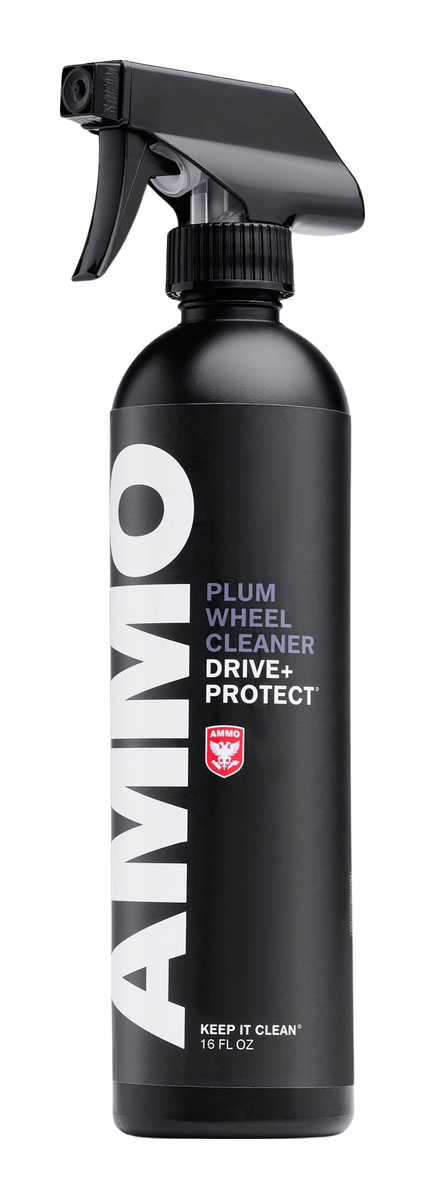
AMMO NYC Plum Wheel Cleaner: ChemCX Analysis

Ranked Performance
Pricing
Badges
Quick Answer
A dual-action wheel cleaner that pairs thioglycolate iron chelation with an alkaline base, dissolving metallic brake dust through color-change chemistry while simultaneously breaking down the organic resins that bond it to the surface. Most wheel cleaners pick one mechanism or the other; AMMO Plum runs both at once. Built for enthusiasts maintaining high-end wheels who want thorough decontamination in a single spray-and-rinse step.
What It Is
Plum Wheel Cleaner is a thioglycolate-based RTU cleaner from AMMO NYC's detail-focused lineup. It chelates ferrous brake dust: the iron particles turn purple on contact as the thioglycolic acid forms soluble iron complexes, lifting metallic contamination without mechanical agitation. The alkaline carrier simultaneously emulsifies the organic binder resins that cement dust to barrel and spoke surfaces. That dual-action approach targets both halves of the brake dust problem in a single dwell step.
Specifications
| Attribute | Value |
|---|---|
| pH | 10.75 |
| Dilution Ratio | ready_to_use |
| Key Actives | (2-hydroxyethyl)ammonium mercaptoacetate |
| Signal Word | Danger |
| Transparency | excellent |
| Biodegradable | No |
Category Context
| Metric | This Product | Category Average | Category Range |
|---|---|---|---|
| pH | 10.75 | 7.8 | 1 - 15 |
| Price/oz | $1.25 | $0.64 | $0.12 - $1.70 |
Where It Lands
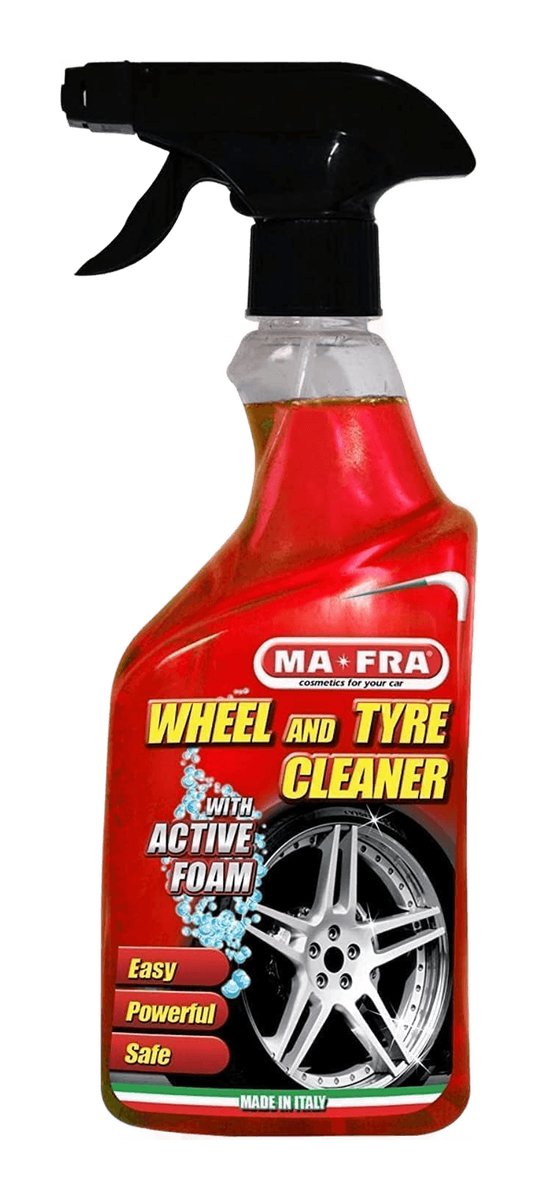
Plum Wheel Cleaner sits in the upper-alkaline tier of a category where most products cluster near neutral. At pH 10.75 RTU, it runs meaningfully above the category average of 7.8 and lands in the same neighborhood as alkaline-only cleaners like MaFra Wheel and Tyre Cleaner (pH 11), but with thioglycolate iron chelation doing work those alkaline competitors lack. That dual mechanism makes it well-suited for moderate-to-heavy brake dust accumulation on uncoated alloy and clear-coated wheels. For lightly dusted wheels on a weekly wash schedule, the chemistry is more firepower than the job demands.
The trade-off is cost. At $1.25/oz with no dilution flexibility, every trigger pull costs nearly double the category average. That math stacks up when stubborn ferrous contamination justifies the chemistry. For routine maintenance on clean-kept wheels, a simpler alkaline cleaner at half the price per ounce, like Chemical Guys Signature Series at similar pH, delivers adequate results for less.
How It Compares
Closest Alternatives
MaFra Wheel and Tyre Cleaner runs a similar alkaline pH but swaps thioglycolate for conventional alkaline surfactant chemistry. It cleans through emulsification rather than iron chelation: no color-change feedback, but fewer sensitivity concerns from the sulfur compounds that earn Plum its Danger signal word.
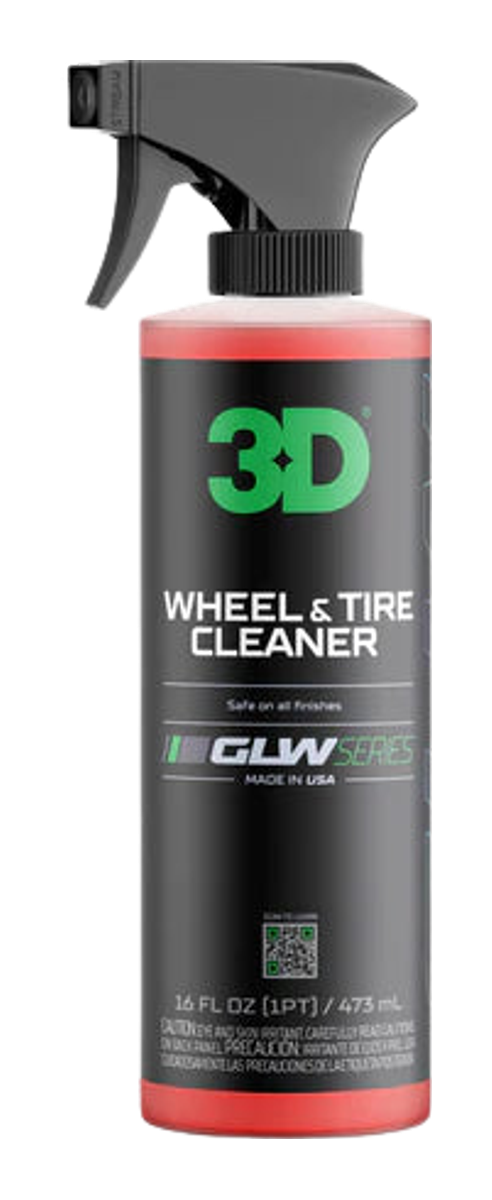
3D GLW Series Wheel & Tire Cleaner takes a straight alkaline approach at pH 11, relying on saponification and surfactancy to lift brake residue without targeting iron specifically. A good option when organic grime and road film matter more than embedded metallic dust.
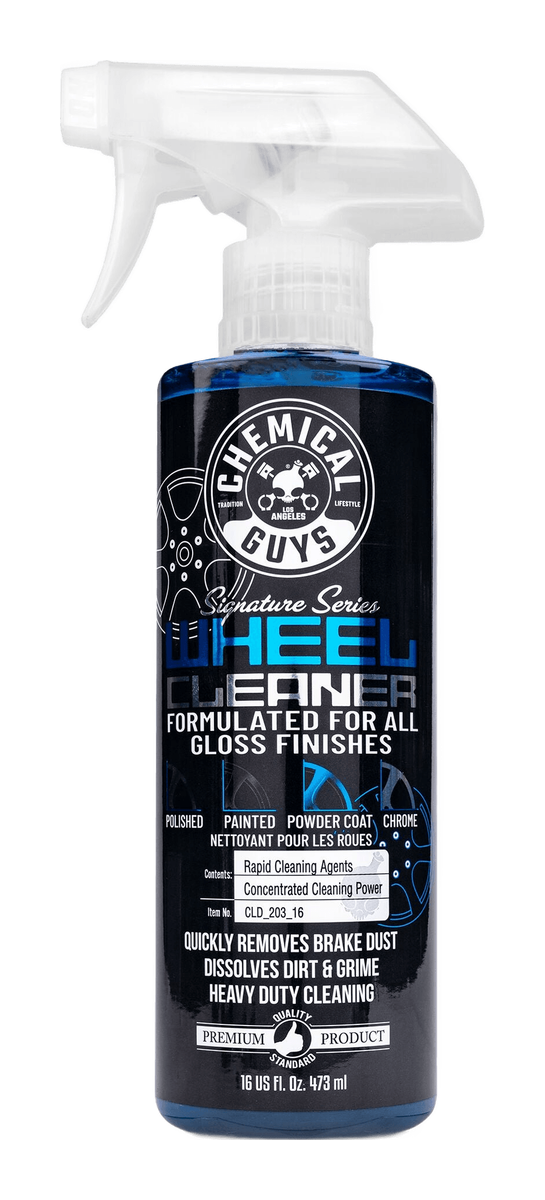
Chemical Guys Signature Series Wheel Cleaner delivers alkaline cleaning at a milder pH 10, a step gentler on coated and polished wheels. At roughly half the per-ounce cost, it stretches the budget on routine washes where heavy iron contamination isn't the primary concern.
Compare These Products


How the Chemistry Works
This formulation attacks wheel contamination on two fronts simultaneously. The thioglycolate active, (2-hydroxyethyl)ammonium mercaptoacetate, reduces ferric iron in brake dust to soluble ferrous complexes, producing the visible purple bleed that tells you the chemistry is working. While that reaction dissolves metallic particles, ethanolamine provides controlled alkalinity that softens and saponifies the organic binder resins holding those particles to the wheel face. A dual chelation system (tripotassium EDTA and sodium gluconate) sequesters liberated metal ions and hard-water minerals so they can't redeposit or interfere with the surfactant package. Five surfactants spanning anionic, nonionic, and cationic classes then emulsify the loosened grime into a foam matrix stabilized by xanthan gum. That thickener is the reason the product clings to barrel spokes instead of sheeting off immediately, giving the thioglycolate time to react. The fragrance blend, built on benzaldehyde's almond-cherry warmth layered with fruity esters like isopentyl acetate and benzyl acetate, masks the sulfur note inherent to thioglycolate chemistry. Users experience a plum-like scent instead of the rotten-egg smell that plagues cheaper iron removers.
The alkyl polyglucoside (APG) surfactant pair, D-glucopyranose decyl octyl glycosides and C10-16-alkyl glycosides, is a deliberate formulation choice. APGs are sugar-derived nonionics that maintain stable foam across a wide alkaline range where many conventional surfactants lose structure. They also synergize with the anionic sodium alpha olefin sulfonate to produce denser, longer-lasting foam without requiring as much of any single component. The practical payoff: the foam blanket stays wet and active on a hot wheel longer than a formula relying on a single surfactant type. Meanwhile, 2-butoxyethanol handles the oil-soluble fraction, cutting through road film and greasy residues that water-based surfactants alone would leave behind.
With 17 disclosed ingredients and concentration ranges for each, this is an unusually open formulation for the category. The key strategic choice is sodium gluconate alongside tripotassium EDTA. EDTA is the stronger chelator, but sodium gluconate is gentler on aluminum and works well as a secondary sequestrant to mop up metal ions the EDTA misses at this alkalinity. The cationic surfactant, cocoalkylmethyl polyoxyethylene ammonium chloride, is the quiet outlier. Cationics are uncommon in wheel cleaners because they carry a positive charge that can compete with anionic surfactants, but in small amounts they improve wetting on negatively charged metal oxide surfaces, exactly where brake dust bonds hardest.
What We Like
- Lean formula — fewer components means fewer potential incompatibilities with ceramic coatings, paint protection films, and anodized finishes. Every ingredient pulls weight.
- RTU at pH 10.75 with active chelation — the alkaline base does the degreasing while thioglycolate handles metallic contamination in one spray-and-rinse step. That eliminates the two-product workflow (iron remover then wheel cleaner) most detailers default to.
- Visual reaction confirms coverage — the purple color change maps exactly where iron is dissolving, so you see missed spots before rinsing rather than after drying.
What to Know
- RTU convenience costs you flexibility and value — no concentrate option means you can't dial back strength for coated wheels or stretch the product further. At the premium price point, every trigger pull is expensive, and heavy-duty jobs burn through volume fast.
- Thioglycolate dwell time is a narrow window — the iron-chelation reaction needs contact time to work, but the alkaline base keeps saponifying protective layers the entire time. Leave it too long and you're stripping sealants; rinse too early and you lose the purple-indicating iron removal you're paying for. Gloves are worth wearing here.
- No eco story to lean on — the formulation carries a Danger signal word, no biodegradability claim, and no environmental certifications. If regulatory or disposal considerations matter to your workflow, this product offers nothing to simplify that calculus.
Who Should Buy This
If your wheels accumulate heavy iron-based brake dust between washes (performance pads on track-driven cars, aggressive semi-metallic compounds on tow vehicles), the thioglycolate chelation mechanism here dissolves metallic contamination that alkaline-only cleaners leave behind. Alkaline surfactants emulsify organic binders well, but they don't form soluble complexes with embedded iron particles the way this formulation does. That distinction matters when contamination has baked on over weeks. For lightly soiled wheels on a weekly maintenance schedule, a standard alkaline cleaner handles the job at a fraction of the cost.
Where Plum earns its keep is the neglected wheel with layered metallic deposits: spray, watch the purple confirmation, and know the iron is lifting rather than just getting pushed around.
Want to see how this stacks up? Compare these 3 wheel cleaners
Frequently Asked Questions
Can I use Plum Wheel Cleaner on ceramic-coated wheels? Yes. The formula avoids aggressive solvents and fillers that can degrade ceramic coatings. Dwell time still matters — rinse within 2–3 minutes to prevent the alkaline base from softening the coating's hydrophobic layer.
Why does the product turn purple on my wheels? That color change is the thioglycolate active reducing ferric iron (Fe³⁺) in brake dust to soluble ferrous complexes (Fe²⁺). Deeper purple means heavier iron contamination. No color change on a given area means the contamination there is organic resin, not metallic.
How does Plum compare to alkaline-only wheel cleaners on iron-heavy brake dust? Alkaline cleaners emulsify the oily binder holding dust to the surface but leave metallic particles largely intact. Plum's thioglycolate chelation dissolves the iron itself, which is why it outperforms on semi-metallic and performance pads where iron content is high.
Do I need to agitate, or can I spray and rinse? Spray-and-rinse works for light weekly dust. For baked-on deposits in barrel faces and behind spokes, agitation with a soft wheel brush during the dwell period dramatically improves results. The chemistry needs fresh surface contact to keep reacting.