Adam's Polishes Proline BUG OFF: ChemCX Analysis
Ranked Performance
Pricing
Badges
Quick Answer
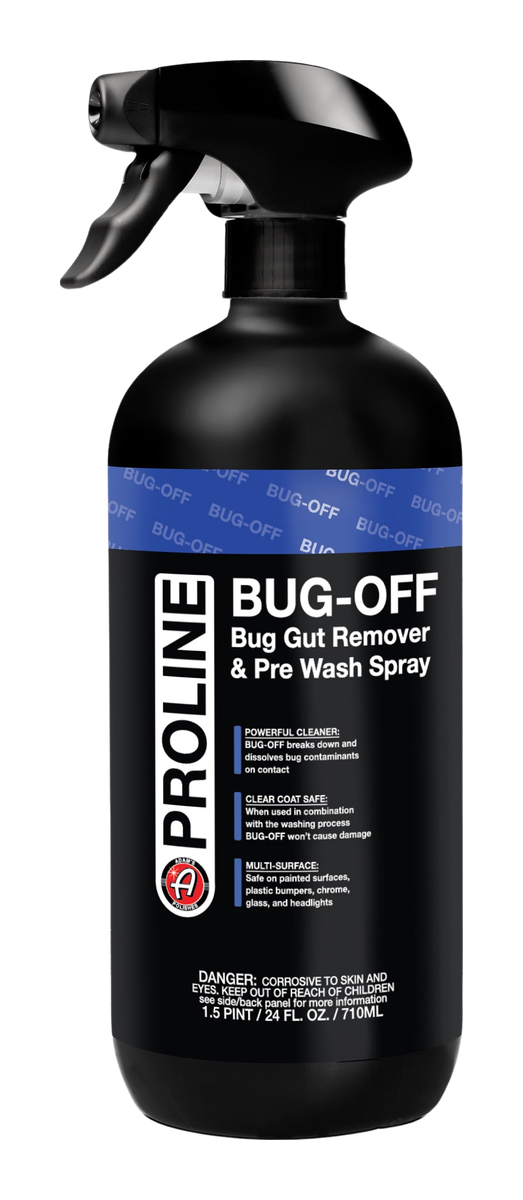
At pH 13, this bug remover sits at the maximum alkalinity in its category, sharing this aggressive chemistry with only P&S Bug Off. The sodium hydroxide formula attacks protein-based bug residue through saponification—ideal for professional detailers facing heavy insect buildup who need chemistry to do the heavy lifting instead of scrubbing.
What It Is
Adam's Polishes markets this through their Proline series, positioned for professional detailers and high-volume users. At pH 13, this concentrate uses strong alkaline chemistry to break down insect proteins and organic residue. The variable dilution format lets users adjust strength based on contamination level, with stronger mixes for heavy bug accumulation, weaker for maintenance washing or pre-soak applications. Excellent ingredient transparency accompanies the Danger signal word.
Specifications
| Attribute | Value |
|---|---|
| pH | 13 |
| Dilution Ratio | Variable based on use |
| Key Actives | sodium hydroxide |
| Signal Word | Danger |
| Transparency | excellent |
Category Context
| Metric | This Product | Category Average | Category Range |
|---|---|---|---|
| pH | 13 | 11.1 | 8 - 13 |
| Price/oz | $0.39 | $0.55 | $0.12 - $1.67 |
Where It Lands
At pH 13, this sits at the top of the bug remover category, tied for the most alkaline formula available. That extreme alkalinity breaks down protein-based contamination like dried insects and road film through aggressive saponification. For fresh bug splatter during a weekly wash, this chemistry is more than needed. For a road trip's worth of baked-on lovebugs across a hot hood, it earns its keep.
At $0.39 per ounce as a concentrate, value scales with your dilution ratio. Light duties at 10:1 push effective cost under $0.04 per ounce of working solution. P&S Bug Off matches the pH 13 chemistry at $0.12 per ounce—the budget pick for identical alkalinity.
How It Compares
Closest Alternatives
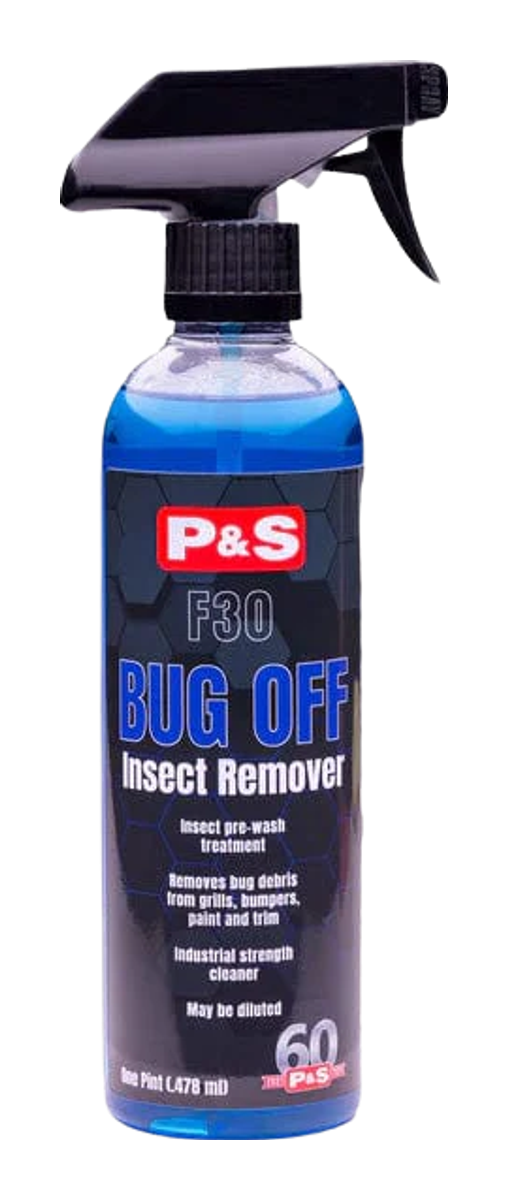
P&S Bug Off matches the pH 13 alkaline chemistry at $0.12/oz versus $0.39/oz. The cleaning mechanism is identical but operational costs drop significantly unless diluting Proline BUG OFF.
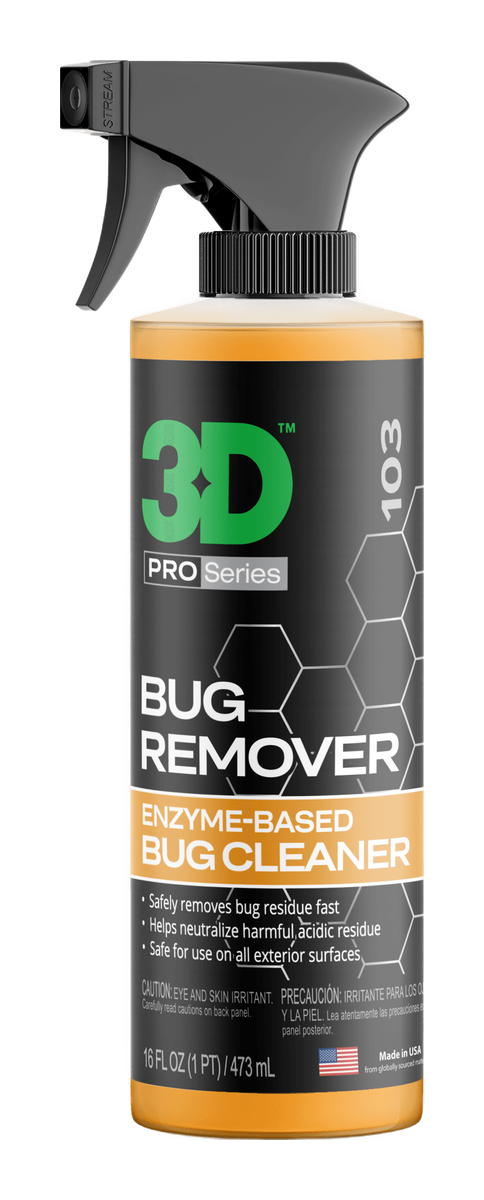
3D Bug Remover runs pH 12, one full point lower on the logarithmic scale. For shops concerned about trim plastics or working on vehicles with sensitive clear coats, the reduced alkalinity provides margin for error. You sacrifice some dissolution speed on heavy infestations.
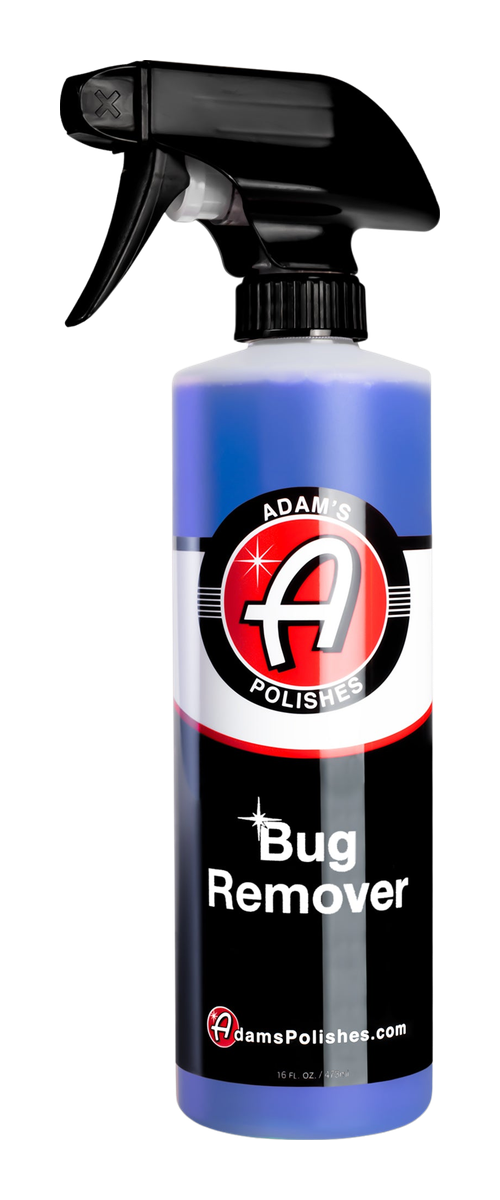
Adam's Polishes Bug Remover is the consumer-facing version from the same brand at pH 12. If you prefer staying within the Adam's ecosystem but want a gentler formula for personal vehicles, this fits. The Proline version hits harder for commercial volume work.
Compare These Products


How the Chemistry Works
Sodium hydroxide drives this formula's bug-dissolving capability. At pH 13, even the small concentration listed (0.1–1%) creates a strongly alkaline environment that breaks down the proteins and fats in dried insect remains. Bug splatter is particularly stubborn because insect body fluids contain proteins that bond to paint when heated by sun exposure. The sodium hydroxide attacks these protein bonds through hydrolysis, essentially liquefying what was solid residue.
The dual nonionic surfactant system, C9-11 Pareth 6 and C9-11 ethoxylated alcohols, handles the lifting and rinsing. Both reduce surface tension to help the alkaline solution penetrate beneath bug residue rather than beading on top. Nonionic surfactants work well across pH ranges and won't react with the sodium hydroxide. The 2-butoxy-1-ethanol adds solvent power for any fatty or waxy components in bug remains.
What We Like
- pH 13 matched with "Danger" signal word — the strongest alkalinity in this category, designed to dissolve dried protein-based bug residue that milder removers leave behind
- Concentrate format with variable dilution — adjust strength from light maintenance (higher dilution) to heavy interstate splatter (lower dilution), stretching the $0.39/oz cost significantly
What to Know
- At pH 13 with a 'Danger' signal word, this is among the most caustic bug removers available. Gloves and eye protection are recommended, and rinse thoroughly after use
- Variable dilution means you can adjust strength for light bug splatter versus baked-on carcasses, but start weaker and work up to avoid surface issues
- Keep off bare aluminum, anodized trim, and fresh ceramic coatings. High alkalinity can etch or degrade these surfaces even with short contact times
Who Should Buy This
Detailers in bug-heavy regions who pre-soak multiple vehicles daily will appreciate the concentrate format and dilution flexibility. The pH 13 formula tackles baked-on insect residue that milder products leave behind. For occasional bug removal or budget-conscious shops, P&S Bug Off delivers identical pH at 69% lower cost. If you prefer ready-to-use convenience without mixing, Adam's Polishes Bug Remover (pH 12) works straight from the bottle.
Want to see how this stacks up? Compare these 3 bug removers
Frequently Asked Questions
Is Adam's Proline BUG OFF safe for ceramic coatings and PPF? At pH 13, this is a highly caustic formula carrying a "Danger" signal word. Limit dwell time to under 2 minutes, never allow it to dry on the surface, and rinse thoroughly.
What dilution ratio should I use? Adam's recommends variable dilution based on severity. For fresh bugs, start at 4:1 (water to product). For baked-on splatter or pre-soak applications, use it stronger at 2:1 or even neat on the worst areas.