Adam's Polishes Eco Wheel Cleaner: ChemCX Analysis
Ranked Performance
Pricing
Badges
Quick Answer
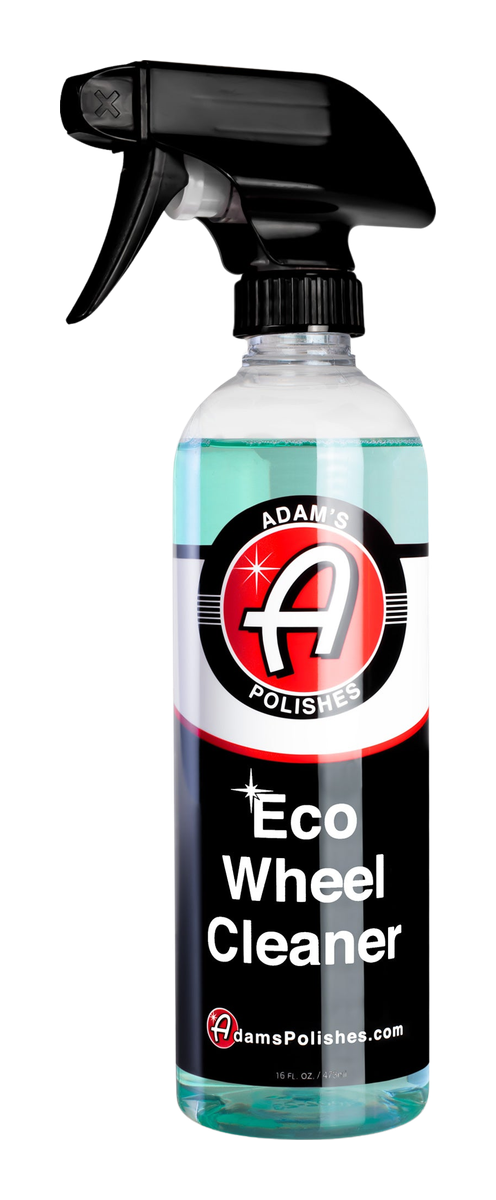
Adam's Polishes Eco Wheel Cleaner takes a different approach to wheel cleaning, using a mildly acidic surfactant formula (pH 5.75) instead of the typical alkaline or iron-reactive chemistry found in most competitors. Based on ChemCX analysis of wheel cleaners, this is the first mildly acidic surfactant-based cleaner in our database, prioritizing surface safety and environmental responsibility over aggressive chemical action.
What It Is
Adam's Eco Wheel Cleaner is a ready-to-use wheel cleaner from Adam's Polishes that falls into the wheel cleaner category. Unlike the majority of wheel cleaners that rely on high-pH alkaline formulas or thioglycolic acid for iron removal, this product uses plant-derived surfactants and biodegradable chelating agents to lift brake dust and road grime. The "Eco" designation reflects genuine formulation choices—biodegradable ingredients throughout—rather than marketing positioning.
Specifications
| Attribute | Value |
|---|---|
| pH | 5.75 |
| Dilution Ratio | ready_to_use |
| Key Actives | Tetrasodium N,N-bis(carboxylatomethyl)-L-glutamate (GLDA) |
| Signal Word | Warning |
| Transparency | Excellent |
Category Context
| Metric | This Product | Category Average | Category Range |
|---|---|---|---|
| pH | 5.75 | 9.1 | 3.5 - 15 |
| Price/oz | $0.34 | $0.49 | $0.19 - $1.25 |
Where It Lands
The pH of 5.75 sits well below the category average of 9.1, making this one of the gentlest wheel cleaners available. Most wheel cleaners push toward alkaline territory (pH 10-14) to break down organic brake dust and oils. Adam's instead uses mild acidity—roughly equivalent to black coffee—which works through a completely different mechanism: dissolving mineral deposits rather than saponifying oils.
At $0.34 per ounce, the pricing falls 31% below the category average despite the premium positioning. The "Warning" signal word versus the "Danger" label on many alkaline competitors reflects the genuinely lower hazard profile. You won't find caustic burns or aluminum etching risks here. The excellent transparency rating means Adam's discloses their full ingredient list, which is increasingly rare in an industry where "proprietary blend" often masks concerning chemistry.
How It Compares
Closest Alternatives
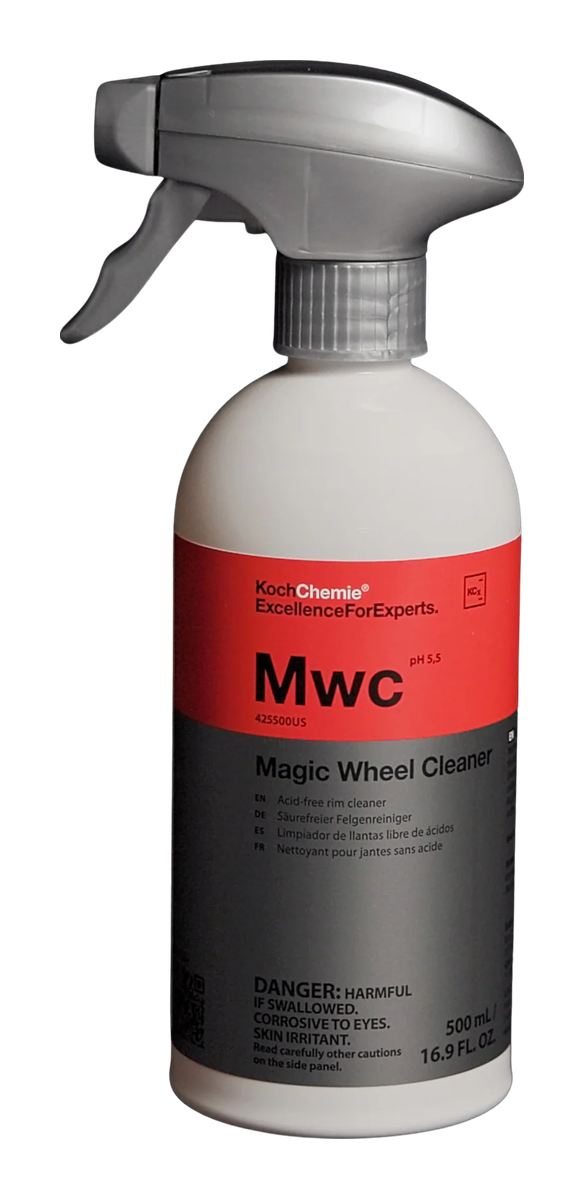
Koch-Chemie Magic Wheel Cleaner uses thioglycolate chemistry at a similar pH (5.5) but achieves cleaning through iron reaction rather than surfactant action. You'll see the purple color change indicating iron dissolution. If brake dust contamination is your primary concern, the thioglycolate approach may work faster on ferrous particles.
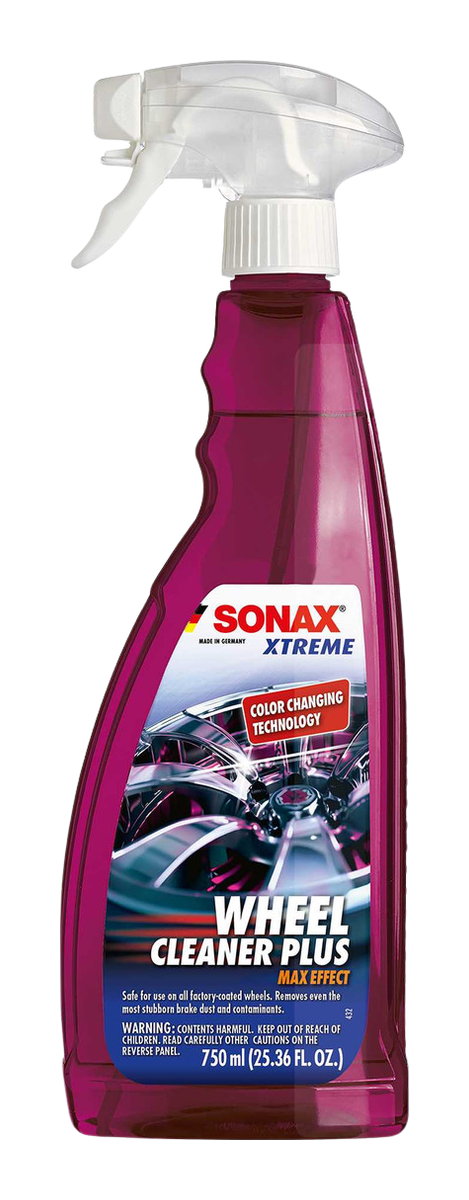
SONAX Wheel Cleaner PLUS also employs thioglycolate at pH 5.1, combining gentle acidity with iron-reactive chemistry. The color-change indicator provides visual feedback that Adam's lacks. For heavily contaminated wheels with embedded iron particles, SONAX offers more aggressive decontamination.
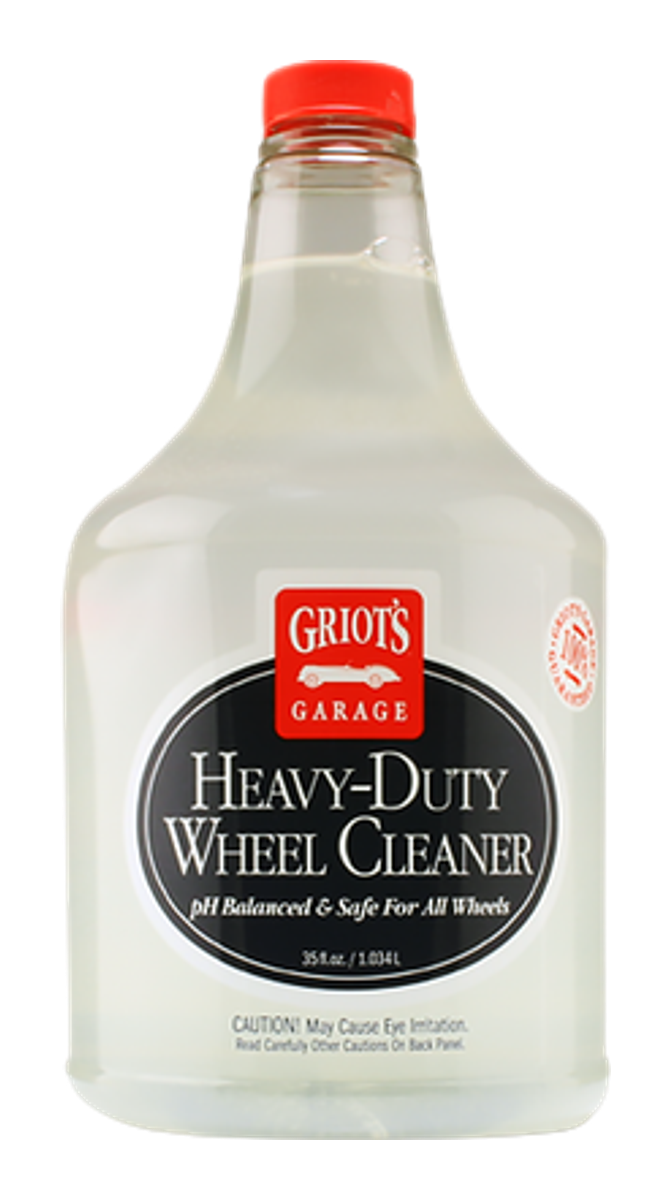
Griot's Garage Heavy-Duty Wheel Cleaner sits slightly higher at pH 6.75 with thioglycolate chemistry. The "Heavy-Duty" name is somewhat misleading given the near-neutral pH—it's actually quite gentle. Choose Griot's if you want iron indication with even less acidity than Adam's.
Compare These Products


How the Chemistry Works
Adam's formula centers on undecyl glucoside, a sugar-derived nonionic surfactant that reduces water's surface tension to penetrate and lift oily soils. Unlike ionic surfactants that can leave residues or interfere with coatings, nonionic surfactants rinse cleanly and won't affect wheel sealants or ceramic coatings. The plant-based origin means genuine biodegradability rather than persistent environmental contamination.
The GLDA (Tetrasodium N,N-bis(carboxylatomethyl)-L-glutamate) chelating agent binds to calcium and magnesium ions in water and on surfaces. This serves two purposes: preventing hard water from interfering with cleaning performance and actively dissolving mineral deposits that trap brake dust. GLDA breaks down naturally in the environment, unlike traditional EDTA which persists indefinitely.
Citric acid provides the mild acidity that dissolves light rust and mineral buildup while remaining safe for all wheel finishes including chrome, painted, powder-coated, and carbon ceramic brakes. The combination targets different soil types—surfactant for oils, acid for minerals, chelator for metal ions—without aggressive chemistry that risks surface damage.
What We Like
- Genuine surface safety — The pH 5.75 formulation won't etch aluminum or degrade clear coats even with extended dwell times, making it essentially mistake-proof for maintenance washing
- Carbon ceramic compatibility — Unlike alkaline cleaners that can damage expensive carbon ceramic brake rotors, the mild acidity poses no risk to these surfaces
- Full transparency — Adam's publishes complete ingredient information, allowing informed decisions about what you're using on your vehicle and introducing to the environment
What to Know
- No iron indication — Unlike thioglycolate-based competitors, there's no purple color change showing iron removal. You'll need to judge cleanliness visually rather than chemically
- Limited heavy contamination capability — The gentle chemistry trades maximum cleaning power for surface safety. Heavily neglected wheels may require multiple applications or pre-treatment
- Surfactant-only approach — This excels at lifting surface soils but won't chemically react with embedded iron particles the way dedicated iron removers will
Who Should Buy This
If you maintain your wheels weekly and use a dedicated iron remover quarterly, this product handles the routine cleaning while minimizing chemical exposure to sealants and the environment. Owners of carbon ceramic brake systems should strongly consider this—the mild pH eliminates the risk that alkaline cleaners pose to expensive rotor surfaces.
The Bottom Line
Adam's Eco Wheel Cleaner trades cleaning power for safety. For maintenance washing on well-kept wheels, the biodegradable surfactant approach cleans effectively without the hazards of alkaline or acidic extremes. Pair it with a dedicated iron remover for quarterly decontamination and you have a sustainable, surface-safe system.
Want to see how this stacks up? Compare these 3 wheel cleaners
Frequently Asked Questions
Will this remove heavy brake dust buildup? For severely contaminated wheels, expect to apply multiple times or agitate with a brush. The surfactant chemistry lifts rather than dissolves brake dust, so mechanical action helps significantly on neglected wheels.
Is it safe for ceramic coated wheels? Yes. The near-neutral pH and nonionic surfactant won't degrade ceramic coatings. This is ideal for coated wheels since aggressive chemicals can shorten coating lifespan.
Why doesn't it turn purple like other wheel cleaners? The purple reaction comes from thioglycolic acid binding with iron particles. Adam's uses a different approach—surfactants and chelators—that doesn't produce a visible color change. Cleaning still occurs, just without the visual indicator.
Can I dilute it for lighter cleaning? The product comes ready-to-use, but diluting 1:1 with water works for light maintenance washes where full strength isn't necessary. This effectively cuts your cost per application in half.
How does it compare to Adam's regular Wheel Cleaner? Adam's standard Wheel Cleaner uses more aggressive chemistry for tougher jobs. The Eco version sacrifices some cleaning power for environmental responsibility and maximum surface safety.