Adam's Polishes Detail Spray: ChemCX Analysis

Pricing
Badges
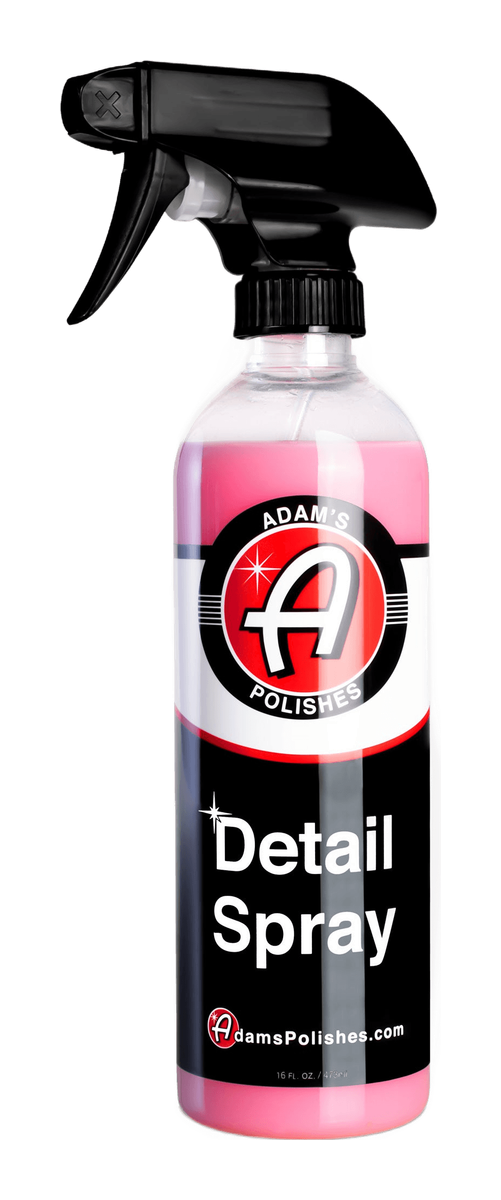
Adam's Detail Spray is a silicone-based quick detailer that adds gloss and slickness between washes. Spray it on a freshly washed panel or a dusty car that just needs a refresh, and it buffs to a streak-free finish with a noticeable bump in shine. The slick feel it leaves behind makes light dust easier to wipe away next time, and it works well as a drying aid if you mist it onto wet paint before toweling off.
Polydimethylsiloxane does most of the work here. It's a silicone oil that spreads into an ultra-thin film across the paint, filling microscopic texture and reflecting light more evenly. That's where the gloss boost and slick surface come from. A nonionic surfactant system handles the light cleaning side, lifting fingerprints and dust into suspension so you're not dragging grit across the surface. The formula also claims to extend existing wax and sealant protection, which tracks: the silicone layer sits on top of whatever coating is already there and takes the first round of wear instead. Straightforward silicone QD chemistry, executed cleanly.
Specifications
| Attribute | Value |
|---|---|
| pH | 7.2 |
| Dilution Ratio | RTU (Ready-to-Use) |
| Key Actives | polydimethylsiloxane |
| Signal Word | None |
| Transparency | excellent |
| Biodegradable | Not disclosed |
Category Context
| Metric | This Product | Category Average | Category Range |
|---|---|---|---|
| pH | 7.2 | 6.6 | 4 - 8 |
| Price/oz | $0.27 | $0.77 | $0.18 - $2.96 |
Where It Lands
Adam's Detail Spray sits slightly alkaline of center in the quick detailer category at pH 7.2 against a 6.6 average. That half-point shift matters less than it sounds; both values are functionally neutral, and the difference won't affect compatibility with coatings, sealants, or waxes. What it signals is a formulation that leans marginally more toward cutting light surface films than the typical slightly acidic quick detailer. For weekly maintenance on protected paint, it's well within safe territory.
The real differentiator is accessibility. At this price point, the product is one you can spray liberally as a drying aid, clay lubricant, or between-wash refresher without rationing. That's 65% below the category average and roughly half the cost of comparable competitors like Dr. Beasley's The Final Finish. For a silicone-based detail spray you'll burn through quickly, that price floor removes the hesitation to use it the way it works best: generously.
How It Compares
Closest Alternatives
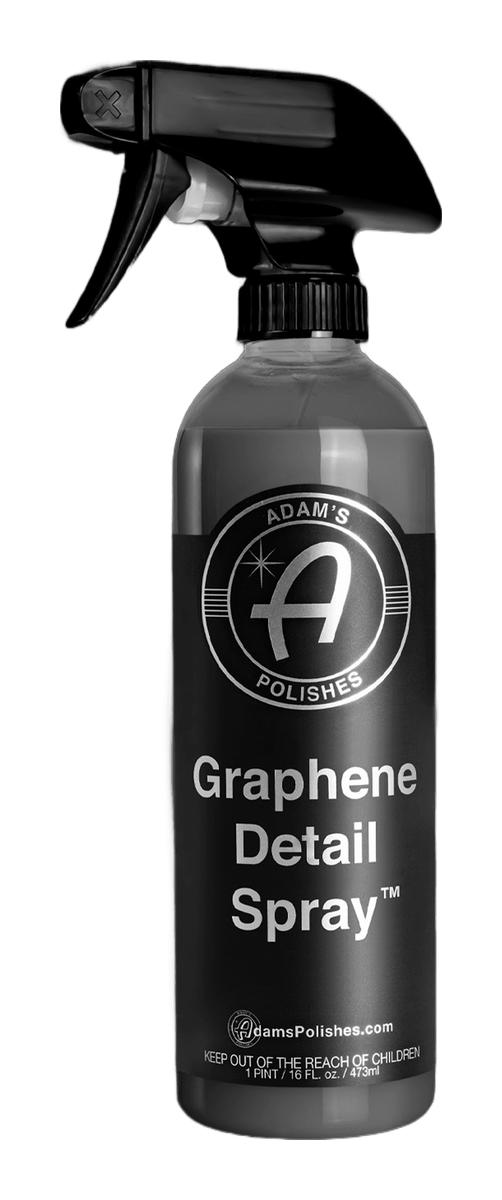
Adam's Polishes Graphene Detail Spray shares the same silicone-based backbone but layers graphene oxide into the formula for added hydrophobic longevity. Near-identical pH and application method. The difference is durability between washes, not the wipe-on experience.
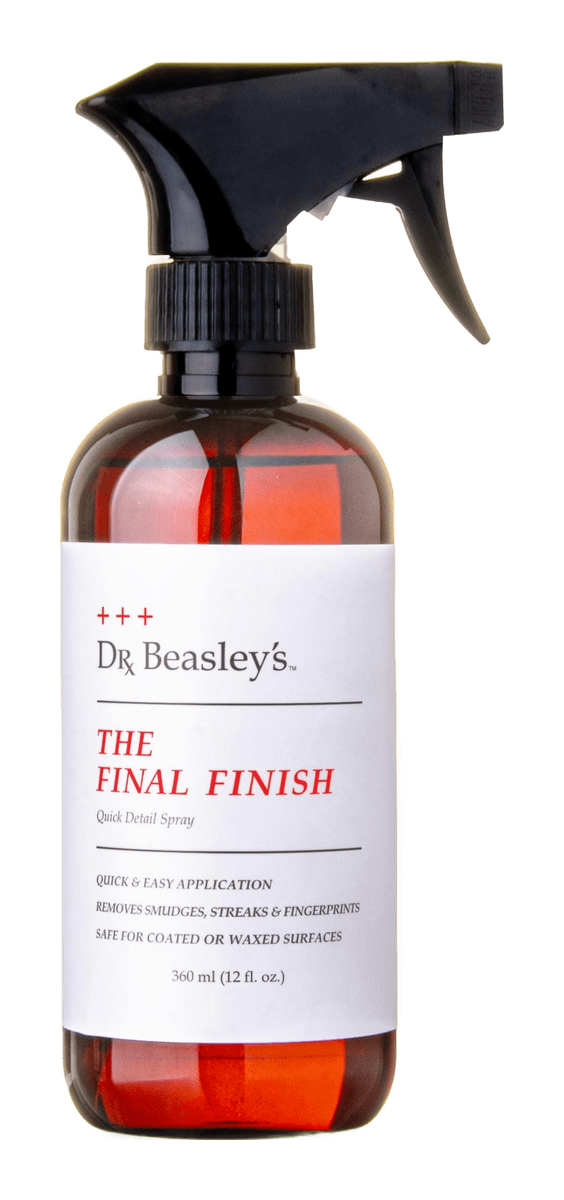
Dr. Beasley's The Final Finish takes a different route, built around polymer film-formers rather than silicone slip. That trade-off yields a drier, less slick finish with better resistance to fingerprints on dark paint. It runs about 52% more per ounce.
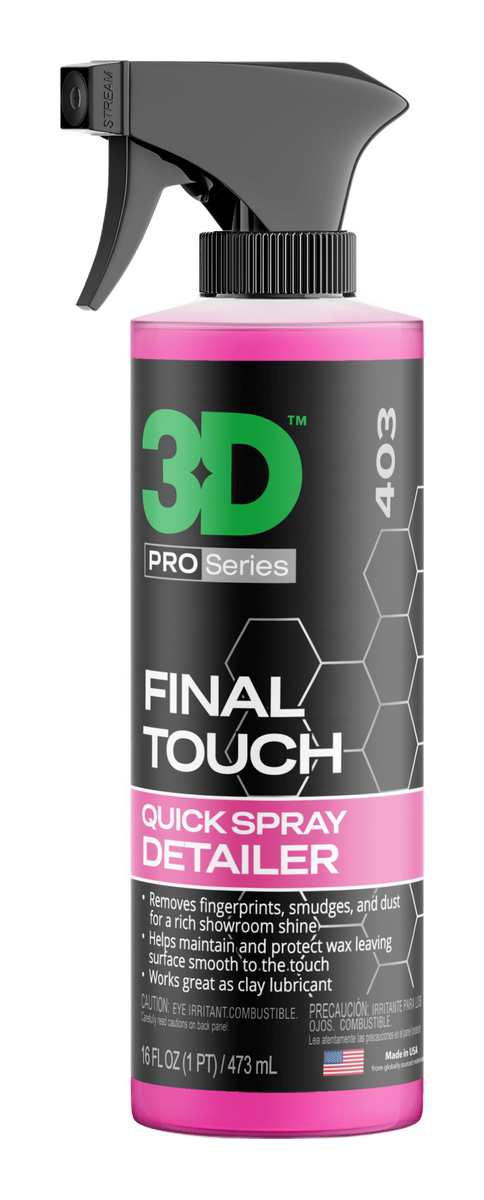
At the budget end, 3D Final Touch Detail Spray matches the neutral pH and RTU format at a lower price point. A straightforward swap for anyone who wants similar streak-free performance without the brand premium.
Compare These Products


How the Chemistry Works
Two silicone polymers handle the core function here, but they need help getting onto the surface. Polydimethylsiloxane (standard PDMS) and silanol-terminated polydimethylsiloxane are both hydrophobic oils that won't mix with water on their own. The ethoxylated C11-14 alcohol surfactant holds them in stable emulsion, suspending microscopic silicone droplets throughout the water carrier so they distribute evenly when you spray. As you wipe with a microfiber towel, the water flashes off and the surfactant breaks its grip, depositing a thin silicone film across the paint. That film is what delivers the slick, just-waxed feel and the gloss bump. Glycerine in the mix slows the evaporation slightly, giving you a longer working window before the product dries on the panel, which is how the formula avoids the streaking that plagues quick detailers in direct sun.
The two silicone variants aren't redundant. Standard PDMS is a linear polymer that spreads easily and provides immediate lubricity, the slickness you feel the moment you buff. Silanol-terminated PDMS carries reactive hydroxyl groups at each end of the chain, which lets it hydrogen-bond to hydroxyl-rich surfaces like clearcoat. That bonding is why Adam's can credibly claim extended protection: the silanol-terminated version resists being wiped away by subsequent washes in a way that standard PDMS cannot. Formulators could have used a single silicone and cut costs. Using both gives the product a two-speed character: instant gratification from the PDMS plus modest durability from the silanol-terminated variant.
Five of the disclosed ingredients are fragrance components, including ethyl methylphenylglycidate (strawberry-sweet) and vanillin (warm vanilla). That ratio tells you this is a partial SDS disclosure focused on regulated or hazardous substances, not a complete recipe. The actual formula almost certainly contains additional emulsifiers, co-solvents, or stabilizers that don't appear because they fall below reporting thresholds. The absence of a chelating agent from the disclosed list is consistent with a product that isn't designed to break down mineral deposits; it encapsulates and lubricates rather than dissolving contamination, so chelation would add cost without functional benefit.
What We Like
- Dual-silicone lubricity system — pairing standard PDMS with silanol-terminated PDMS gives this spray enough slip to double as a clay lubricant without leaving heavy residue that interferes with subsequent wax or sealant layers.
- True neutral pH in a ready-to-use format — no dilution math, no surface-compatibility guesswork. Spray it on paint, trim, glass, or coated panels without adjusting concentration or worrying about etching.
- Price-to-versatility ratio — at $0.27/oz for a product that handles detail spraying, drying aid duty, and clay lubrication, you're replacing three dedicated products with one bottle.
What to Know
- Silicone residue complicates future coating work. PDMS and silanol-terminated PDMS leave a hydrophobic film that bonds well to existing wax or sealant layers but creates adhesion problems for ceramic coatings. If a coating install is on the horizon, you'll need a thorough panel wipe or polish to strip what this spray deposits.
- RTU convenience locks you into one concentration. No dilution flexibility means you can't run a lighter ratio for drying-aid duty or a stronger mix for heavier dust loads. Every spray delivers the same silicone load regardless of the task.
- Protection extension depends on what's underneath. The "up to 2 months" claim assumes a robust base layer of wax or sealant. On bare paint or a degraded coating, the thin silicone film washes off far sooner.
Who Should Buy This
If you maintain a wax or sealant layer and want a between-wash refresher that reinforces rather than strips that protection, the silicone backbone here bonds to existing hydrophobic films and extends their working life. That same chemistry makes this a capable clay lubricant as the dual-silicone system provides enough slip to prevent marring while leaving a film thin enough that subsequent polishing steps aren't fighting heavy residue. For quick dust removal on a garage queen that sees more shelf time than road grime, the neutral pH and RTU format keep the job under ten minutes with zero rinse required.
Want to see how this stacks up? Compare these 3 quick detailers
Frequently Asked Questions
Can I use Adam's Detail Spray on a matte or satin paint finish? No. The polydimethylsiloxane and silanol-terminated PDMS in this formula deposit a glossy, light-refracting film. It's exactly what you want on clearcoat, and exactly what ruins a matte finish. Use a silicone-free quick detailer for matte or satin wraps.
How does Adam's Detail Spray differ from 3D Final Touch Detail Spray? Adam's relies on silicone polymers for gloss and slickness; 3D Final Touch discloses only three ingredients and skips silicones entirely, making it a safer choice before coating installations. Adam's delivers more noticeable gloss enhancement, but that silicone film is harder to remove when prep work matters.
Does the silicone in this spray affect how my car beads water? Yes. PDMS raises the surface's contact angle, so water sheets and beads more aggressively after application. The effect is temporary. Expect noticeable beading for one to two weeks depending on exposure, but it stacks with existing wax or sealant hydrophobicity.
Can I use this as a drying aid after a rinseless wash? Yes. Spray onto a wet panel and pat dry with a microfiber towel. The silicone lubricates the towel's pass, reducing marring risk, while the surfactant package helps lift remaining rinse water off the surface.