Adam's Polishes Bug Remover: ChemCX Analysis
Ranked Performance
Pricing
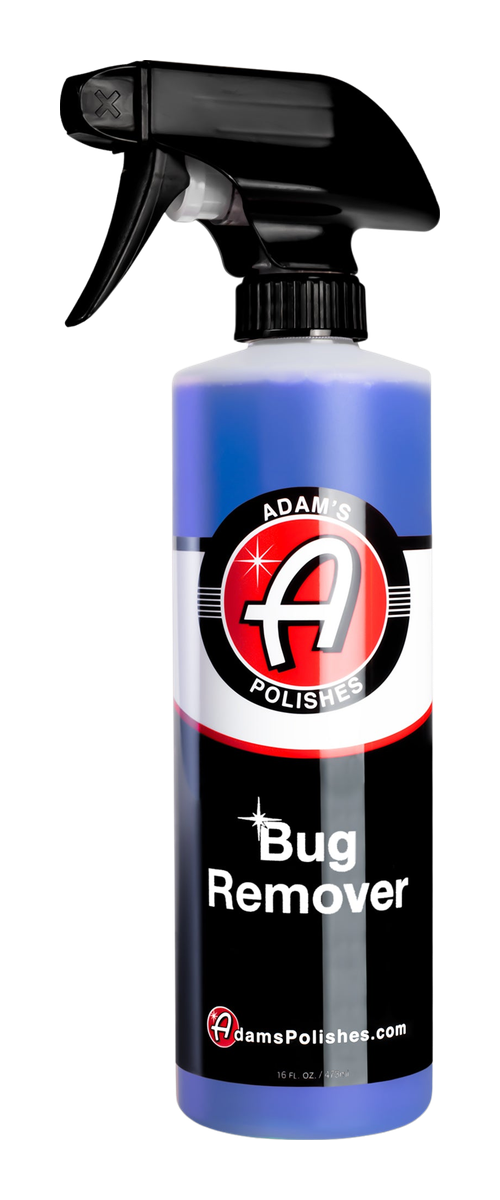
Adam's Bug Remover dissolves dried bug residue so it wipes off without much effort. Spray it on, give it a short dwell, and bug splatter that was baked solid goes soft enough to wipe away clean. Where most bug removers need repeated passes and scrubbing to get through heavy buildup, this one does the bulk of the work chemically while it sits on the surface.
Sodium hydroxide drives the formula. It breaks down the proteins in dried bug guts, which is why they go from rock-hard to loose and soft during the dwell time. A surfactant blend of anionic and nonionic agents keeps the solution clinging to vertical panels like bumpers and grilles instead of running off before it finishes working. Those same surfactants lift the dissolved residue into suspension so it wipes away rather than smearing around. The formulation is straightforward alkaline chemistry, nothing exotic, but the pieces work together well. It does one job and does it cleanly.
Specifications
| Attribute | Value |
|---|---|
| pH | 12 |
| Dilution Ratio | ready_to_use |
| Key Actives | sodium hydroxide |
| Signal Word | danger |
| Transparency | excellent |
| Biodegradable | Not disclosed |
Category Context
| Metric | This Product | Category Average | Category Range |
|---|---|---|---|
| pH | 12 | 10.8 | 7 - 13 |
| Price/oz | $0.27 | $0.55 | $0.12 - $1.06 |
Where It Lands
Adam's Bug Remover sits near the aggressive end of the bug remover category. At pH 12, it runs a full point above the category average of 10.8 and has enough alkalinity to break down dried hemolymph and chitin proteins that neutral-pH formulas leave behind. That positions it alongside other heavy-hitter products like 3D Bug Remover and CARPRO BugOut rather than the milder enzyme-based options that dominate the middle of the range. This is a product built for baked-on summer road trips, not light fall touch-ups.
For fresh splatter or lightly soiled bumpers, this much alkalinity is probably overkill and a neutral bug remover would handle it without the "danger" signal word baggage. Where it earns its place is on front ends with layered, sun-cured bug impacts. It costs half the category average and roughly a third the price of CARPRO BugOut at similar pH.
How It Compares
Closest Alternatives
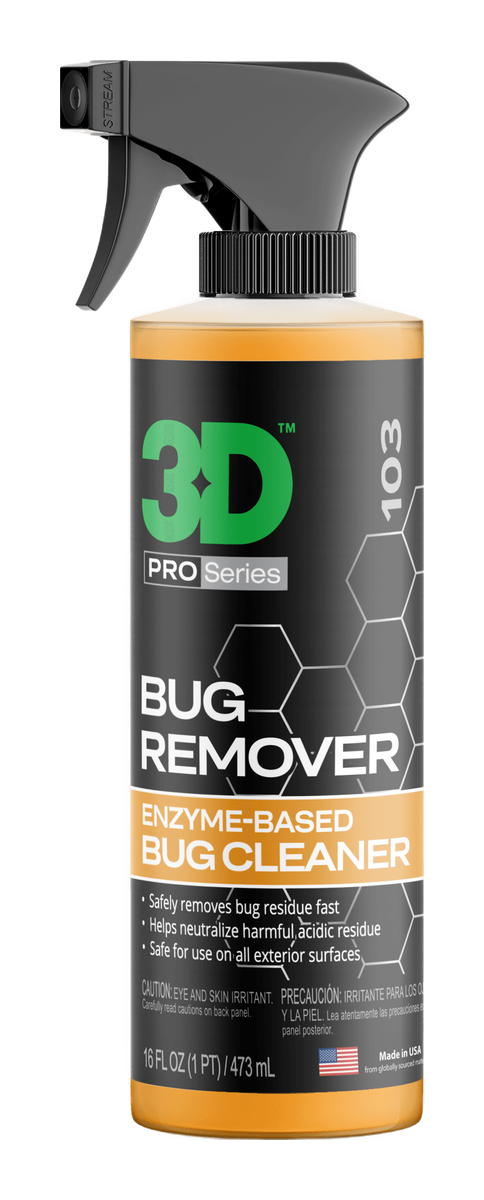
3D Bug Remover shares the same pH and alkaline mechanism, making it the nearest chemical sibling. Both rely on strong alkalinity to hydrolyze dried insect proteins, so real-world performance should overlap closely. The difference comes down to ingredient transparency and price.
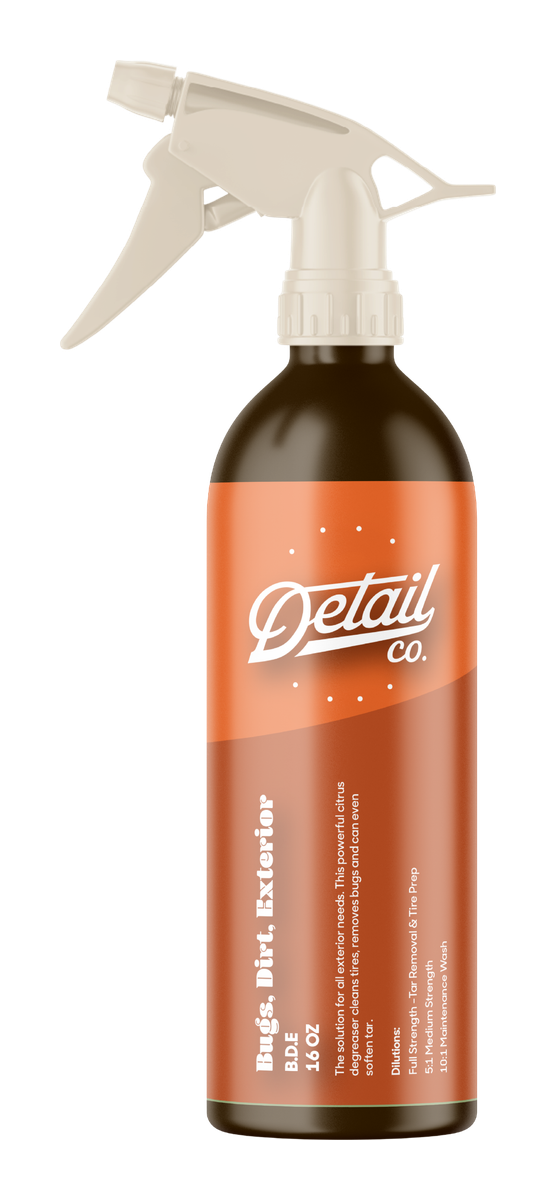
Detail Co. B.D.E dials the pH back half a point to 11.5 — a meaningful step down in alkalinity that reduces risk on coated or wrapped surfaces while still operating well above the category average. A better fit for regular maintenance washes rather than heavy decontamination passes.
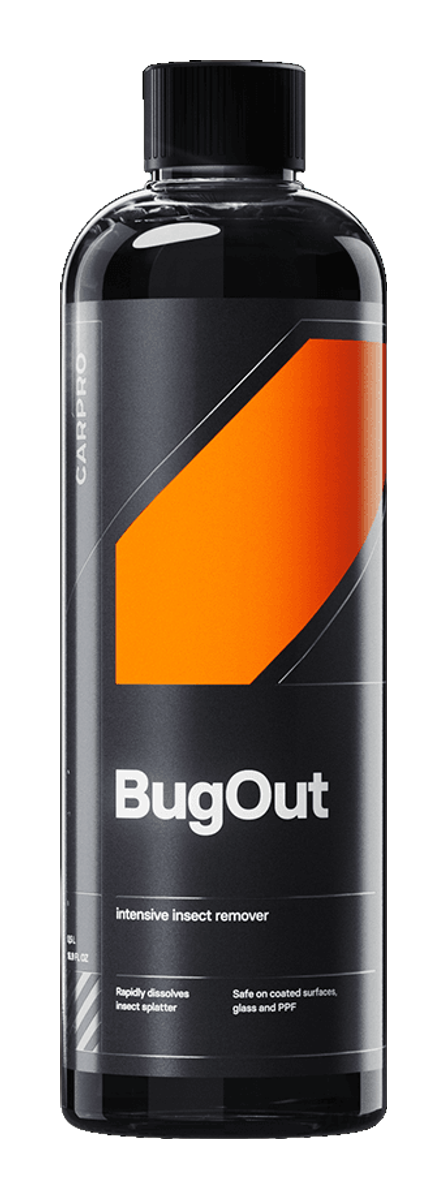
CARPRO BugOut matches the alkaline strength but costs 270% more per ounce. That premium buys CARPRO's surfactant package and brand ecosystem, though the core chemistry delivers the same pH-driven protein breakdown.
Compare These Products



How the Chemistry Works
This formulation attacks bug residue through a two-stage process: alkaline hydrolysis breaks the protein bonds in dried hemolymph and chitin, then a triple-surfactant system lifts the loosened material off the surface. Sodium hydroxide drives the hydrolysis, splitting the tough protein chains that make bug splatter so stubborn once it dries. Once those bonds crack, three surfactants divide the cleanup work. Sodium dodecylbenzenesulfonate, the primary anionic workhorse, emulsifies the oily lipid fraction of insect residue and generates the foam that gives the product visual feedback on the surface. Sodium 1-octanesulfonate, a shorter-chain anionic, penetrates faster into the softened residue because its smaller molecular structure lets it reach contamination the larger surfactant can't immediately access. C9-11 ethoxylated alcohols, the nonionic component, lower surface tension so the solution wets out across the splatter zone rather than beading up around it. Together, these three surfactants create a system that wets, penetrates, and emulsifies in sequence, which is why bug guts soften during a short dwell rather than requiring repeated scrubbing.
The inclusion of 2-butoxy-1-ethanol is the formulation choice that separates this from simpler alkaline bug removers. This glycol ether co-solvent dissolves both oil-soluble and water-soluble fractions simultaneously, meaning it bridges the gap between the fatty lipids in bug residue and the water-soluble proteins the alkaline system already handles. Without it, the surfactants would need to do all the oil-dissolution work alone, requiring either higher surfactant concentrations or longer dwell times. The formulator also invested in fragrance architecture: six distinct fragrance components, from ethyl butyrate's fruity pineapple note to gamma undecalactone's peachy sweetness, create a layered scent profile. That's unusual for a bug remover and signals a deliberate effort to mask the sharp alkaline odor that sodium hydroxide formulations typically carry.
With 15 disclosed ingredients, this is a fully open formula, and what's absent tells a story. There's no chelating agent, which means the product doesn't target mineral-bound contamination like hard water spots or metallic fallout. That's a focused decision: this formula is built to destroy organic protein and lipid contamination, nothing else. Sodium sulfate appears as an anti-redeposition agent, preventing loosened bug residue from settling back onto the paint during the wipe-off step. The absence of any thickening polymers or gelling agents explains why this sprays thin and runs on vertical surfaces. The formulator chose penetration speed over cling time, a trade-off that favors horizontal panels like hoods and bumper tops where bug contamination concentrates.
What We Like
- Full 15-ingredient disclosure with CAS numbers — lets you cross-reference every component against your coating manufacturer's compatibility list before spraying, which matters when you're putting a high-pH product on a ceramic-coated bumper.
- RTU format at half the category price — at half the category average price, the ready-to-use format removes any dilution guesswork while keeping per-application cost low enough to spray liberally on a bug-covered front end without rationing.
- Sodium hydroxide as the lead active — a deliberate choice over weaker alkaline agents; NaOH hydrolyzes dried chitin faster than carbonates or silicates, cutting dwell time on heavy splatter to minutes rather than repeated soak-and-scrub cycles.
What to Know
- Protection stripping is the cost of this alkalinity. Any wax or sealant layer gets saponified on contact. Budget for reapplication after each use, or limit application to ceramic-coated surfaces where the chemistry is compatible.
- No dwell time forgiveness. The RTU format means you can't dial back strength for lighter jobs. If it dries on a hot panel, you risk etching or staining. Work in shade, keep panels cool, and treat one section at a time.
- Vinyl wraps are off-limits. The formulation degrades wrap adhesives and finishes across all types. Gloss, matte, satin. If your front end is wrapped, choose a neutral-pH alternative.
Who Should Buy This
If you're scraping bugs off a bumper after a long highway trip and want a single spray-and-wipe pass instead of repeated scrubbing, this formulation's alkaline hydrolysis breaks down dried hemolymph proteins faster than neutral-pH alternatives that rely on surfactants alone. It earns its keep on road-trip recovery days where bug splatter has baked in sun and needs strong chemistry to release. If you maintain a wax or sealant and want something gentler for weekly touch-ups, a lower-alkalinity option avoids stripping protection. But for the deep clean where you're reapplying protection anyway, this is the right tool.
Want to see how this stacks up? Compare these 3 bug removers
Frequently Asked Questions
Can I leave Adam's Bug Remover on the surface while I wash the rest of the car? No. The sodium hydroxide base continues hydrolyzing whatever it contacts (paint sealants, rubber trim dye, even anodized aluminum) the longer it sits. Keep dwell time under two minutes, and rinse before moving on to other panels.
Why do bug splats sometimes leave a shadow even after the product dissolves the bulk residue? The stain is etching, not leftover bug material. Acidic hemolymph can etch clear coat within hours in direct sun, and no alkaline remover reverses that damage. If shadows persist after a clean wipe, a light polish is the fix.
How does Adam's Bug Remover compare to 3D Bug Remover for someone choosing between them? Chemically, they're near-identical in mechanism and strength. The real difference is ingredient count: Adam's lists 15 components including a triple-surfactant system, while 3D uses just 5. That extra surfactant complexity gives Adam's an edge on rinsing loosened residue off textured surfaces like plastic grilles.
Do I need to wear gloves every time, even for a quick spot spray? Yes. Sodium hydroxide at this concentration causes skin burns within minutes of contact. Nitrile gloves and eye protection are non-negotiable, even for a single panel.