3D Magic Blue Tire Dressing: ChemCX Analysis

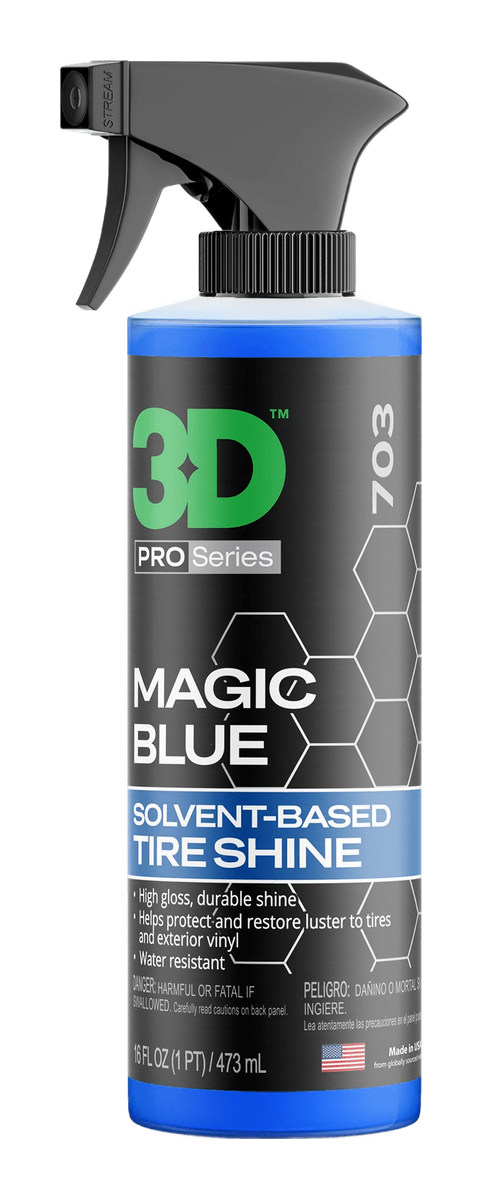
3D Magic Blue Tire Dressing puts a deep, dark black finish on tires that holds up through rain and multiple washes. Most water-based tire dressings fade after a few days or wash off in the first storm. This one stays put. The finish looks wet without being slingy, and it doesn't fling onto paint at highway speeds the way thinner dressings tend to.
The durability comes from a high concentration of polydimethylsiloxane, a silicone polymer that forms a hydrophobic film on the rubber surface. At 25-30% silicone content, this formula loads significantly more PDMS onto the tire than typical water-based dressings carry. The solvent carrier helps the silicone penetrate into the rubber's pores rather than sitting on top, which is why the finish lasts longer and resists washing off. The formula is stripped down to just two functional components: silicone and solvent carrier. No thickeners, no fragrance, no filler. That simplicity is a deliberate choice, not a shortcut. Every drop is working toward the same goal.
Specifications
| Attribute | Value |
|---|---|
| pH | 6.5 |
| Dilution Ratio | RTU (Ready-to-Use) |
| Key Actives | Polydimethylsiloxane |
| Signal Word | Danger |
| Transparency | excellent |
| Biodegradable | Yes |
Category Context
| Metric | This Product | Category Average | Category Range |
|---|---|---|---|
| pH | 6.5 | 7.4 | 4.99 - 11.5 |
| Price/oz | $0.45 | $0.91 | $0.21 - $1.77 |
Where It Lands
3D Magic Blue lands at the budget end of the tire dressing category without cutting corners on formulation transparency. At pH 6.5, it sits slightly acidic of the 7.4 category average, a mild, tire-safe zone that won't interact with wheel coatings or trim sealants during application. That mildness is the norm for silicone-based dressings; the pH is a carrier characteristic, not an active one. The real work comes from the silicone.
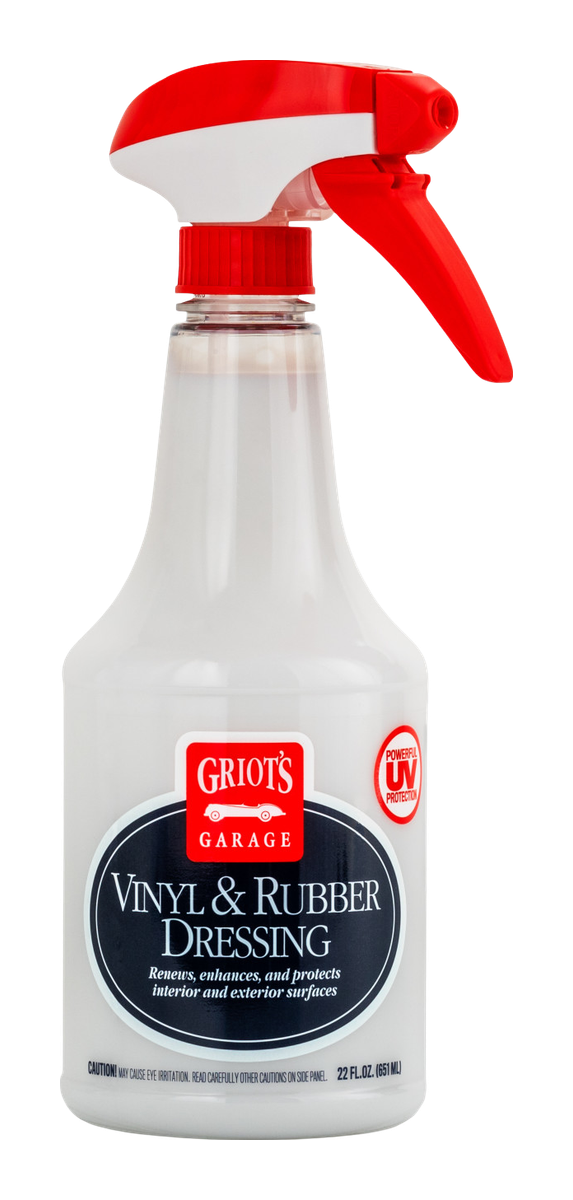
At $0.45/oz, this is half the category average and undercuts most competitors with comparable ingredient disclosure. Griots Garage Vinyl and Rubber Dressing matches it on disclosure quality at a lower price point, but is a far more complex formula for a similar job. For detailers who want a simple, proven silicone dressing with nothing hidden in the ingredient list, this is the straightforward buy.
How It Compares
Closest Alternatives
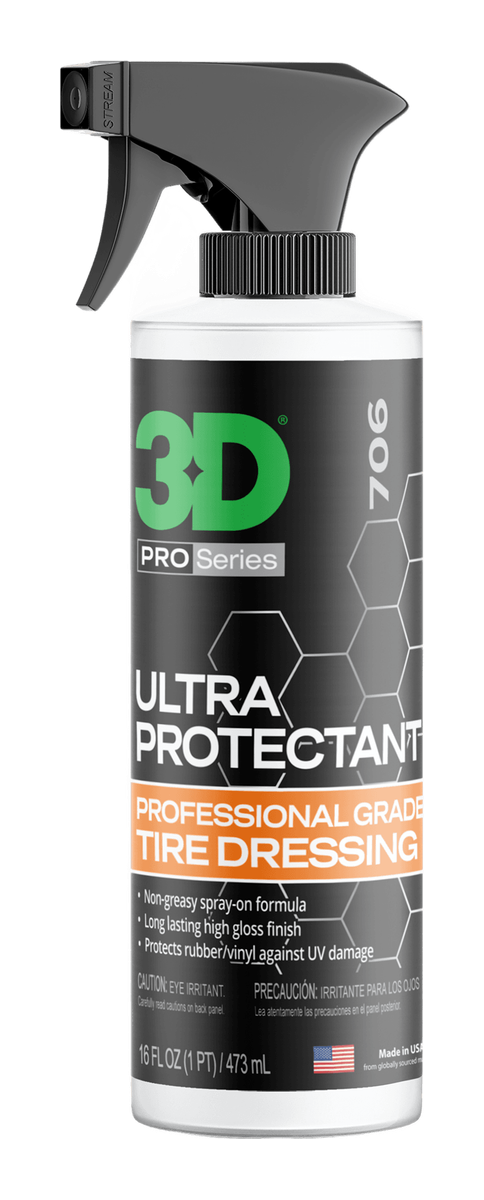
3D Ultra Protectant Tire Dressing shares the same brand lineage and a nearly identical neutral pH, making it the closest sibling in the lineup. Where Magic Blue chases a wet, high-gloss black, Ultra Protectant targets a satin finish with broader trim compatibility. It's the same silicone backbone, with a different aesthetic endpoint.
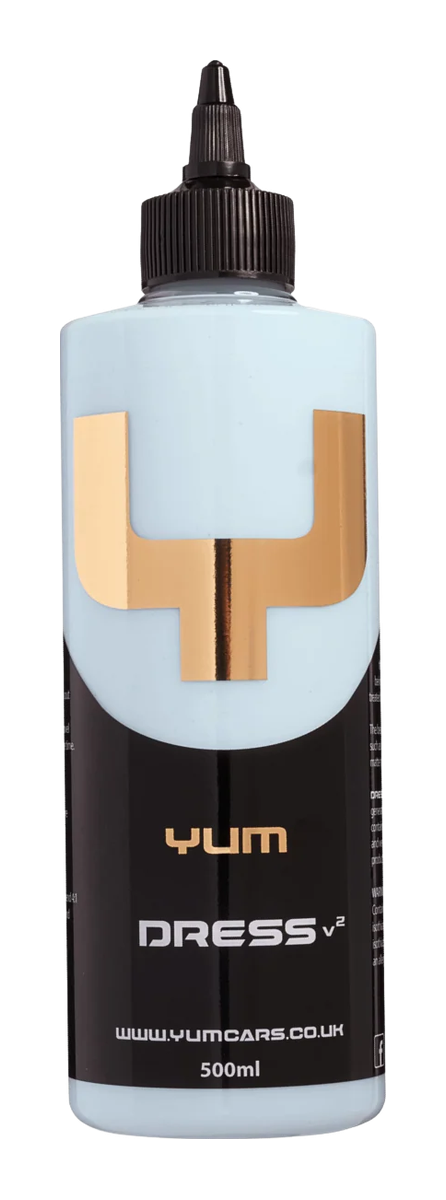
YumCars Yum Dress V2 takes a polymer-forward approach at neutral pH 7. The formulation leans on synthetic polymers rather than polydimethylsiloxane as the primary film-former, producing a matte-to-satin look that resists sling differently than silicone-dominant dressings.
Griots Garage Vinyl and Rubber Dressing runs half the per-ounce cost while holding a similar pH profile. A straightforward silicone-based dressing designed for tires and trim with less emphasis on deep wet gloss and more on versatile surface coverage at a lower price floor.
Compare These Products


How the Chemistry Works
Two ingredients, one job: deposit a uniform silicone film on rubber. The hydrotreated light petroleum distillates act as the carrier, dissolving polydimethylsiloxane into a thin, sprayable liquid that wets the tire surface evenly. Once applied, the distillates flash off, leaving behind a continuous silicone coating that fills the micro-texture of the rubber. That filling action is what produces the deep black appearance. The silicone layer is hydrophobic, so water beads and rolls off rather than sitting on the surface and pulling the dressing away. Users will notice a mild petroleum smell during application that dissipates as the solvent evaporates, typically within a few minutes.
Polydimethylsiloxane, the workhorse here, is the most common silicone polymer in tire care for good reason. Its molecular weight and viscosity can be tuned during manufacturing to balance gloss level against sling resistance. A higher-viscosity PDMS stays put on the tire but can look greasy; a lower-viscosity version penetrates deeper into rubber pores but may fling onto paint at highway speed. The loading 3D chose is roughly double what many water-based emulsion dressings deliver to the surface after their water phase evaporates. That heavier loading is why the product produces a wet, high-gloss finish rather than the satin look common in water-based competitors. The petroleum distillate carrier also matters because PDMS dissolves directly into a hydrocarbon solvent rather than being suspended in water as an emulsion, and so the silicone hits the rubber as a true solution and forms a more cohesive film.
With only two ingredients and full disclosure, there is genuinely nothing hidden here. No UV absorbers, no antiozonants, no conditioning agents that would feed the rubber long-term. This is a cosmetic dressing, not a treatment. The formulation makes no attempt to slow the oxidative degradation that turns tires brown over months, so the protection story is limited to water resistance and surface-level shielding. The trade-off is simplicity: fewer ingredients mean fewer compatibility issues, a longer shelf life, and predictable performance. The Danger signal word comes from the petroleum distillates, which are flammable and require ventilation during application, not from any exotic additive.
What We Like
- Two-ingredient simplicity eliminates variables — with only PDMS and a petroleum distillate carrier, there are no emulsifiers, thickeners, or fragrances to break down over time. Shelf stability is essentially indefinite, and you never get batch-to-batch inconsistency in finish appearance.
- Solvent-based carrier flashes off cleanly — the light distillate evaporates without leaving water-trapping residue beneath the silicone film, which is why the coating resists washouts that defeat emulsion-based dressings within days.
- RTU at $0.45/oz undercuts half the category — no mixing, no dilution ratios to debate, and the per-application cost stays low enough for weekly detail maintenance without guilt.
What to Know
- High-gloss silicone is a dust magnet — the wet-look PDMS film that makes tires look freshly detailed also attracts road dust and brake particulate faster than satin or matte dressings. You get the darkest possible finish, but tires will look dirty sooner between washes.
- Petroleum distillate carrier earns that Danger signal word — the same solvent that delivers such a thin, even silicone coat is flammable and produces harmful vapors. Work outdoors or in open garages, and consider gloves since the carrier degreases skin on contact.
- RTU convenience locks you into one concentration — no way to dial back to a lighter coat or strengthen for weathered rubber. Every application deposits the same film thickness, which suits weekly maintenance but limits flexibility for heavily oxidized tires that could benefit from a heavier first pass.
Who Should Buy This
If you're chasing a deep wet-black finish that survives weekly drives through rain, the silicone-film approach here outperforms water-based dressings that wash off after the first downpour. Where this product earns its keep is on daily drivers parked outdoors: PDMS bonds to rubber and sheds water rather than absorbing it, so the finish holds through weather cycles that strip emulsion-based alternatives. A solid choice when you want dark, durable gloss without fuss.
Want to see how this stacks up? Compare these 3 tire dressings
Frequently Asked Questions
Can I apply 3D Magic Blue over ceramic-coated tires or tire coatings? Yes, but the PDMS film sits on top of any existing coating rather than bonding to it. You're layering two hydrophobic barriers, which can cause the dressing to bead unevenly and sling off at highway speed. If your tires already carry a semi-permanent coating, this product adds gloss but reduces that coating's longevity by trapping contaminants between layers.
Why does my bottle carry a Danger signal word for a tire dressing? The petroleum distillate carrier is flammable and harmful if inhaled in concentration. Once applied and dried on the tire, the carrier evaporates and the remaining PDMS film is inert. Use in ventilated areas, avoid spraying near open flames, and wear gloves during application.
How does 3D Magic Blue differ from 3D Ultra Protectant in actual use? Ultra Protectant uses three ingredients to target a satin, more natural finish across vinyl, rubber, and plastic. Magic Blue's two-ingredient formula deposits a thicker silicone layer tuned specifically for high-gloss tire work. Choose Ultra Protectant for interior trim and lower sheen; choose Magic Blue when maximum wet-black depth on tires is the goal.