303 Products Speed Detailer: ChemCX Analysis

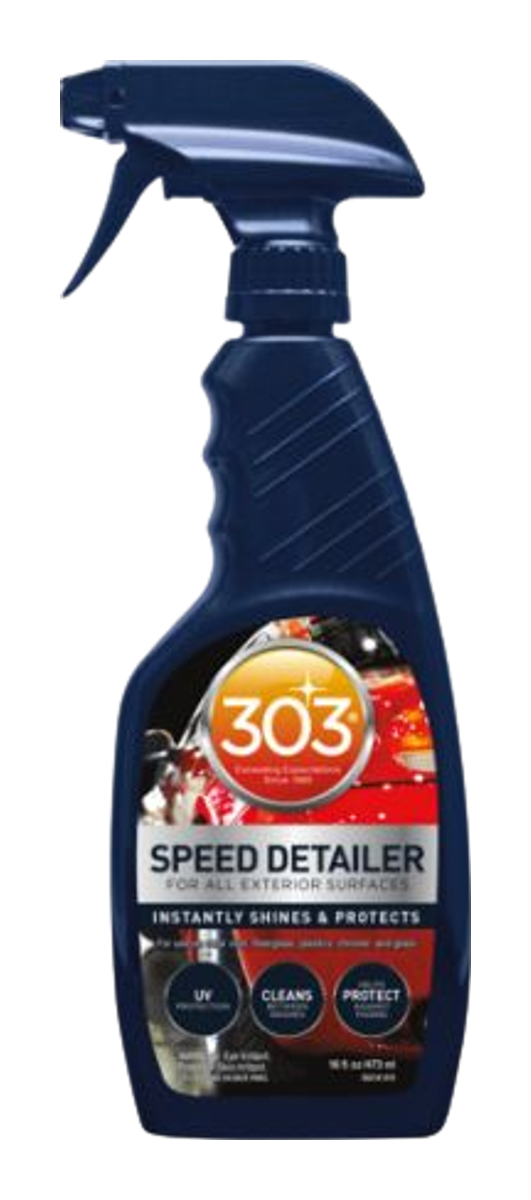
303 Speed Detailer is a silicone-based quick detailer that leaves a slick, glossy finish across paint, plastic, glass, and trim. It sprays on thin, buffs off clean, and doesn't leave streaks or hazy residue behind. Panels feel coated rather than just wiped down, and dust doesn't cling the way it does on bare paint. It works well as a maintenance spray between washes, adding a layer of protection each time you use it.
Polydimethylsiloxane, a liquid silicone in the 3-7% range, is the primary functional ingredient. It spreads into a thin, even film that fills micro-texture in the paint and reflects light uniformly, which is where the gloss bump comes from. That same silicone layer is hydrophobic and anti-static, so water beads up and dust has less reason to stick. A nonionic surfactant package keeps the silicone dispersed evenly in the bottle and helps it lay down without streaking during application. The formula is straightforward: silicone for protection and shine, surfactants for clean application.
Specifications
| Attribute | Value |
|---|---|
| pH | 7.5 |
| Dilution Ratio | RTU (Ready-to-Use) |
| Key Actives | Polydimethylsiloxane |
| Signal Word | Warning |
| Transparency | excellent |
| Biodegradable | Yes |
Category Context
| Metric | This Product | Category Average | Category Range |
|---|---|---|---|
| pH | 7.5 | 6.6 | 4 - 8 |
| Price/oz | $0.00 | $0.77 | $0.18 - $2.96 |
Where It Lands
303 Speed Detailer sits slightly alkaline in a category that trends acidic to neutral. At pH 7.5, it lands near the top of the quick detailer range (category average: 6.6, ceiling: 8). That extra alkalinity gives it a marginal edge for lifting fresh dust and light road film compared to the pH 5–6 formulas that dominate the segment. Those lean on lubricity alone and skip any cleaning contribution. For a product marketed as a "cleaner in between washes," the chemistry backs the claim, even if the cleaning power is modest.
303 outperforms on light maintenance days when you want a single spray-and-wipe that adds slickness and mild cleaning without a separate wash step. It's not overkill for anything: a neutral-range quick detailer is about as gentle as the category gets. The price data isn't available for direct comparison, but full 24-ingredient disclosure at this pH range puts it in rare company; most competitors at similar working strength disclose half as many ingredients or fewer.
How It Compares
Closest Alternatives
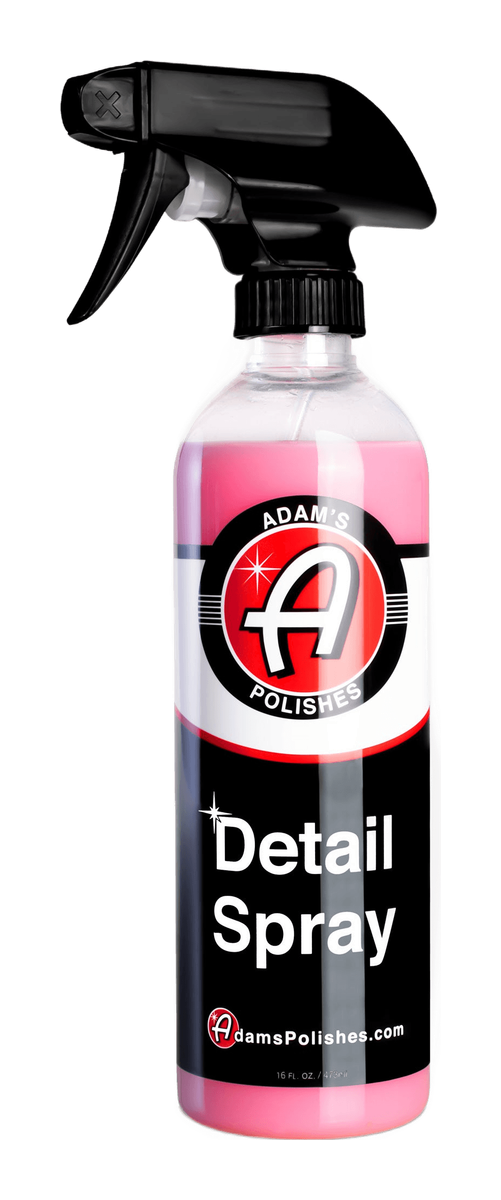
Adam's Polishes Detail Spray runs a near-identical pH of 7.2 and relies on a similar silicone-polymer backbone for gloss and slickness. It's the closest formula match in the category, a straightforward swap if you want the same lubricity and wipe-off behavior from a different bottle.
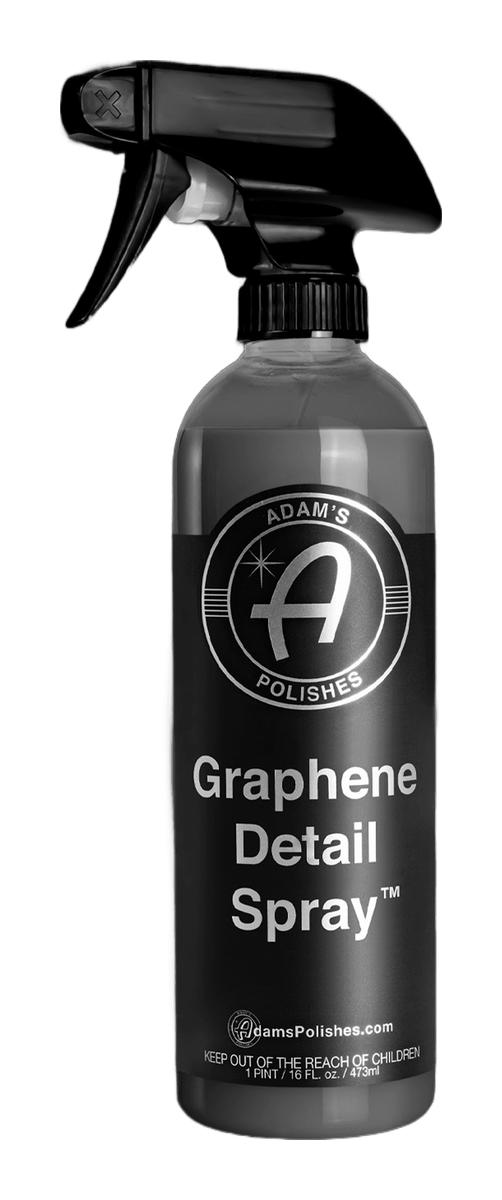
Adam's Polishes Graphene Detail Spray layers graphene-oxide polymers over the base silicone approach, trading pure slickness for harder surface energy reduction. It shares a similar neutral pH, but the graphene component aims to extend durability between washes rather than maximize immediate gloss.
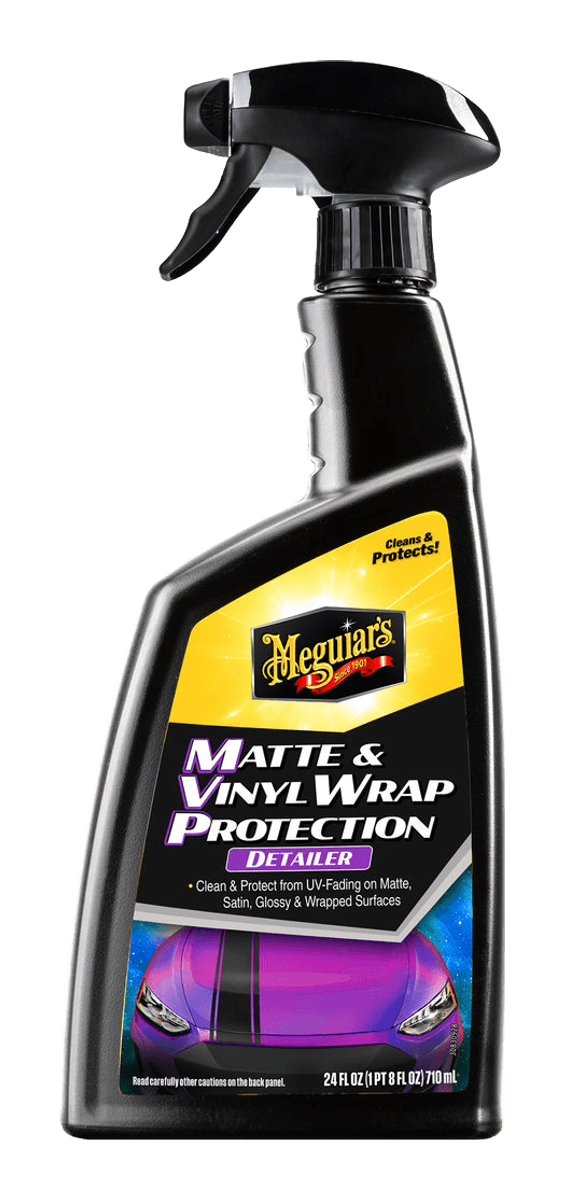
Meguiar's MVP Detailer shares the pH 7.5 sweet spot and targets the same multi-surface versatility (paint, plastic, glass) in a formula designed for professional detail shops. Sold in bulk sizes, its per-ounce cost drops significantly at volume, making it the more practical pick for frequent use.
Compare These Products


How the Chemistry Works
Spray this on a panel and the system activates in layers. Polydimethylsiloxane (PDMS) at 3–7% forms the functional core, a silicone emulsion suspended in water by a single nonionic surfactant, ethoxylated 2-propylheptanol. That surfactant keeps the PDMS droplets uniformly dispersed in the bottle and ensures they spread evenly across the surface when you mist it on. As you wipe, the water and isopropyl alcohol flash off, collapsing the emulsion and depositing a thin silicone film. The IPA serves two roles here: it cuts through light surface contamination like fingerprints and road film while accelerating dry time so the silicone lays down before you can create streaks. A glycol co-solvent slows evaporation just enough to give you working time in direct sun. The result is that slick, dust-repelling finish the product is known for, with UV absorbers co-deposited into the silicone layer to extend protection beyond simple gloss.
The choice of PDMS over cyclopentasiloxane or amino-functional silicones is deliberate. PDMS is a widely used linear polymer that spreads into a uniform, optically clear film without the tackiness of heavier silicone oils or the volatility of cyclics. It's why 303 Speed Detailer works identically on paint, plastic, and glass without leaving different textures on different substrates. The ethoxylated 2-propylheptanol surfactant is worth a closer look. It's a Guerbet alcohol ethoxylate, chosen because its branched hydrophobe provides strong wetting on low-energy surfaces like plastic trim and rubber while generating almost no foam. That's a smart pick for a spray-and-wipe product: foam would trap silicone in bubbles instead of letting it flow across the surface.
Review of the 24 ingredients reveals something unusual: nearly half the list is fragrance components. The functional side of the formula is lean. One surfactant, one silicone, two solvents, two preservatives, UV absorbers, and water. No polymers for extended durability, no wax for layered protection. This is a product designed to deposit silicone quickly and leave nothing else behind.
What We Like
- Single-surfactant emulsion design — Using one nonionic surfactant (ethoxylated 2-propylheptanol) to stabilize the PDMS emulsion keeps the formula lean. Fewer surfactants mean less residue competing for the surface, which is why this buffs off so cleanly on glass and dark paint where haze shows instantly.
- Anti-static silicone film — The PDMS layer doesn't just add gloss; it reduces static charge on plastic trim and dashboards. Dust clings to charged surfaces, so the anti-static property extends the time between details on exterior plastics and interior touchpoints.
- Biodegradable at full silicone loading — Most silicone-based detailers skip biodegradability claims. 303 achieves it here despite 3–7% PDMS content, which matters if you're detailing outdoors where rinse water hits soil or storm drains.
What to Know
- Silicone slickness comes with prep. PDMS deposits a hydrophobic film that interferes with coating adhesion and paint correction compounds. If you plan to polish or apply a ceramic coating, you'll need a dedicated panel wipe or IPA wipedown to strip the silicone layer first.
- Durability trails synthetic polymer detailers. The PDMS film delivers immediate gloss but breaks down faster under UV and mechanical wear than polymer-crosslinked alternatives. Expect to reapply every week to maintain slickness, where a polymer QD might hold longer between applications.
Who Should Buy This
If you're wiping down a car between washes — removing light dust, fingerprints, and water spots without dragging grit across the clear coat, this formula's single-surfactant emulsion lifts contamination cleanly while the PDMS film restores slickness in one pass. It works well as a show-day touch-up across mixed surfaces: paint, trim, glass, and plastic all respond to the same spray-and-buff process. For maintaining daily drivers where deep cleaning isn't the goal but consistent gloss and UV screening are, 303 Speed Detailer handles the job with minimal fuss and zero streaking.
Want to see how this stacks up? Compare these 3 quick detailers
Frequently Asked Questions
Will the silicone in 303 Speed Detailer interfere with ceramic coatings I've already applied? No. Applying it over a cured ceramic coating won't damage the coating itself. The PDMS film sits on top and adds temporary slickness, but it will mask the coating's own hydrophobic behavior until it wears off or gets stripped with a dedicated panel wipe.
How does 303 Speed Detailer compare to Adam's Graphene Detail Spray? Adam's Graphene Detail Spray shares the same neutral pH but uses graphene-derived additives for durability claims, while 303 relies on a straightforward PDMS emulsion. 303 discloses 24 ingredients versus Adam's 12 partial disclosure, so you know exactly what's going on the surface.
Why does the label carry a Warning signal word for a neutral-pH product? The Warning comes from the solvent and propellant package, not the pH. Inhalation risk from aerosolized silicone emulsions triggers the designation. Apply in ventilated areas and avoid spraying directly toward your face.
Can I use this on matte or satin paint finishes? No. PDMS leaves a glossy film by design, which will create uneven sheen on matte and satin surfaces. Stick to gloss and metallic finishes.