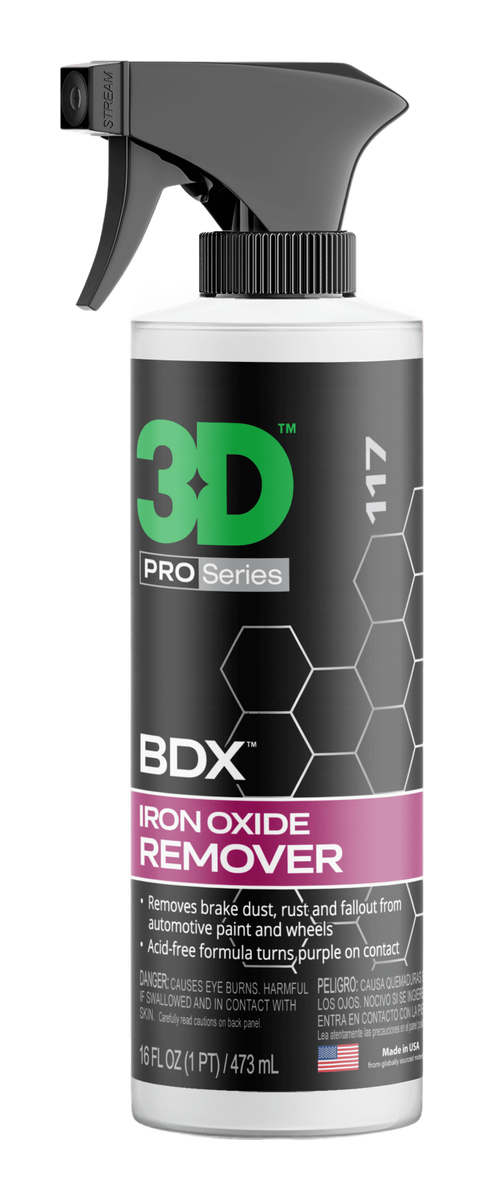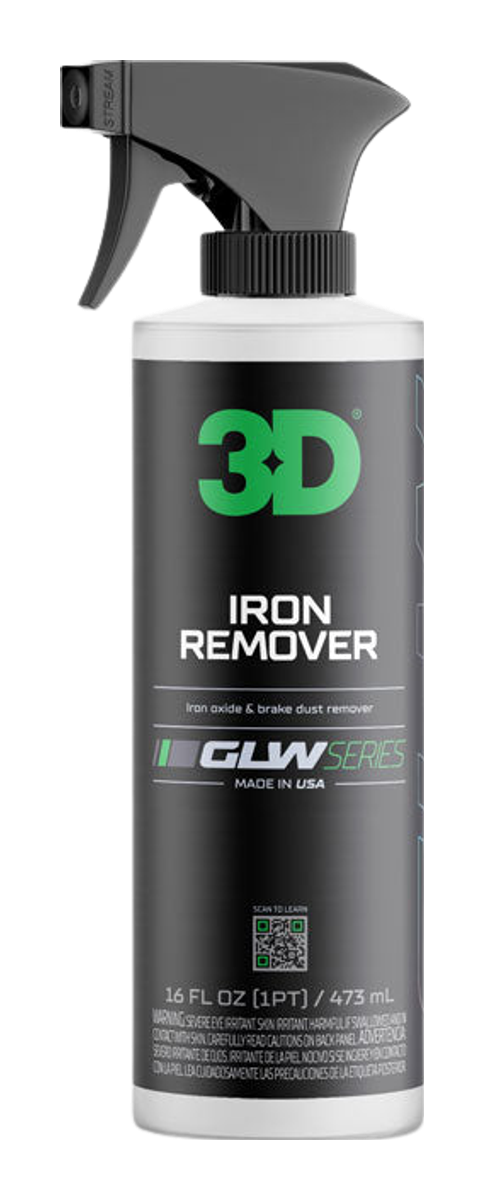
3DGLW Series Iron Remover
Updated · 3 ingredients analyzed
$0.43BEST $/OZ
A thioglycolate-based iron remover featuring 10-15% sodium thioglycolate for removing embedded iron contamination from paint and wheels. 3D GLW Series Iron Remover ranks #5 for value among 34 iron removers, at $0.43 an ounce.
Key Chemistry
pH
10–12
Active
Thioglycolate
Active strength
≈10.0%
Expert Analysis
Uses sodium thioglycolate at 10-15% concentration to chemically dissolve iron particles through reduction reactions. The alkaline pH of 10-12 enhances the thioglycolate's effectiveness while nonionic surfactants help penetrate and lift loosened contaminants. This concentration level provides strong iron removal capability comparable to professional-grade products.
Key Differentiators
- •High 10-15% sodium thioglycolate concentration for strong iron dissolution
- •Safe for clear coats, paint, and aftermarket wheels according to manufacturer
Ingredients
Sodium Thioglycolate
10–15%≈ 10.0% active thioglycolate (salt-normalized)
CAS: 367-51-1iron chelator
Alcohols, C9-11, Ethoxylated
1–5%
CAS: 68439-46-3surfactant
Sodium Hydroxide
N/D
CAS: 1310-73-2ph adjuster
Safety Profile
Signal Word
DangerEye Hazard
Assumed serious eye damage (part of H314)Skin Hazard
H314 - Causes severe skin burns and eye damage (MOST SEVERE in iron remover database)Corrosive to Metals
NoFlammable
No