SONAX Spray and Seal: ChemCX Analysis
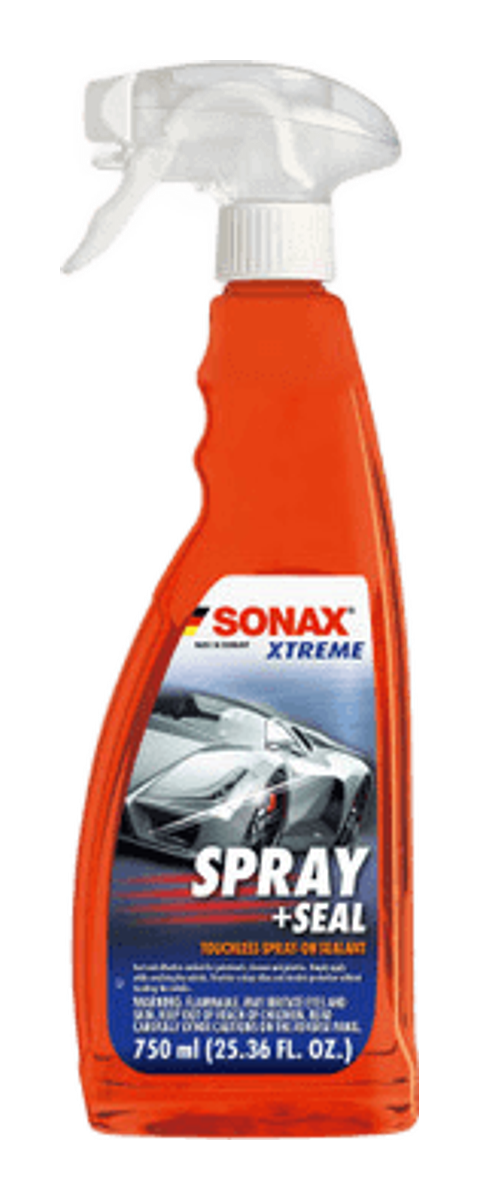
SONAX Spray and Seal is a spray sealant you apply during the wash process, rinse off, and never touch with an applicator. You spray it onto a wet panel, let it sit briefly, then rinse. The surface sheets water immediately. The whole process adds about five minutes to a wash, which makes it one of the lowest-effort ways to maintain a hydrophobic layer between more serious protection details. Where most spray sealants ask you to work them in with a towel or at least wipe off residue, this one skips that step entirely.
Aminoethyl-functionalized silicone polymers do the heavy lifting. They crosslink when they contact water on the paint surface, forming a hydrophobic film that bonds without buffing or curing time. That crosslinking reaction is why the touchless method works: the silicone doesn't need mechanical pressure to anchor itself. A nonionic surfactant package ensures the product spreads evenly across the wet panel instead of pooling in low spots. The formula is straightforward in its approach: get silicone onto the surface and let chemistry handle adhesion, no applicators required.
Specifications
| Attribute | Value |
|---|---|
| pH | 4.5 |
| Dilution Ratio | RTU (Ready-to-Use) |
| Key Actives | Siloxanes and Silicones, dimethyl, polymers with 3-[(2-aminoethyl)amino]propyl silsesquioxanes |
| Signal Word | Warning |
| Transparency | excellent |
| Biodegradable | Not disclosed |
Category Context
| Metric | This Product | Category Average | Category Range |
|---|---|---|---|
| pH | 4.5 | 6.2 | 4 - 9 |
| Price/oz | $0.83 | $1.47 | $0.23 - $7.10 |
Where It Lands
SONAX Spray and Seal sits at the acidic edge of the spray sealant category. At pH 4.5, it lands 1.7 points below the category average of 6.2, tied for the lowest pH in the field. That mild acidity works in its favor during the rinse-and-go application: it won't strip existing wax layers or interact aggressively with fresh paint corrections the way a neutral or slightly alkaline sealant might. For weekly wash-and-protect routines, the chemistry is well-matched to the use case.
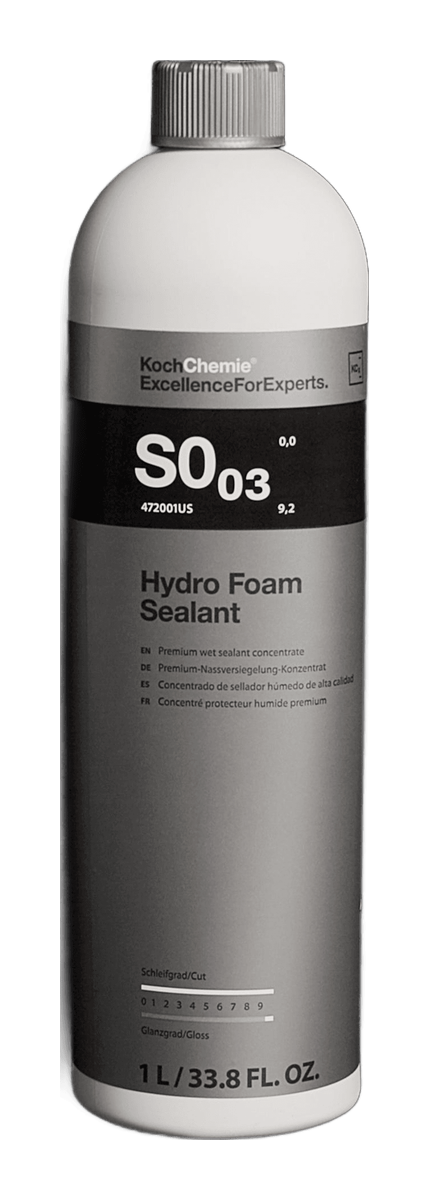
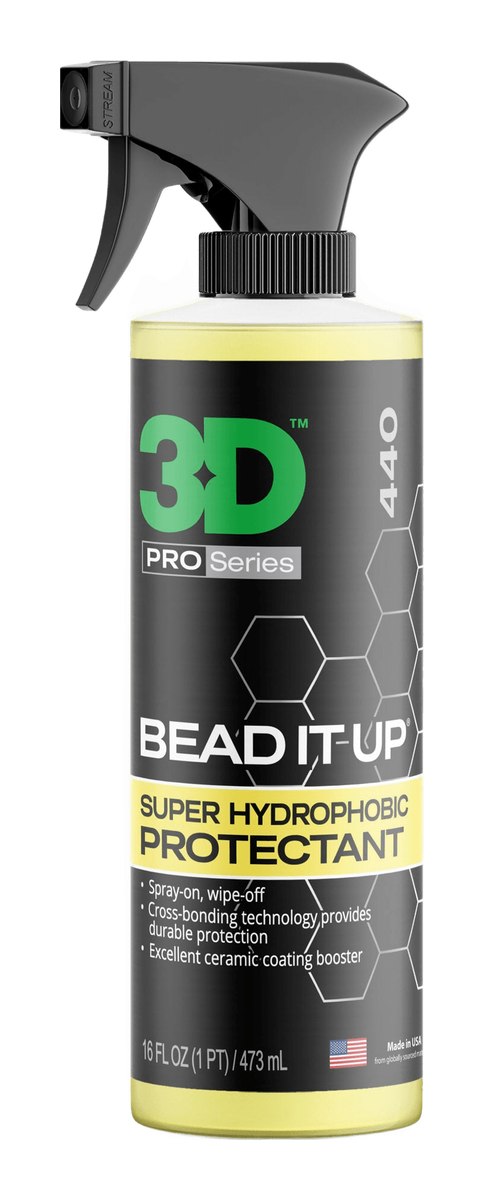
At $0.83 per ounce, it runs 44% below the category average: genuine budget territory for a silicone-based spray sealant from a major manufacturer. You can get cheaper: 3D Bead It Up delivers the same pH at $0.34 per ounce. But SONAX undercuts the similarly formulated Koch-Chemie Hydro Foam Sealant by 38%, making it the cost-effective middle ground for rinse-off sealant buyers.
How It Compares
Closest Alternatives
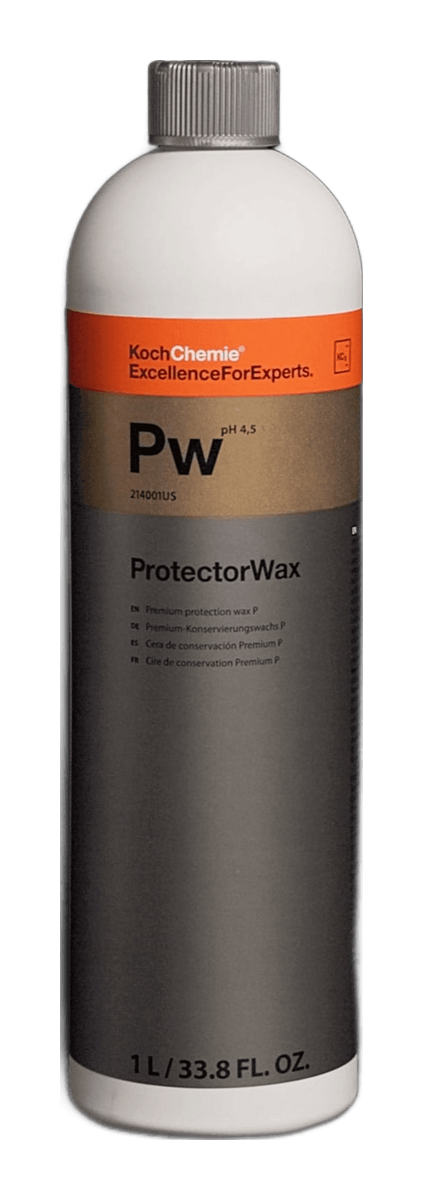
Koch-Chemie Protector Wax shares the same pH and silicone-based protection approach, making it the closest formulation match in the category. At $0.81/oz, pricing is nearly identical. The primary difference is application protocol. Protector Wax is designed as a wipe-on product rather than a rinse-off spray, which adds contact time but gives more control over coverage.
Koch-Chemie Hydro Foam Sealant S0.03 takes a foam cannon delivery route to achieve touchless sealant application. The foaming mechanism increases dwell time on vertical panels without runoff, a different solution to the same coverage problem. It runs 60% more expensive per ounce.
At $0.34/oz, 3D Bead It Up delivers spray sealant protection at a fraction of the cost. It matches the pH but targets a budget-conscious maintenance routine where reapplication frequency matters less than per-application cost.
Compare These Products

How the Chemistry Works
The system works in two phases: spread, then bond. Glycerol and isopropanol act as the delivery vehicle, lowering viscosity and helping the silicone polymer disperse evenly across a wet surface. Water on the panel actually assists here. The aminofunctional silicone polymer carries amine groups that are protonated by the mildly acidic carrier, giving them a positive charge. Paint surfaces carry a slight negative charge. That electrostatic attraction pulls the silicone polymer onto the surface and anchors it even as rinse water flows over the panel. Trideceth-12, the lone nonionic surfactant, emulsifies the silicone into the water-based carrier so it stays in suspension until it contacts the surface. Once the rinse water carries away the glycerol, isopropanol, and surfactant, what remains is a thin crosslinked silicone film. The user experiences this as immediate water sheeting and a slick, glossy feel without any buffing.
The aminofunctional silsesquioxane polymer is the formulation's most deliberate choice. Standard PDMS (polydimethylsiloxane) oils provide gloss and hydrophobicity, but they sit loosely on surfaces and wash off within days. By grafting aminoethylaminopropyl groups onto a silsesquioxane backbone, SONAX gets a polymer that chemically bonds to hydroxyl-rich surfaces through hydrogen bonding and electrostatic interaction. The silsesquioxane cage structure adds rigidity compared to linear silicones, which translates to a harder, more durable film. This is why a spray-on, rinse-off product can deliver multi-week hydrophobic performance rather than just single-wash slickness. The three cyclic siloxanes in the disclosed list, cyclopentasiloxane, cyclohexasiloxane, and cyclotetrasiloxane, serve as volatile carriers that help the polymer spread into a uniform film before evaporating cleanly.
The disclosed ingredient list covers hazardous and regulated components only, so the full formula is larger than ten ingredients. Undisclosed components likely include additional emulsifiers, stabilizers, or co-solvents that keep the aminofunctional silicone polymer from separating in the bottle. The absence of any chelating agent from the disclosed list is worth considering: the mildly acidic carrier handles minor mineral deposits on its own, but the product isn't designed to strip existing water spots. Lactic acid pulls double duty as pH adjuster and mild descaler, a smart choice over mineral acids since it's gentler on trim and rubber while still maintaining the acidic environment the aminofunctional polymer needs to stay charged during application.
What We Like
- Acidic pH doubles as mineral deposit defense — At the low end of the category range, the formulation dissolves light water spot precursors during application rather than leaving them trapped under a fresh sealant layer. You get a cleaner bonding surface without a separate prep step.
- Zero-contact application eliminates marring risk — The spray-and-rinse workflow means no applicator pads or microfibers touch the paint during sealing. For owners of soft single-stage or freshly corrected finishes, that removes the most common source of fine scratches during protection steps.
- Aminoethyl-modified silicone anchors to multiple substrates — The amine-functional polymer bonds to paint, plastic, rubber, and glass through the same spray pass, so you protect trim and panels simultaneously without switching products or worrying about silicone staining on unpainted surfaces.
What to Know
- Silicone protection trades durability for speed. The rinse-and-go format eliminates applicators and curing time, but silicone-based films break down faster than ceramic or hybrid sealant layers. Expect to reapply every few weeks to maintain consistent beading, which offsets some of the per-application time savings.
- Rinse technique controls the outcome. Water-activated crosslinking means film thickness depends on how you rinse. Uneven water flow, high mineral content, or rushing the rinse step can leave inconsistent coverage. Gloves are worth considering given the acidic chemistry and signal word.
- RTU convenience locks you into one concentration. No dilution flexibility means you pay the same per ounce whether you're doing a quick refresh or a full detail. Heavy users absorb that cost faster than concentrate buyers would.
Who Should Buy This
If your routine is weekly maintenance washes and you want hydrophobic protection without adding a separate step afterward, the rinse-and-go format here eliminates towels, applicators, and curing time entirely. If you wash in hard-water areas, the acidic chemistry works in your favor. It breaks down mineral deposits during application instead of sealing them under a fresh layer, a problem neutral-pH sealants don't address. If you need protection that lasts months rather than weeks, a ceramic or hybrid sealant is the better tool. For fast, repeatable hydrophobic top-ups between deeper protection layers, though, this is purpose-built.
Want to see how this stacks up? Compare these 3 spray sealants
Frequently Asked Questions
Can I use Spray and Seal on top of an existing ceramic coating? Yes, but it won't chemically bond to a cured ceramic layer the way it bonds to bare paint. The aminosilicone polymer needs reactive sites on the surface to anchor properly. On ceramic, it sits on top as a sacrificial hydrophobic booster, effective for refreshing beading between full decontamination washes but likely to wash off faster than on uncoated paint.
How does Spray and Seal compare to 3D Bead It Up? Both share a rinse-off application format and the same pH, but the chemistry diverges. Bead It Up uses a fully disclosed four-ingredient formula, making it the more transparent option. SONAX delivers a more complex aminosilicone polymer system designed to bond rather than just coat, which typically produces longer-lasting beading per application.
Should I apply it to a dry car or a wet car? Wet. The glycerol and isopropanol carrier system is designed to spread across a water film. Applying to a dry panel concentrates the silicone unevenly and can leave streaky residue that requires buffing, exactly the extra step the product is built to eliminate.
Does the Warning signal word mean it's unsafe for regular use? No. It means standard precautions apply. Avoid eye contact and prolonged skin exposure. Nitrile gloves are sensible during application, especially since you're spraying at close range onto wet surfaces where splash-back is common.