SONAX Beast Wheel Cleaner: ChemCX Analysis
Ranked Performance
Pricing
Badges
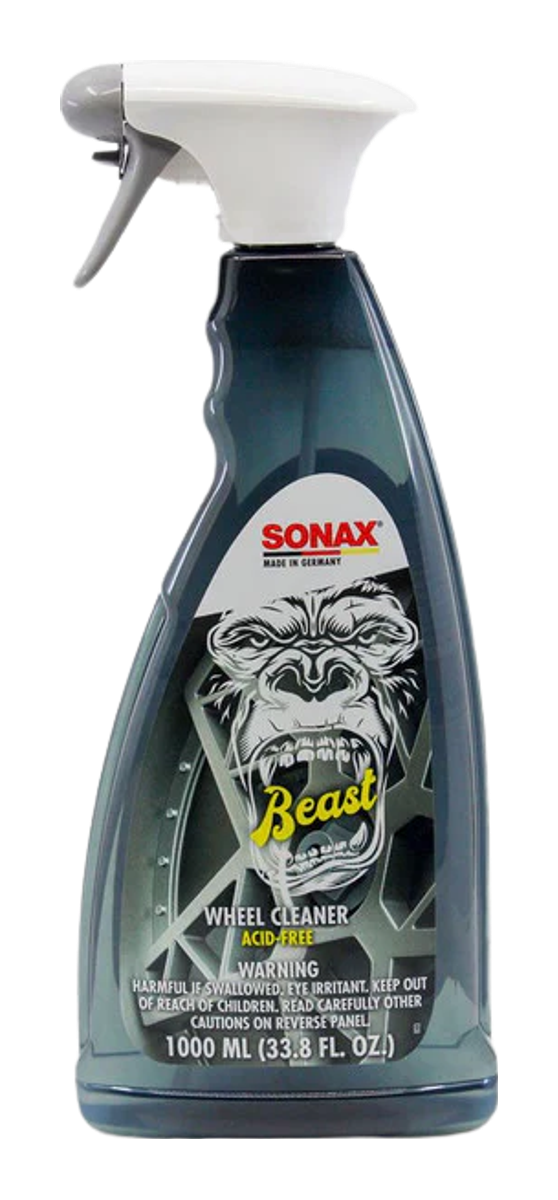
SONAX Beast Wheel Cleaner dissolves brake dust and iron contamination without the acidity that makes most wheel cleaners risky on sensitive finishes. You can spray it on chrome, polished, matte, or painted rims without worrying about etching or staining, which makes it genuinely versatile for a shop that sees different wheel types all day. The bleeding action turns purple as it reacts with iron particles, so you can see where contamination is heavy and know when it's ready to rinse.
Sodium thioglycolate does the work. It's a reducing agent that breaks the chemical bonds holding iron contamination to the surface, which is why brake dust loosens and rinses clean instead of needing heavy agitation. The purple color change is a byproduct of that same reaction. An amphoteric and nonionic surfactant blend keeps the product clinging to vertical spoke faces and suspends the loosened grime so it doesn't redeposit. The formula takes a smart approach to the universal-compatibility problem: thioglycolate delivers strong iron removal without the corrosion risk that acidic or strongly alkaline cleaners carry.
Specifications
| Attribute | Value |
|---|---|
| pH | 5.2 |
| Dilution Ratio | ready_to_use |
| Key Actives | Sodium Thioglycolate |
| Signal Word | Warning |
| Transparency | excellent |
| Biodegradable | Yes |
Category Context
| Metric | This Product | Category Average | Category Range |
|---|---|---|---|
| pH | 5.2 | 7.9 | 1 - 15 |
| Price/oz | $0.77 | $0.64 | $0.12 - $1.70 |
Where It Lands
SONAX Beast sits in the acid-free thioglycolate camp, a pH 5.2 cleaner that relies on chemical chelation rather than acid attack to lift brake dust and iron deposits. That puts it well below the category average of 7.9, but "acidic" here is misleading; this is a mild, skin-safe range closer to black coffee than to the pH 1–3 mineral acid cleaners that dominate the aggressive end of the category. The practical result: safe on every wheel finish SONAX lists, including chrome and polished aluminum, without the time-pressure etching risk that acid-based competitors impose.
It outperforms on sensitive or coated wheels where acid cleaners are simply off the table. For heavily neglected, caked-on contamination, a stronger alkaline or acid product will work faster. Beast trades speed for surface safety. It runs 20% above the category average and costs more than SONAX's own Wheel Cleaner PLUS at $0.59/oz, which shares nearly identical chemistry. The premium buys a marginally different surfactant package, not a fundamentally different cleaning mechanism.
How It Compares
Closest Alternatives
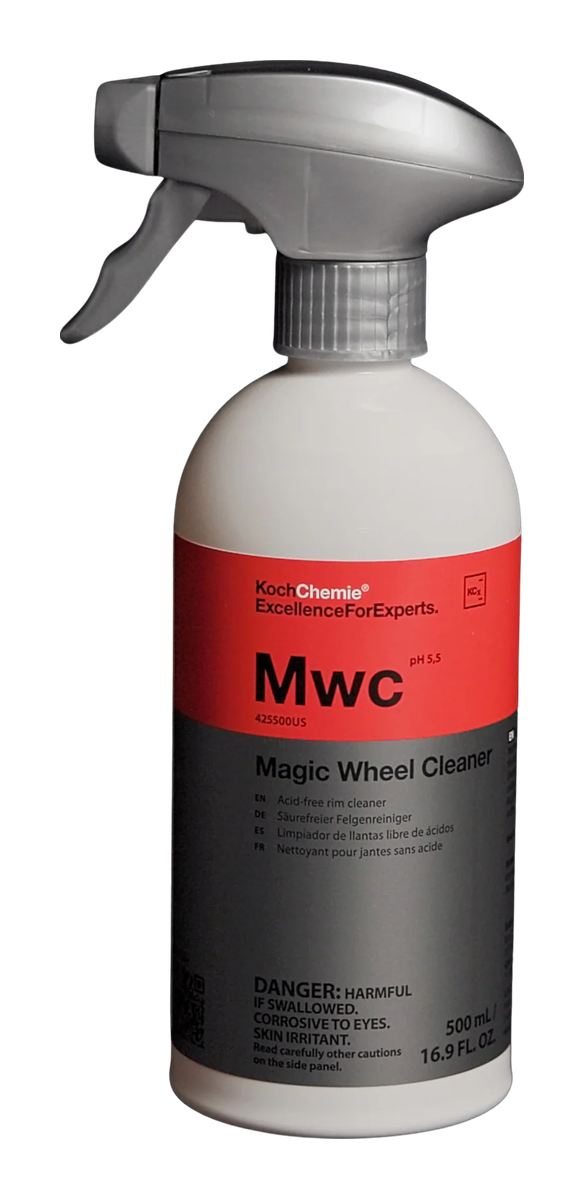
Koch-Chemie Magic Wheel Cleaner runs the same thioglycolate chemistry at a nearly identical pH of 5.5, making it the closest formulation match in the category. Koch-Chemie's version costs slightly more per ounce but comes from a concentrate-oriented line, so bulk pricing shifts the math on larger jobs.
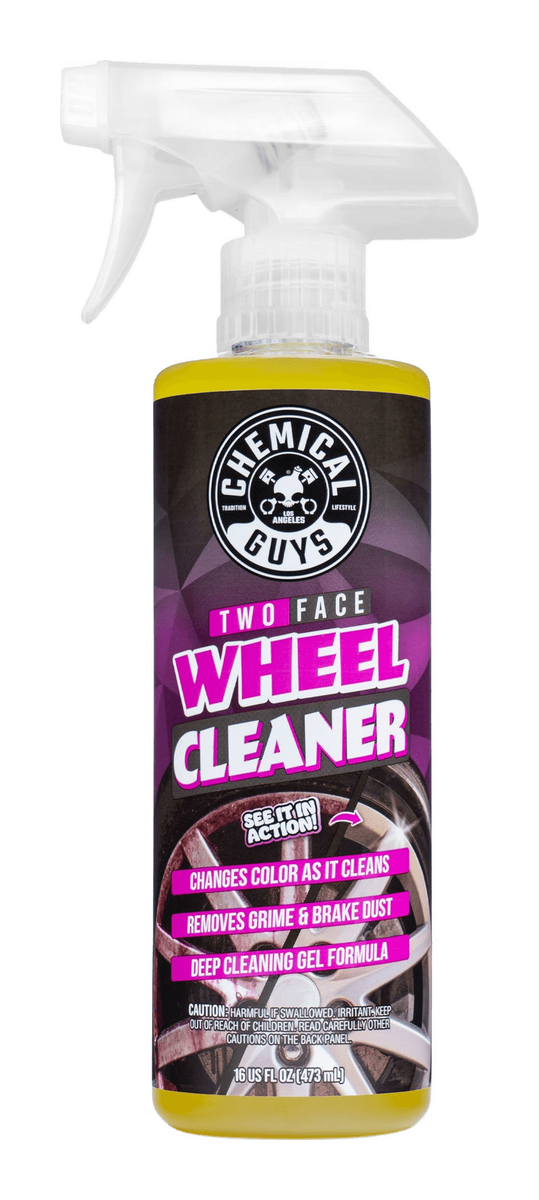
Chemical Guys Two Face Color Changing Wheel Cleaner pairs a color-changing iron indicator with a pH 5.5 formula, giving visual confirmation of brake dust dissolution similar to what Beast already provides. That feedback loop is useful on heavily contaminated wheels where dwell time decisions matter. It runs 22% more expensive per ounce.
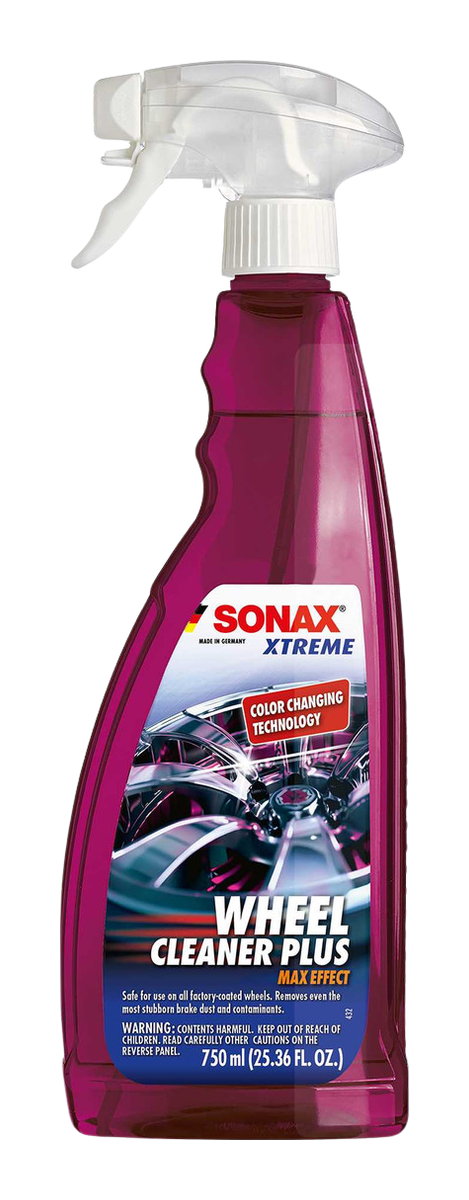
SONAX Wheel Cleaner PLUS delivers the same acid-free thioglycolate approach at pH 5.1 for $0.59/oz — the straightforward value pick within SONAX's own lineup when the Beast's reformulated surfactant package isn't a priority.
Compare These Products

How the Chemistry Works
Sodium thioglycolate drives the entire cleaning mechanism here, but not on its own. It reduces ferric iron (Fe³⁺) in brake dust to ferrous iron (Fe²⁺), breaking the bond between metallic particles and the wheel surface. That reduction reaction is what produces the purple bleeding users see within seconds of application. But dissolved iron needs somewhere to go. Phosphonobutanetricarboxylic acid (PBTC) and sodium alaninate, both chelating agents, sequester those freed metal ions so they stay suspended in solution rather than redepositing on the rim. The dual surfactant system, cocamidopropyl betaine paired with an undisclosed non-ionic surfactant, emulsifies the non-metallic half of the contamination: road film, oily residues, and carbon-based brake pad deposits. Xanthan gum thickens the whole formula into a clinging gel, buying dwell time on vertical spokes and barrel surfaces. The result is a product that attacks both the metallic and organic components of wheel grime simultaneously while physically staying put long enough to finish the job.
The choice of xanthan gum as the rheology modifier is deliberate and smart. Most wheel cleaners rely on surfactant concentration alone for cling, which means thinner formulas that sheet off curved surfaces in seconds. Xanthan gum creates a shear-thinning gel: thick at rest, fluid under spray pressure. That's why Beast sprays easily through a trigger nozzle but locks onto the wheel face once it lands. The practical payoff is longer dwell time without the user needing to reapply. Sodium hydroxide, listed as a pH adjuster, serves a second role here. It converts thioglycolic acid into sodium thioglycolate, the active salt form, and stabilizes the formulation at the mildly acidic operating point where thioglycolate reactivity is high but corrosion risk to sensitive finishes stays low.
The disclosure lists 10 ingredients, which is thorough for a wheel cleaner, but the non-ionic surfactant remains unnamed. That matters because non-ionics vary wildly in behavior: an ethoxylated alcohol would boost penetration into tight crevices, while a glucoside would add foam stability. Without knowing which, you can't fully predict rinse behavior or foam density. The inclusion of two distinct chelators, PBTC and sodium alaninate, is unusual. Most thioglycolate wheel cleaners rely on a single chelator. Running both suggests SONAX wanted broad-spectrum metal ion capture across different contamination types, not just iron but also calcium and magnesium from hard water and road salts. That's a formulation choice geared toward real-world conditions where wheels collect far more than brake dust alone.
What We Like
- 10–30% thioglycolate loading at pH 5.2 — that concentration is aggressive enough to dissolve heavy brake dust deposits in a single dwell cycle, yet the mildly acidic pH sits far from the range that etches clear coats or dulls polished aluminum. One product safely covers chrome, matte, and painted rims without swapping cleaners.
- Visible color-change indicator — the purple bleed confirms iron is being chelated in real time, giving a reliable "done" signal so you rinse at the right moment instead of over-dwelling on sensitive finishes.
What to Know
- Thioglycolate trades speed for surface safety. The chelation mechanism that makes this safe on chrome and polished rims works slower than alkaline competitors. Heavily contaminated wheels need 3–5 minutes of dwell time where a pH 12+ cleaner would dissolve the same deposits in under a minute. Plan accordingly on neglected wheels.
- Ready-to-use format locks you into one strength. No concentrate option means you pay the per-ounce premium on every application and can't mix a stronger solution for heavy buildup or a lighter one for maintenance washes.
- The sulfur chemistry that dissolves iron also irritates skin. Thioglycolate is a known sensitizer. Gloves are worth wearing, especially during extended contact or repeated use sessions.
Who Should Buy This
If you're maintaining wheels with chrome plating, polished lips, or matte finishes and need a cleaner that won't compromise the surface, the thioglycolate chelation mechanism here is the deciding factor: it dissolves iron contamination without the acid or alkaline attack that damages sensitive coatings. That makes it the right pick for regular maintenance on multi-finish wheels where you'd otherwise need separate products. It also fits well for post-drive decontamination on track or canyon cars where brake dust accumulates fast but the wheels carry expensive finishes worth protecting. For heavily neglected wheels caked in months of buildup, a stronger alkaline cleaner works faster.
Want to see how this stacks up? Compare these 3 wheel cleaners
Frequently Asked Questions
Can I use SONAX Beast on ceramic-coated wheels? Yes. The thioglycolate mechanism targets iron particles specifically — it chelates metallic contamination without attacking ceramic or polymer-based coatings. Spray, dwell, and rinse as normal.
Why does it turn purple on my wheels? The color change signals active iron dissolution. Sodium thioglycolate reduces ferric iron to ferrous iron, and the resulting complex is purple. No color change means little iron contamination is present — the wheels may just need a surfactant wash instead.
How does SONAX Beast compare to SONAX Wheel Cleaner PLUS? Both use thioglycolate at nearly the same pH, so the cleaning mechanism is identical. PLUS costs roughly a quarter less per ounce, making it the better value for routine maintenance. Beast discloses more ingredients, which matters if you screen for specific sensitizers.
Do I need to agitate, or can I spray and rinse? Light brake dust lifts with spray-and-rinse alone after adequate dwell. Baked-on deposits from track days or months of neglect need brush agitation — thioglycolate loosens the bond, but mechanical action clears the residue faster than a second application.