Optimum Power Clean: ChemCX Analysis
Ranked Performance
Pricing
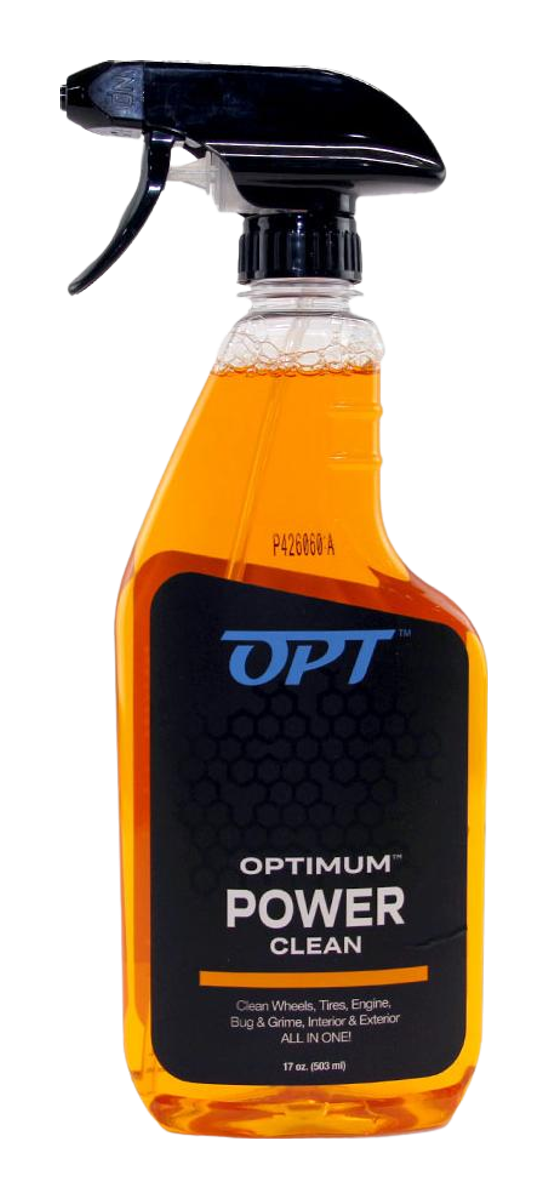
Optimum Power Clean is a concentrated all-purpose cleaner that handles everything from greasy wheels to interior plastics, adjusting its aggression through dilution. Mix it at 3:1 for wheels and paint, stretch it to 5:1 for door panels and dashboards. One bottle replaces several dedicated cleaners, which is the main selling point. It cuts through brake dust and road grime on wheels, then cleans vinyl and fabric interiors without the residue that heavier degreasers leave behind.
Disodium metasilicate does the heavy lifting. It's a strong alkaline salt that breaks down grease, organic soils, and the baked-on carbon and metallic dust that make wheels such a pain. The nonionic surfactants lift loosened grime into suspension so it rinses clean instead of smearing around. A polymer and emulsifier package helps keep everything dissolved in the wash water rather than redepositing on the surface. The formula is lean, only five ingredients, and none of them are filler. It's a straightforward alkaline cleaner built around one proven cleaning agent, tuned to work across a wide dilution range.
Specifications
| Attribute | Value |
|---|---|
| pH | 11.5 |
| Dilution Ratio | Neat to 1:5 |
| Key Actives | Disodium Metasilicate |
| Signal Word | Danger |
| Transparency | excellent |
| Biodegradable | Not disclosed |
Category Context
| Metric | This Product | Category Average | Category Range |
|---|---|---|---|
| pH | 11.5 | 11.3 | 7 - 13.6 |
| Price/oz | $0.35 | $0.52 | $0.09 - $1.18 |
Where It Lands
Optimum Power Clean lands squarely in the middle of the APC category at pH 11.5, but that neat number overstates what most users will actually experience. Diluted to 1:5 for interior work, working pH drops to roughly 10.8 — mild enough for weekly use on plastics and vinyl without stress. At 1:3 or neat, it stays in the range that handles wheel grime and engine bay buildup. That flexibility is the product's core positioning: a single bottle that scales from gentle maintenance cleaner to moderate degreaser depending on the mix.
At $0.35/oz before dilution, effective cost drops to under $0.07/oz at 1:5 — hard to beat in this category. 3D All Purpose Cleaner undercuts it at $0.27/oz with a slightly higher pH, but Optimum's five-ingredient simplicity and broad dilution window make it the more versatile buy. For heavily neglected surfaces where you need pH above 12, look elsewhere. For everything else, this covers it.
How It Compares
Closest Alternatives
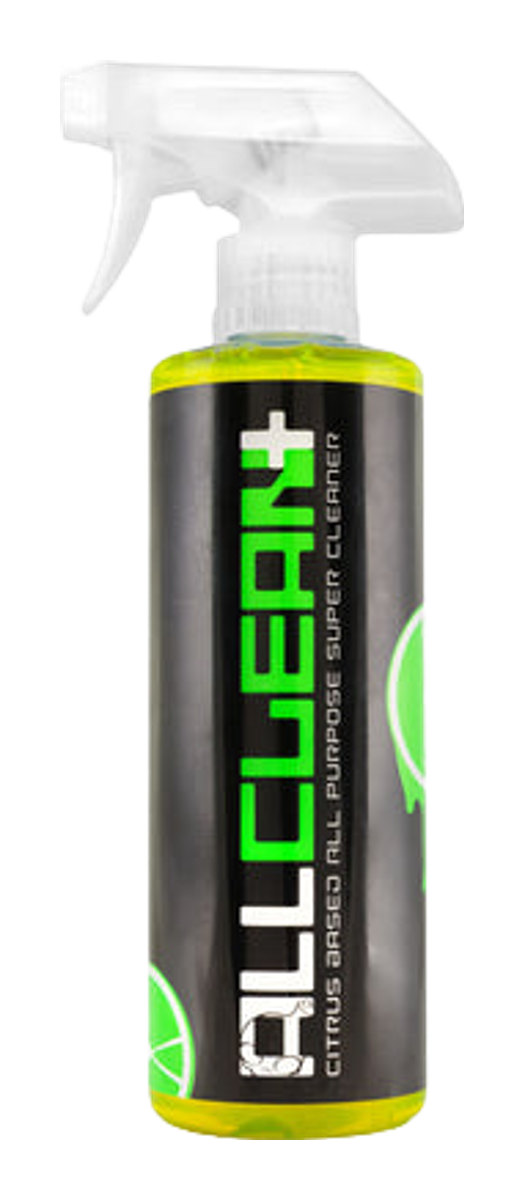
Chemical Guys All Clean+ All Purpose Cleaner & Degreaser runs nearly the same alkaline pH and targets the same broad range of surfaces — wheels, interiors, engine bays. The closest formula match in the category, with comparable dilution flexibility and cleaning strength.
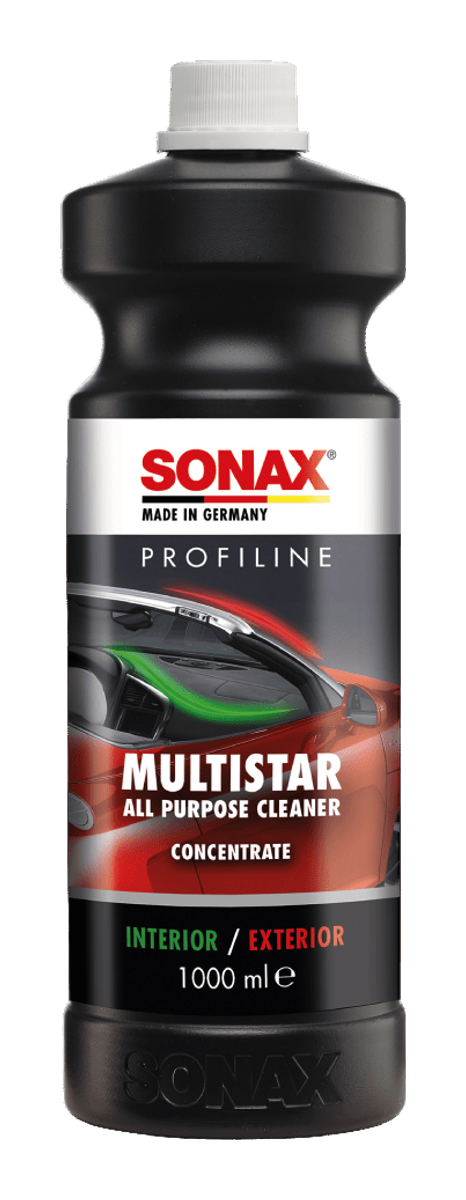
Sonax Multi Star All Purpose Cleaner takes a slightly milder alkaline approach at pH 11. That half-point gap translates to meaningfully less aggression on delicate plastics and trim, making it a better fit for frequent interior maintenance at the same per-ounce cost.
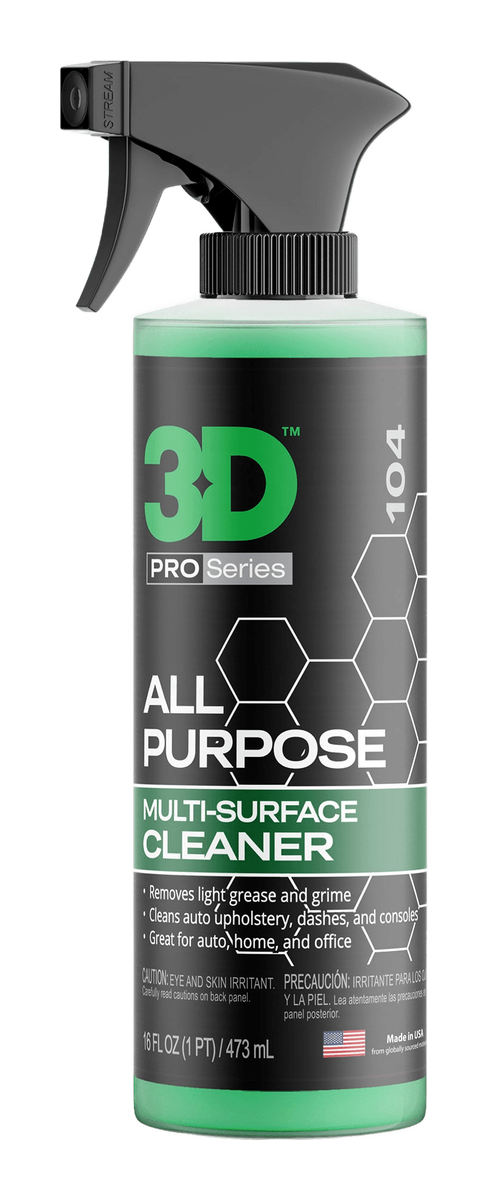
3D All Purpose Cleaner delivers a stronger alkaline punch at pH 12 while costing 23% less per ounce. A concentrate that hits harder for less — the trade-off is narrower safe-use range on sensitive surfaces.
Compare These Products


How the Chemistry Works
Disodium metasilicate and a trace of sodium hydroxide establish the alkaline baseline, but the cleaning happens when that alkalinity meets organic contamination. Disodium metasilicate saponifies greasy films, converting oily road grime and brake pad residue into water-soluble soaps that rinse away. Sodium hydroxide, present in small amounts, isn't doing heavy lifting on its own — it fine-tunes the pH environment so the metasilicate operates at peak efficiency. Meanwhile, the ethoxylated C9-11 alcohol surfactant drops surface tension so the alkaline solution wets out across textured surfaces like tire sidewalls and pebbled plastic trim instead of beading up and rolling off. The surfactant then emulsifies whatever the alkaline agents have loosened, suspending it in solution for a clean rinse. Dipropylene glycol butyl ether (listed as 1-(2-butoxy-1-methylethoxy)propan-2-ol) bridges a gap neither water nor surfactant can fill: it dissolves petroleum-based soils, wax residue, and other organics that alkaline hydrolysis alone won't fully break down. The result is a three-pronged mechanism: saponification, emulsification, and direct solvency. That explains why a five-ingredient formula works across so many surface types.
The ethoxylated alcohol deserves a closer look. Optimum chose a single nonionic surfactant rather than blending anionic and nonionic systems the way many APCs do. Nonionic surfactants don't carry a charge, so they remain stable across the full alkaline range without precipitating or losing effectiveness. That simplicity also means the product foams modestly rather than generating thick, clingy lather. Users who spray it through a foam cannon expecting shaving-cream thickness will be disappointed, but the trade-off is faster sheeting action and cleaner rinsing — less residue left behind on glass and paint.
There are no chelating agents, which means hard water minerals won't be sequestered during the wash. On well water or in hard-water regions, spotting risk increases at rinse. There are no corrosion inhibitors listed either, a significant omission given the Danger signal word and the product's marketed use on wheels. Bare aluminum, anodized finishes, and polished metal get no chemical safety net beyond dilution and dwell-time discipline. The formulator clearly optimized for cleaning breadth and simplicity over specialized surface protection, putting the responsibility on the user to manage contact time.
What We Like
- Five-ingredient simplicity — fewer components mean fewer potential reactions with coatings, trim dressings, and leather protectants, reducing the risk of streaking or residue that plagues more complex APC formulations.
- Task-matched dilution architecture — a single bottle covers engine bays at 3:1 and leather seats at 5:1, effectively replacing two or three dedicated products while keeping the per-ounce cost well below the category average.
- Silicate-based surface passivation — disodium metasilicate leaves a thin protective silicate film on aluminum and painted surfaces during cleaning, buffering against the flash corrosion that straight hydroxide-based APCs can trigger on bare metal.
What to Know
- Wax and sealant removal is baked into the chemistry. Disodium metasilicate saponifies protective layers the same way it saponifies road grime. Any concentration strong enough for wheels will strip wax on contact. Budget for reapplication after aggressive dilutions.
- Glass demands attention, not just speed. The formulation cannot dry on glass without risking haze or etching. In direct sun or on warm panels, your working window shrinks to minutes. Rinse fast or work in shade.
- "Danger" signal word means concentrate strength demands respect. Wear gloves when handling neat product. Splashes at full strength irritate skin and eyes quickly.
Who Should Buy This
If you're maintaining a daily driver and want one bottle that handles wheel brake dust, greasy engine bay edges, and interior door jambs without switching products, this concentrate earns its shelf space. The dilution range lets you run aggressive for neglected wheel barrels or gentle enough for vinyl trim. If your contamination is primarily organic — road film, bug splatter, oily fingerprints — disodium metasilicate's saponification mechanism breaks those down more efficiently than solvent-heavy APCs that rely on emulsification alone. For shops cleaning coated vehicles where stripping protection is a concern, a pH-neutral cleaner avoids the reapplication cycle entirely.
Want to see how this stacks up? Compare these 3 all purpose cleaners
Frequently Asked Questions
Can I use Optimum Power Clean on leather seats? Yes, but only at maximum dilution (1:5) and with a short dwell time — under 30 seconds. Disodium metasilicate saponifies the oils that keep leather supple, so prolonged contact at stronger ratios will dry out and dull the surface. Follow immediately with a leather conditioner.
What dilution should I use for engine bay degreasing? 1:1 or neat for heavy petroleum buildup. At full strength the alkalinity cuts through baked-on oil and road film without mechanical agitation. Rinse thoroughly — residual metasilicate left on aluminum or bare metal will cause white oxidation spots.
How does the five-ingredient formula affect rinsing compared to Chemical Guys All Clean+? Fewer surfactants mean less foam and faster sheeting during rinse. All Clean+ carries 17 ingredients including multiple surfactant systems that can leave a slick residue if not thoroughly flushed. Power Clean's stripped-down formula rinses cleaner with less water, which matters in engine bays and jambs where trapped soap causes problems.