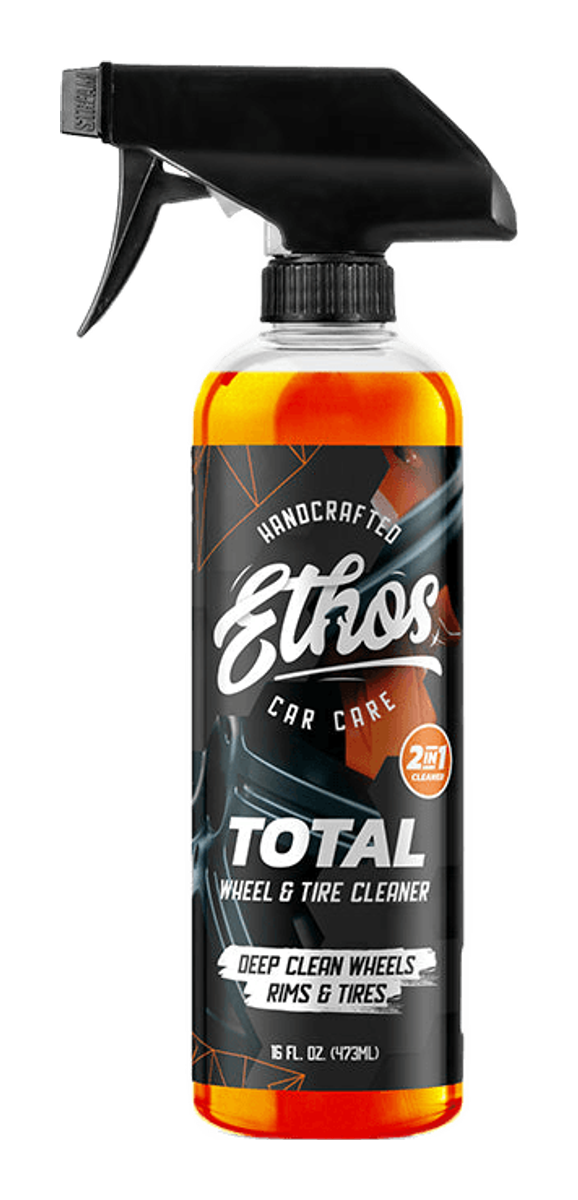
Ethos Car Care TOTAL Wheel & Tire Cleaner: ChemCX Analysis

Ranked Performance
Pricing
Badges
Ethos TOTAL Wheel & Tire Cleaner does what the name says: one product for both surfaces. Spray it on a dirty wheel and tire, let it dwell, and it loosens brake dust from the barrel while cutting the brown grime off the tire sidewall in the same step. Most wheel cleaners ignore the tire, and most tire cleaners aren't safe on wheel finishes. This one handles both, which cuts a two-product job down to one.
Sodium metasilicate drives the cleaning. It's an alkaline builder that breaks down the baked-on brake dust and road film bonded to wheel surfaces, dissolving the metallic and organic deposits so they rinse away instead of requiring heavy agitation. The surfactant package is unusually broad, combining four different surfactant types to wet and lift grime on two very different surfaces: hard, coated metal and porous rubber. Built-in corrosion inhibitors keep the alkaline chemistry from attacking the wheel finish while it works. The dual-surface approach is the real story here. The chemistry is straightforward, but the balance between cleaning power and surface safety across both substrates is well considered.
Specifications
| Attribute | Value |
|---|---|
| pH | 8.5 |
| Dilution Ratio | RTU (Ready-to-Use) |
| Key Actives | sodium metasilicate, anhydrous |
| Signal Word | Danger |
| Transparency | excellent |
| Biodegradable | Not disclosed |
Category Context
| Metric | This Product | Category Average | Category Range |
|---|---|---|---|
| pH | 8.5 | 7.8 | 1 - 15 |
| Price/oz | $0.93 | $0.64 | $0.12 - $1.70 |
Where It Lands
Ethos TOTAL sits in the mild-alkaline tier of the wheel cleaner category and is strong enough to outperform neutral pH spray-and-rinse products but well short of the pH 12+ heavy hitters that dominate the alkaline segment. At pH 8.5, it sits just above the category average, placing it alongside light-duty alkaline cleaners rather than the aggressive degreasers built for neglected or track-driven wheels. That positioning makes it a realistic weekly-use product on coated, polished, or anodized wheels where stronger alkaline cleaners would be a liability.
At $0.93/oz as a ready-to-use spray, this is premium-priced, 45% above the category average and more than double what you'd pay for comparable mild-alkaline options like Dr. Beasley's Premium Wheel Cleanser at $0.41/oz. The dual wheel-and-tire pitch justifies some of that premium if it genuinely replaces two products, but for heavy brake dust buildup, you'll still reach for something stronger.
How It Compares
Closest Alternatives
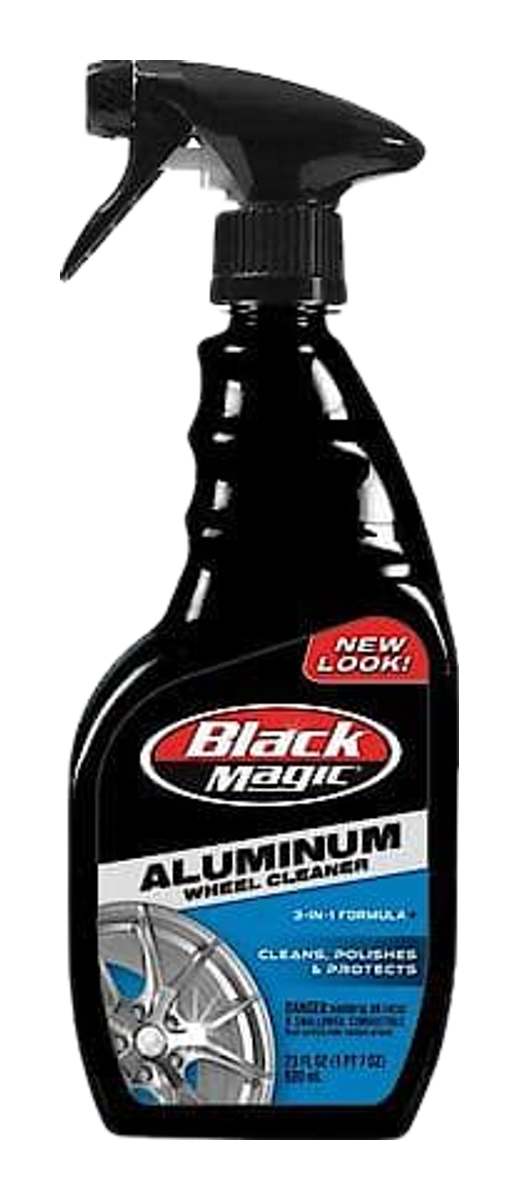
Black Magic Aluminum Wheel Cleaner shares the mild-alkaline profile of the Ethos TOTAL, sitting at pH 9 with a similar mechanism for loosening brake dust without aggressive chemistry. The closest formulation parallel in the category at a fraction of the cost.
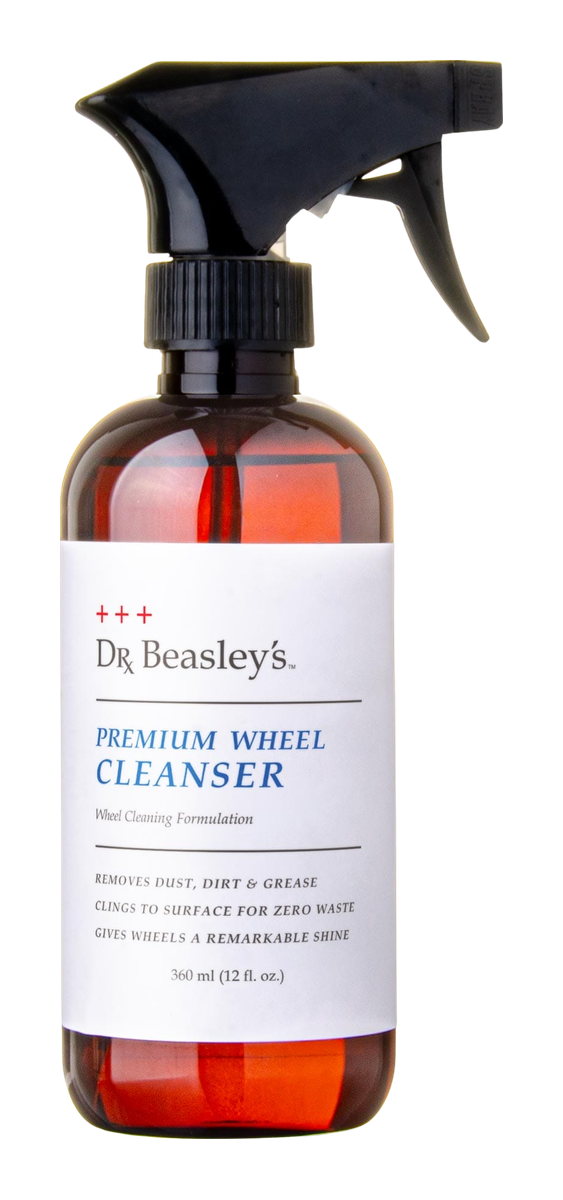
Dr. Beasley's Premium Wheel Cleanser takes a surfactant-forward approach rather than leaning on alkaline builders. At pH 9 it operates in the same mild range but relies on emulsification rather than saponification to lift contamination, a gentler mechanism for coated or polished finishes.
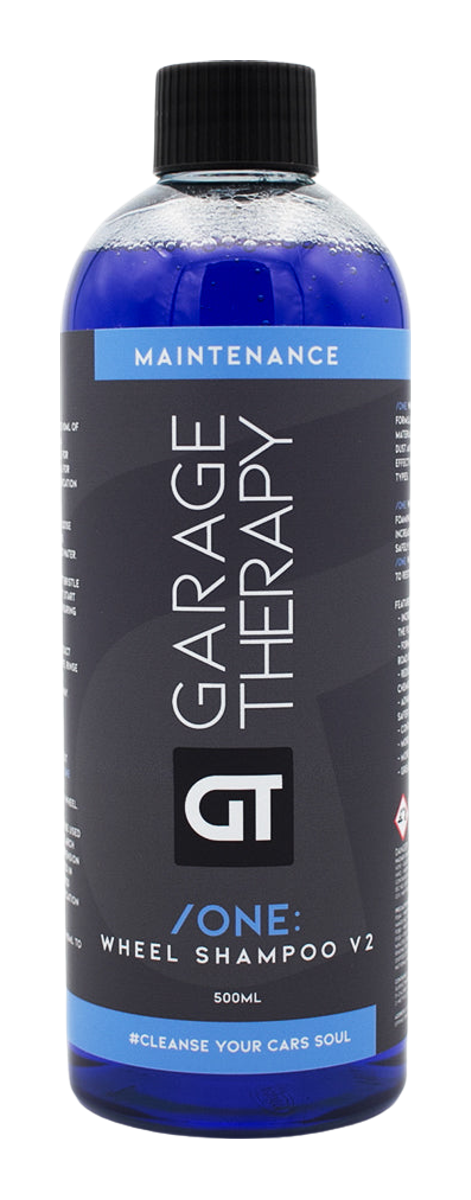
At $0.39/oz, Garage Therapy /ONE: Wheel Shampoo V2 delivers surfactant-based cleaning at pH 8 for roughly 58% less per ounce. A neutral-territory wheel shampoo designed for regular maintenance rather than heavy decontamination.
Compare These Products


How the Chemistry Works
What makes this formulation interesting is four surfactant classes working in concert. Sodium metasilicate provides the alkaline backbone, saponifying oily brake dust binders and road film so they lose their grip on the wheel surface. The sodium olefin sulfonate then generates the foam that carries loosened contamination away from the surface, while disodium cocoamphodipropionate, an amphoteric surfactant, moderates the system's overall harshness and stabilizes that foam layer. The cationic quaternary ammonium compound (cocoalkylmethyl polyoxyethylene ammonium chloride) adds a conditioning dimension unusual in wheel cleaners, leaving surfaces with a slight anti-static effect that resists immediate re-soiling. Meanwhile, the amine oxide surfactant boosts foam density and cling on vertical surfaces like wheel barrels and tire sidewalls, giving the alkaline chemistry more dwell time where gravity works against you. The acrylic polymer thickens the solution enough to slow runoff further. The net result for the user: a product that foams on contact, clings to the tire sidewall long enough to soften brown oxidation, and rinses without leaving a tacky residue. Lime and lemon oils handle the scent, masking the characteristic metallic smell of metasilicate solutions with a citrus note.
The chelating agent, tetrasodium N,N-bis(carboxylatomethyl)-L-glutamate, is the formulation choice worth examining. Most wheel cleaners in this price range use EDTA for chelation. Ethos chose a glutamic acid derivative instead, which sequesters calcium and iron ions from hard water and dissolved brake dust metals. The practical payoff: fewer water spots during rinsing and better surfactant performance in hard-water regions where calcium ions would otherwise deactivate the cleaning system. 1-Butoxypropan-2-ol, the glycol ether co-solvent, dissolves the organic fraction of brake pad residue (the petroleum-based binders and phenolic resins) that the alkaline component alone would struggle with. Together these two ingredients extend the product's effective reach across both mineral and organic contamination types.
Eighteen ingredients are disclosed here, but this is a partial list covering regulated and hazardous components. The surfactant package is well-documented, which is unusual for partial-disclosure products. Expect undisclosed ingredients handling functions like corrosion inhibition, pH buffering, and preservation. The Basic Violet 10 colorant at 0.0011% tints the product but at that concentration serves no color-change indication function. This is a formulation built around surfactant diversity rather than chemical aggression, trading raw alkaline strength for a broader toolkit of cleaning mechanisms.
What We Like
- Dual-surface design at mild alkalinity — pH 8.5 is enough to saponify brake dust binders on wheels while staying gentle enough for tire rubber, eliminating the need to switch products mid-detail. One spray bottle replaces two.
- RTU format with no dilution math — Ready-to-use delivery means consistent concentration every application. No guessing ratios, no risk of mixing too strong and damaging a coated wheel or too weak and wasting dwell time.
- Four-class surfactant blend targets both hydrophobic and particulate soils — Tire browning is largely oily antiozonant migration; brake dust is metallic particulate bound by resin. Covering anionic, nonionic, cationic, and amphoteric surfactancy in one formula gives the product legitimate reach across both soil types.
What to Know
- Mild alkalinity limits ceiling on heavy neglect. The dual-surface convenience means the chemistry splits the difference between wheel and tire needs. Heavily caked brake dust that a pH 12+ cleaner dissolves on contact will need multiple dwell cycles here, or agitation with a stiff brush. You trade speed on worst-case wheels for rubber-safe chemistry.
- Every wash strips your tire dressing. The surfactant package that cuts sidewall browning also removes any existing tire coating. Budget for reapplication after each use. Gloves are worth grabbing too, given the Danger signal word.
- RTU convenience locks you into one strength. No concentrate option means you can't dial up potency for barrels or dial down for quick maintenance washes. You get simplicity but lose flexibility.
Who Should Buy This
If you're maintaining regularly washed wheels and want one bottle that handles both the barrel and the tire sidewall in a single pass, this is the use case Ethos TOTAL was built for. Weekly or biweekly wash routines where brake dust hasn't had time to bake on play directly to the mild-alkaline chemistry. The saponification mechanism handles fresh contamination efficiently without risking coated or polished finishes. The same logic applies to a mid-week tire refresh: spray, agitate, rinse, and the sidewall comes back black without needing a dedicated tire cleaner. For anyone running a multi-vehicle household on a maintenance schedule, one RTU bottle simplifying the workflow is a genuine time saver.
Want to see how this stacks up? Compare these 3 wheel cleaners
Frequently Asked Questions
Can I use Ethos TOTAL on ceramic-coated wheels? Yes. The mild-alkaline chemistry won't degrade ceramic coatings, which resist degradation up to roughly pH 11. Sodium metasilicate at this concentration saponifies brake dust binders without attacking the SiO₂ coating layer. Check an inconspicuous area first if your coating manufacturer specifies a lower pH tolerance.
How long should I let it dwell before agitating? 30–60 seconds gives the surfactant blend time to penetrate and lift brake dust. Longer dwell won't compensate for the mild alkalinity on heavy buildup and agitation with a wheel brush matters more here than extra soak time.
How does Ethos TOTAL compare to Dr. Beasley's Premium Wheel Cleanser for regular maintenance? Both target the maintenance-wash segment, but they solve different problems. Dr. Beasley's uses surfactant-only chemistry (no alkaline active), making it gentler but more reliant on mechanical agitation. Ethos TOTAL's sodium metasilicate gives it a chemical edge on oily brake residues, and the dual-surface formula handles tires in the same step.