Detail Co Infinity Ceramic Spray Sealant: ChemCX Analysis

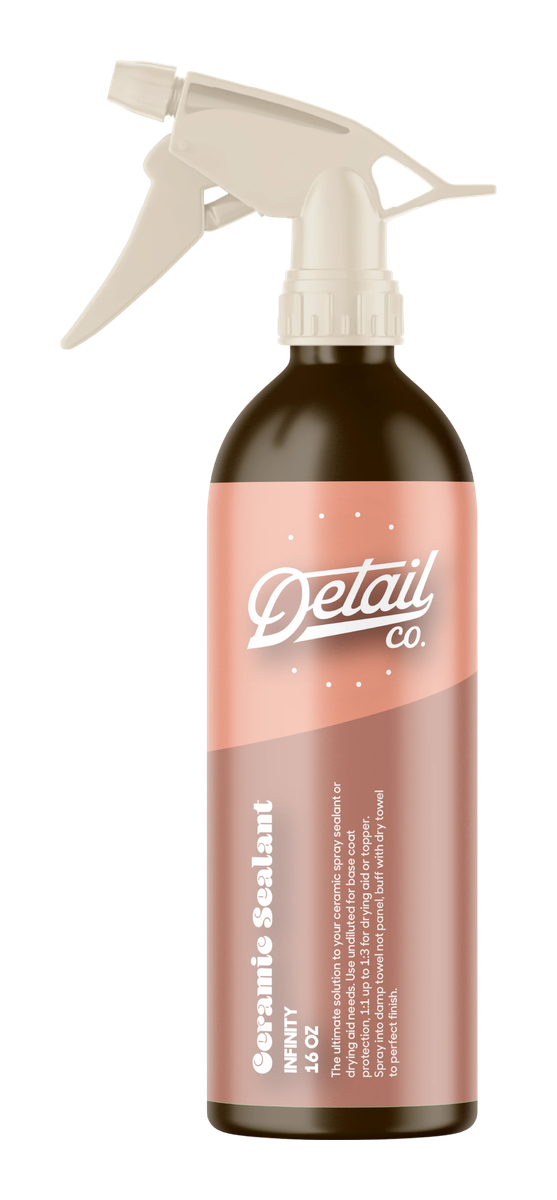
Detail Co Infinity Ceramic Spray Sealant is a concentrate that bonds chemically with paint rather than just sitting on top of it. You spray it on, spread it with a towel, and the coating cures as it reacts with moisture in the air. The result is a slick, hydrophobic layer that holds up longer than most spray sealants because it's actually anchored to the surface. The concentrate format lets you run it undiluted for maximum protection or dilute it up to 1:3 for a quick drying aid, which makes it flexible enough to fit into different steps of a detail.
The bonding mechanism comes from amino-functional compounds that use ambient humidity to cross-link and form covalent bonds with the silica in your clear coat. That chemical attachment is why the protection outlasts a typical wax or polymer sealant that relies on surface adhesion alone. The disclosed ingredient list covers only regulated components, so the full supporting cast of surfactants and leveling agents isn't visible.
Specifications
| Attribute | Value |
|---|---|
| pH | 6.3 |
| Dilution Ratio | 1:1 to 1:3 |
| Key Actives | Trade Secret (CAS: Trade Secret) |
| Signal Word | Danger |
| Transparency | excellent |
| Biodegradable | Not disclosed |
Category Context
| Metric | This Product | Category Average | Category Range |
|---|---|---|---|
| pH | 6.3 | 6.1 | 4 - 9 |
| Price/oz | $0.23 | $1.50 | $0.23 - $7.10 |
Where It Lands
Detail Co Infinity lands squarely in the mainstream of spray sealants by chemistry with a pH 6.3 neat, and drifting toward 6.8 at working dilution. Its economics are anything but typical. At the lowest price point in the category, the effective cost diluted 1:3 drops to roughly $0.06/oz per application. That's a fraction of what you'd spend on P&S Bead Maker at $0.29/oz or Adam's H2O Guard & Gloss at $0.42/oz, neither of which dilute further.
The neutral pH and concentrate format make this a maintenance-cycle product, not a problem-solver. It won't strip old wax or cut through mineral deposits.
How It Compares
Closest Alternatives
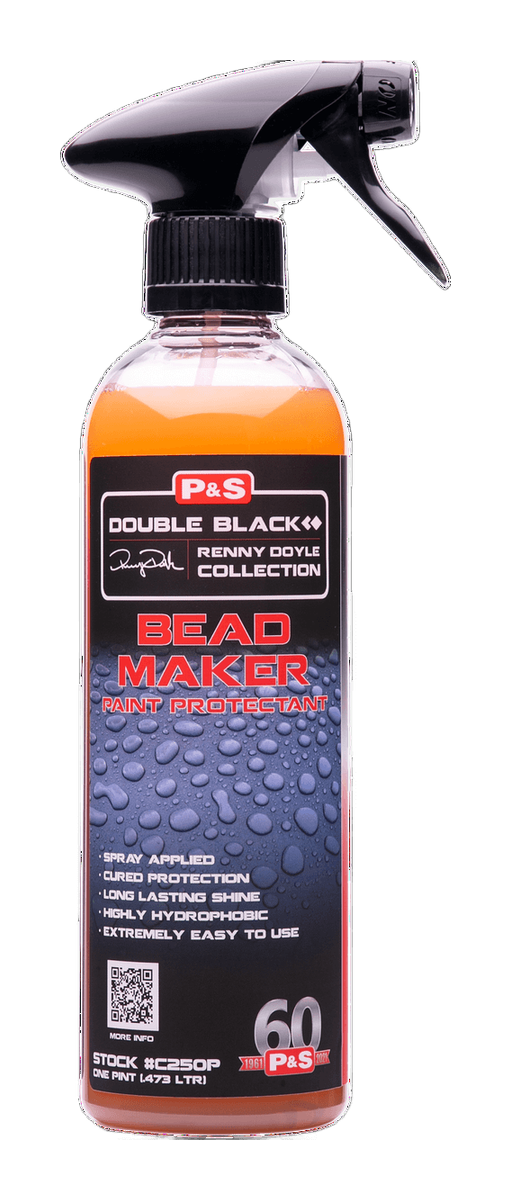
P&S Bead Maker runs a polymer-based formula at a nearly identical pH, making it the closest functional match. The key difference is that Bead Maker's chemistry deposits and sits, rather than moisture-curing, so reapplication cycles are shorter but the application is more forgiving.
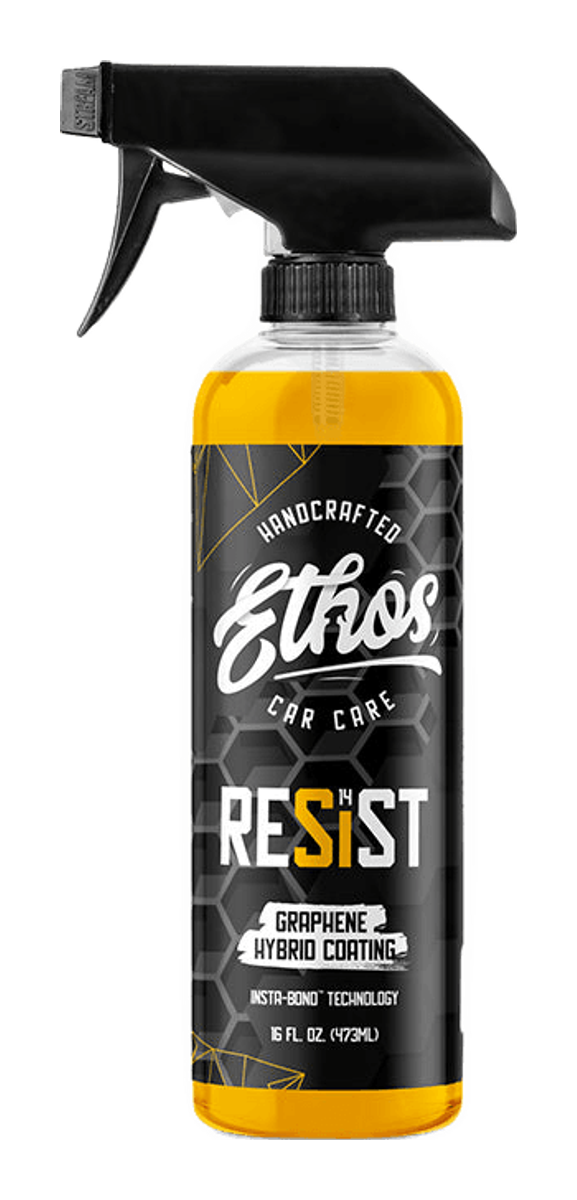
Ethos Car Care RESIST Graphene Spray Coating takes a silicone-driven route to the same goal. Silicone actives deliver immediate slickness and strong water behavior without relying on an amino cure mechanism, trading long-term chemical bonding for faster, more predictable results per application.
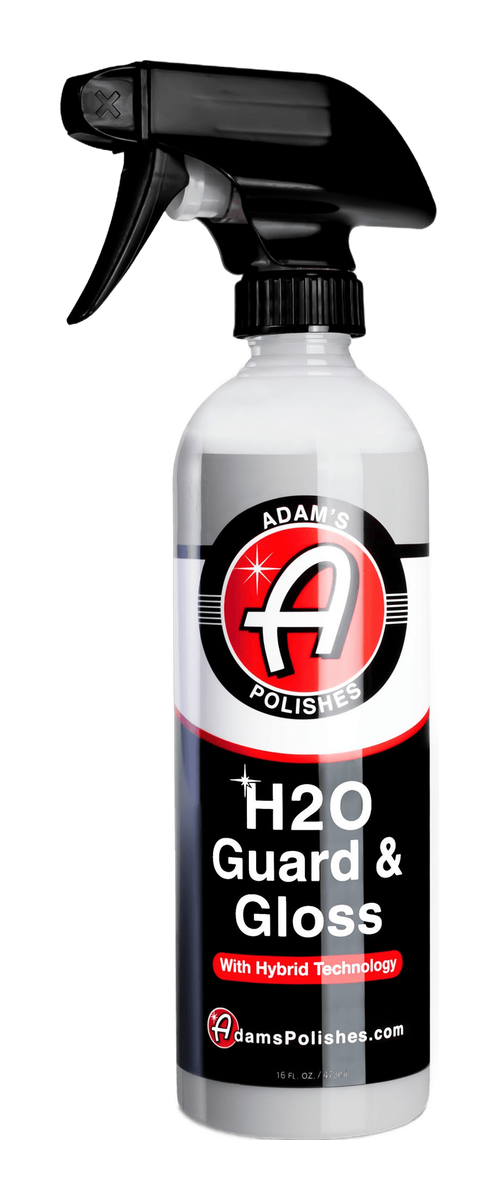
Adam's Polishes H2O Guard and Gloss blends hybrid chemistry at a comparable near-neutral pH. At roughly 80% more per ounce, it arrives ready-to-use which offsets some of that cost gap for low-volume users.
Compare These Products



How the Chemistry Works
The core mechanism here hinges on the trade secret component, which Detail Co describes as "moisture cured aminos." Amino-functional chemistry reacts with ambient humidity to crosslink into a durable film on the paint surface. The near-neutral carrier solution keeps the reactive aminos stable in the bottle while allowing them to activate once exposed to air. The non-hazardous base, almost certainly water-dominant, serves as the delivery vehicle, thinning the reactive polymer enough to spray evenly and spread under a microfiber towel before the crosslinking reaction begins. The user experience tracks with this chemistry: you apply, wipe to a thin uniform layer, and the coating firms up over the next few hours as moisture drives the cure. The slickness that builds progressively after application, rather than appearing instantly, is the signature of a reactive system rather than a simple polymer deposit.
The fragrance inclusion is functionally a micro-dose, just enough to mask whatever solvent or amine odor the trade secret component carries. Amino-functional chemistries often have a faint ammonia-adjacent smell during application, and even this trace amount of fragrance redirects the user's nose. The colorant intermediate likely gives the liquid a visual identity in the bottle and on the panel during application, helping the user track where product has been spread before buffing. Neither ingredient contributes to protection, but both solve real usability problems that would otherwise make the product less pleasant to work with.
The disclosure here is honest about its limits: a handful of line items, two of which are functionally decorative, one preservative to keep the water-based formula shelf-stable, and two broad categories that contain everything that matters. The trade secret designation on the reactive polymer is expected for a competitive ceramic sealant formula, but it also means the specific amino chemistry, any co-solvents aiding film formation, and whatever surfactant system enables spray atomization and surface wetting all remain invisible. The "Danger" signal word with no hazardous ingredients individually flagged suggests the trade secret component itself carries the hazard classification, likely related to the reactive amine chemistry. Wear gloves during application, and work in ventilated spaces, particularly when using the product undiluted.
What We Like
- Concentrate economics shift the value equation — At the lowest price point in an 80-product category, the 1:1 to 1:3 dilution range means a single bottle yields two to four bottles of working product. That turns a budget price into a genuinely low cost-per-application that undercuts even bulk polymer sealants.
- Moisture-cure chemistry rewards imperfect conditions — Unlike polymer-deposit sealants that need dry panels and controlled wipe-off windows, amino-functional crosslinking actually requires ambient humidity to bond. Detailing in a humid garage or wiping a damp car after a wash works with the chemistry instead of against it.
- Near-neutral pH preserves existing protection layers — pH 6.3 sits close enough to neutral that layering over a prior ceramic coating or topping up between maintenance washes won't strip what's already there. That makes it a viable maintenance topper, not just a standalone sealant.
What to Know
- Moisture-curing chemistry demands humidity you can't always control — The amino crosslinking mechanism needs ambient moisture to bond properly. In arid climates or low-humidity garage environments, cure quality drops. You get a durable coating in the right conditions, but inconsistent results when the air won't cooperate.
- The "Danger" signal word is unusually severe for a spray sealant — Most products in this category carry "Warning" or no signal word at all. Whatever drives that classification means gloves and skin coverage are worth taking seriously, especially when working with the undiluted concentrate.
- Concentrate flexibility costs you consistency — The 1:1 to 1:3 range leaves real room for user error. Too dilute and the coating underperforms. Too concentrated and you waste product or get uneven curing.
Who Should Buy This
If you're maintaining multiple vehicles and reapplying sealant every few weeks, the concentrate format and dilution flexibility make this the cheapest per-application option in the category by a wide margin. If you want a sealant that crosslinks into the paint rather than depositing a sacrificial polymer layer, the moisture-curing amino chemistry here creates a fundamentally different bond than spray-and-wipe alternatives like Bead Maker. And if you're layering protection over an existing ceramic coating as a maintenance topper, the near-neutral working solution won't interfere with the base layer.
Want to see how this stacks up? Compare these 3 spray sealants
Frequently Asked Questions
Can I use Infinity as a drying aid at the 1:3 dilution, or does that ratio sacrifice durability? Yes. At 1:3 you reduce the amino-functional active concentration enough to work as a slick drying aid without heavy buildup. Durability drops compared to 1:1 and expect weeks rather than months of hydrophobic behavior but reapplication is trivial at the cost per diluted ounce.
Why does a spray sealant carry a Danger signal word when the pH is near neutral? The hazard isn't corrosivity. It's the amino-functional actives and likely solvent carriers in the concentrate. Undiluted product poses inhalation and skin contact risks distinct from pH. Wear nitrile gloves and work in ventilated spaces, especially when spraying neat, but that's true for most chemicals.
How does Infinity differ from P&S Bead Maker in real-world performance? Bead Maker deposits a polymer layer that wipes on and wipes off. It is easy to apply, easy to strip. Infinity's moisture-curing chemistry crosslinks into a bonded film, so it resists wash-induced degradation better but demands correct humidity during application to reach full potential.