Chemical Guys Incite Foaming Wheel Cleaner: ChemCX Analysis

Ranked Performance
Pricing
Badges
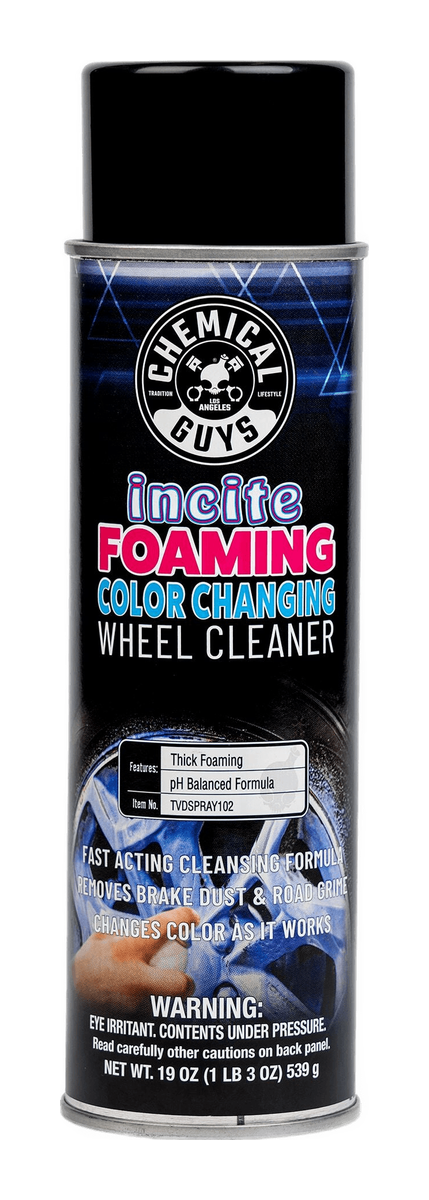
Chemical Guys Incite is an aerosol foam wheel cleaner that sprays on blue and turns white when it's done working. That color shift takes the guesswork out of dwell time. Spray it on, wait for the foam to change, and rinse. The thick foam clings to vertical spoke faces and inner barrels instead of running straight down to the tire, so it stays in contact with brake dust long enough to break it down.
Disodium metasilicate is the cleaner here. It's a mild alkaline builder that dissolves the baked-on iron and carbon compounds in brake dust, loosening them from the wheel surface so they rinse away. A paired surfactant system, one anionic and one nonionic, generates that thick foam and keeps dissolved grime suspended in it rather than redepositing on clean areas. The color-change indicator is the clever bit. The rest of the formula is straightforward stuff assembled well.
Specifications
| Attribute | Value |
|---|---|
| pH | Not disclosed |
| Dilution Ratio | RTU (Ready-to-Use) |
| Key Actives | Disodium metasilicate |
| Signal Word | Warning |
| Transparency | excellent |
| Biodegradable | Yes |
Category Context
| Metric | This Product | Category Average | Category Range |
|---|---|---|---|
| pH | Not disclosed | 7.8 | 1 - 15 |
| Price/oz | $0.79 | $0.64 | $0.12 - $1.70 |
Where It Lands
Incite positions itself as a convenience-first wheel cleaner: aerosol delivery, color-changing dwell indicator, no dilution required. Without a disclosed pH, it's impossible to place this product on the aggressive-to-gentle spectrum that defines the category. The presence of disodium metasilicate as a key active signals alkaline cleaning power, but the actual working strength remains a black box. That missing data point matters: it's the single most useful number for deciding whether a wheel cleaner suits coated alloys or neglected steel.
The convenience has a cost. At $0.79 per ounce, Incite runs 23% above the category average and more than double what Meguiars Hot Rims Chrome costs at $0.37/oz. The aerosol format and indicator foam justify some premium, but budget-conscious detailers doing weekly maintenance will burn through cans fast. This is a product for people who value simplicity over economy.
How It Compares
Closest Alternatives
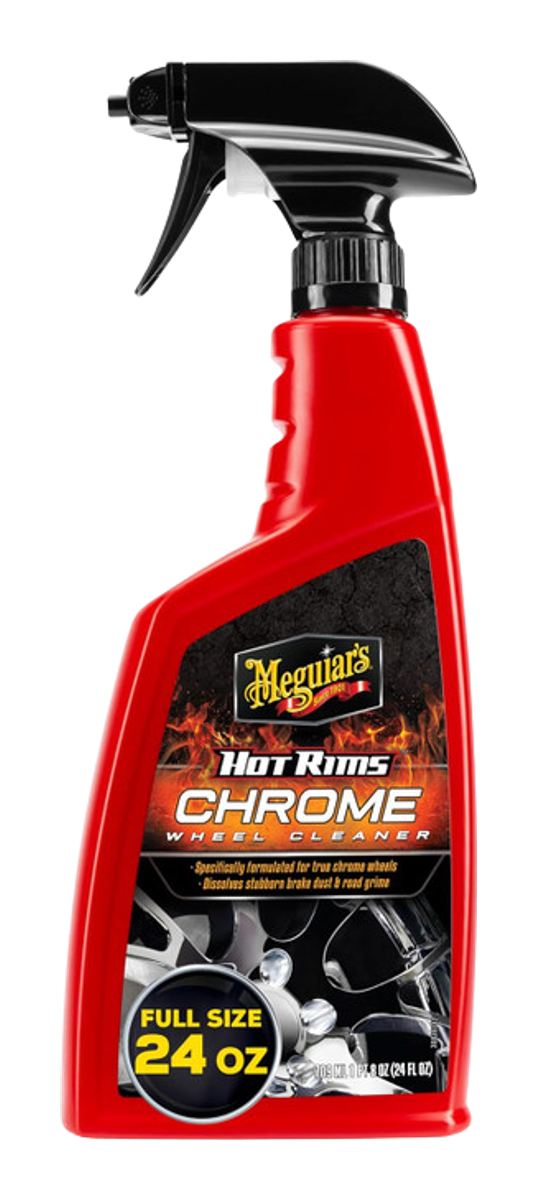
Meguiars Hot Rims Chrome Wheel Cleaner uses a similar alkaline cleaning mechanism in a trigger-spray format rather than aerosol. It lacks the color-changing indicator but delivers comparable degreasing action at a fraction of the cost.
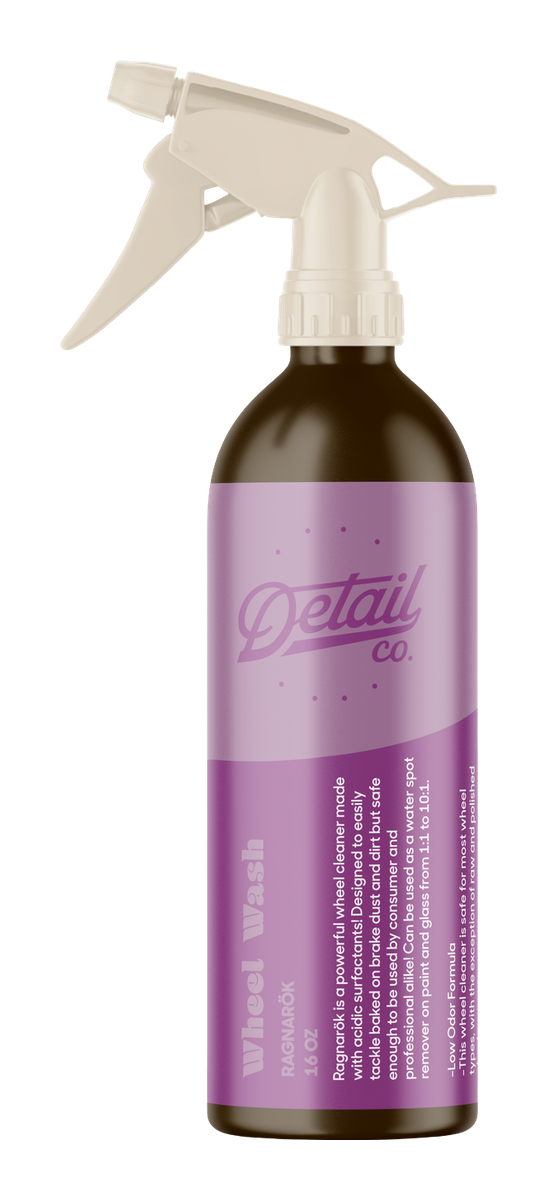
Detail Co Ragnarok takes a reactive-iron approach, using color-changing chemistry to flag ferrous brake dust specifically rather than signaling general dwell time. A different cleaning pathway for wheels where iron contamination is the primary concern.
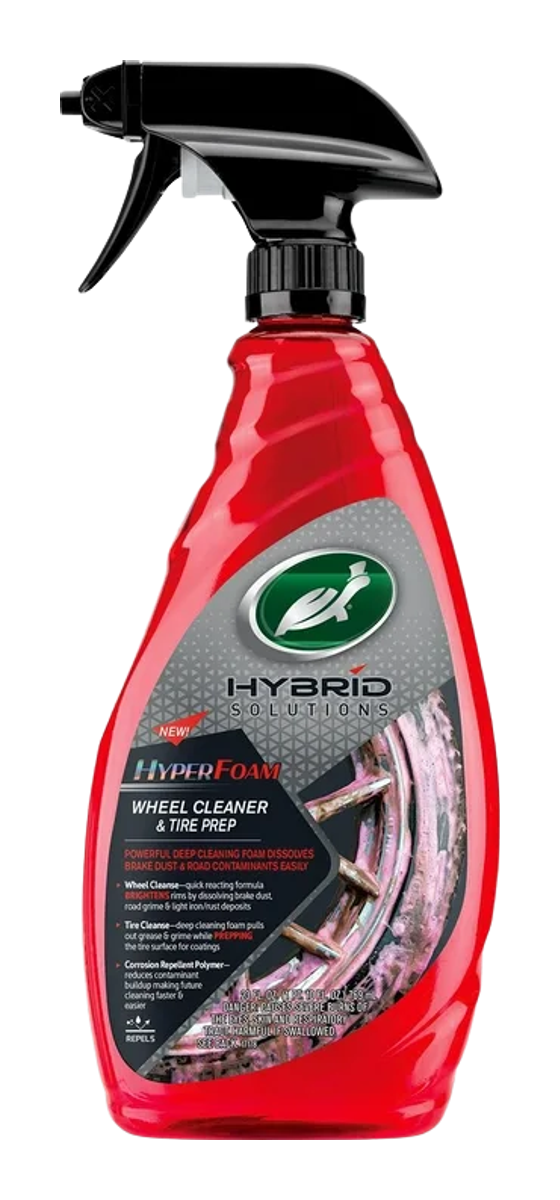
Turtle Wax Hyper Foam Wheel Cleaner & Tire Prep matches Incite's aerosol foam format and cling profile at 39% less per ounce. It adds tire-prep functionality, bundling two steps into one can.
Compare These Products


How the Chemistry Works
Three surfactant classes divide the labor here. Sodium xylenesulphonate acts as a hydrotrope, keeping the formula stable and uniform inside the can, while also contributing detergency once it hits the wheel. Alcohol ethoxylated (C9-C11), a nonionic surfactant, lowers surface tension so the foam wets into the textured geometry of spokes, lug nut recesses, and barrel surfaces where brake dust embeds. Sodium N-lauroylsarcosinate, a mild amino acid-derived anionic, generates the dense, clinging foam the aerosol delivery depends on. Behind this surfactant trio, disodium metasilicate provides the alkaline cleaning action, saponifying the oily binder resins in brake dust so surfactants can lift the loosened particles. Tetrasodium EDTA chelates the iron and copper ions in that dust, preventing them from deactivating the surfactants and helping the color-change indicator function cleanly. The proprietary colorant shifts from blue to white as these reactions progress, giving the user a visual timer that replaces guesswork about dwell time. 2-(2-Butoxyethoxy)ethanol ties it all together as a co-solvent, dissolving road film and grease that water-based surfactants alone would struggle with.
Sodium N-lauroylsarcosinate is the most deliberate choice in this formula. Derived from the amino acid sarcosine, it foams aggressively but irritates skin far less than conventional anionic surfactants like sodium lauryl sulfate. That matters in an aerosol where overspray is inevitable. The formulator picked it specifically for foam architecture: lauroylsarcosinate produces thick, slow-draining foam that clings to vertical wheel faces long enough for the alkaline builder and chelator to do their work. Without it, the foam would sheet off spokes before the color change completes. Pair it with the ethoxylated alcohol's wetting power and you get foam that sticks where you aim it and penetrates where it lands.
Full disclosure of ten ingredients is unusually transparent for an aerosol wheel cleaner, but two entries, proprietary diluent and proprietary colorant, still withhold specifics. The diluent is likely water or a water-glycol blend serving as the carrier solvent, but its exact identity stays hidden. The colorant is the more interesting omission because it's central to the product's signature feature. Color-changing indicators in wheel cleaners typically rely on pH-sensitive dyes or iron-reactive compounds, and knowing which type would clarify whether the color shift signals chemical completion or just pH neutralization on the surface. That distinction matters: one tells you contamination has been broken down, the other tells you the alkalinity has been spent. Without that detail, the blue-to-white transition is a useful visual cue but not a guaranteed confirmation that every contaminant has been addressed.
What We Like
- Color-change dwell indicator — the blue-to-white shift gives you a visible endpoint, so you rinse at the right moment instead of guessing or leaving product on too long and risking residue on coated finishes.
- Triple-surfactant system in aerosol form — combining a hydrotrope, nonionic ethoxylate, and amino acid-derived anionic in a pressurized can produces thick foam that clings to vertical barrel spokes rather than sheeting off, which extends contact time where gravity works against liquid sprays.
- Full 10-ingredient disclosure — eight named components plus two proprietary entries are listed, letting you cross-check compatibility with ceramic-coated or polished aluminum wheels before the product touches the surface.
What to Know
- Aerosol convenience costs you per-ounce value. At $0.79/oz you're paying a premium over trigger-spray and concentrate alternatives for the propellant system and foam delivery. The can runs out faster than it feels like it should, especially on multi-wheel sessions.
- Disodium metasilicate does the heavy lifting, but undisclosed pH leaves you guessing on limits. Without knowing where this sits on the alkalinity spectrum, you can't confidently assess risk to anodized, polished, or PVD-finished wheels. Spot-test first on anything beyond standard clear-coated alloys.
- RTU format trades flexibility for simplicity. You can't dial the strength up for neglected wheels or down for weekly maintenance. One concentration handles everything, which means it either over-cleans light dust or under-cleans baked-on buildup.
Who Should Buy This
If you're cleaning wheels between details and want a product that tells you when it's done working, the color-change indicator eliminates the dwell-time guesswork that leads to either premature rinsing or over-dwelling on sensitive finishes. For single-car households tackling lightly soiled wheels every few weeks, the RTU aerosol format means zero prep. Shake, spray, dwell, then rinse. Where Incite's triple-surfactant system earns its keep is on complex wheel designs with deep barrel spokes: the clinging foam reaches surfaces a trigger spray drips off before the detergency cycle finishes. Bulk or frequent-use cleaning favors cheaper trigger-spray alternatives, but for grab-and-go convenience with a built-in visual timer, Incite delivers exactly what it promises.
Want to see how this stacks up? Compare these 3 wheel cleaners
Frequently Asked Questions
Can I use Incite on matte or satin-finished wheels? Proceed carefully. Disodium metasilicate, the primary alkaline active, can dull low-gloss finishes if it dwells too long. The color-change indicator helps, but matte and satin clears are less forgiving than gloss. Test on an inconspicuous spoke first.
What does "hybrid" chemistry mean for this cleaner? Incite pairs an alkaline builder (disodium metasilicate) with three distinct surfactant classes — a hydrotrope, a nonionic degreaser, and an anionic emulsifier. The alkaline component breaks down baked-on brake dust while surfactants lift and suspend the loosened grime. It's a belt-and-suspenders approach rather than relying on acid or alkali alone.
How does Incite compare to Turtle Wax Hyper Foam for routine maintenance washes? Both are aerosol foams, but Hyper Foam lists 26 ingredients to Incite's 10, a significantly more complex formula. Incite's color-change indicator gives it a practical edge for timing your rinse, something Hyper Foam lacks. Hyper Foam costs considerably less per ounce, so it stretches further on multi-wheel jobs.