Chemical Guys Decon Pro: ChemCX Analysis

Ranked Performance
Pricing
Badges
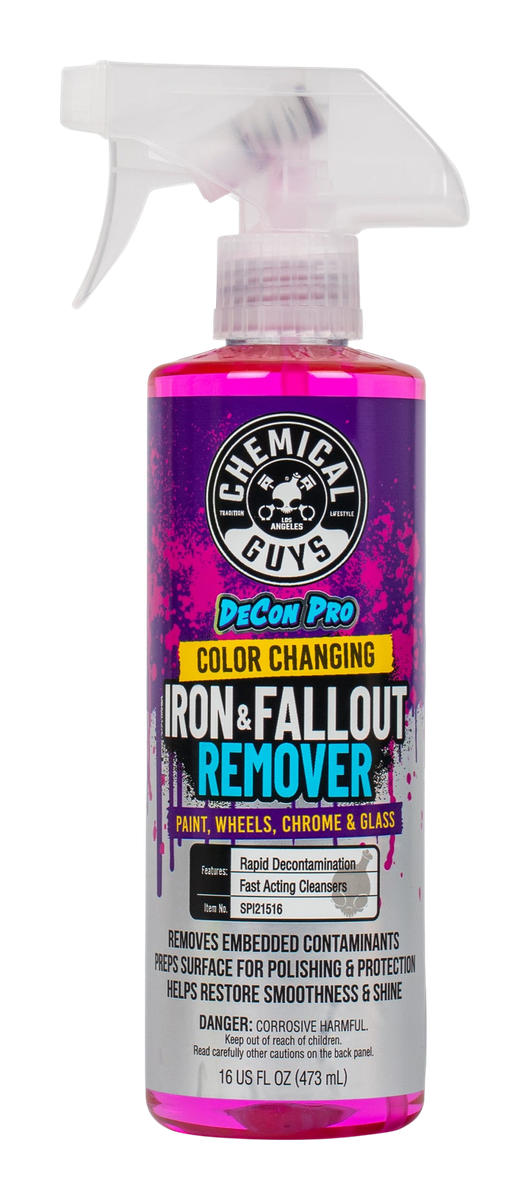
Chemical Guys Decon Pro is a dedicated iron remover that hits hard on embedded brake dust and ferrous contamination. Spray it on a wheel or paint surface, give it a minute, and you'll see the clear liquid bleed purple wherever it contacts iron particles. On heavily contaminated wheels, the purple bloom is immediate and dense, which makes it easy to judge whether a second pass is needed.
Ethanolamine thioglycolate does the work here, and at a 10-25% concentration it's one of the stronger consumer-grade iron removers available. Thioglycolate reduces iron oxides on contact, chemically dissolving particles that are physically embedded in clear coat or wheel finish. That reduction reaction is what produces the purple color. The surfactant package pairs nonionic and amphoteric agents to keep dissolved contamination in suspension so it rinses clean instead of redepositing. A straightforward formula with a high active concentration.
Specifications
| Attribute | Value |
|---|---|
| pH | 7.28 |
| Dilution Ratio | ready_to_use |
| Key Actives | Monoethanolamine Thioglycolate |
| Signal Word | Danger |
| Transparency | good |
| Biodegradable | Yes |
Category Context
| Metric | This Product | Category Average | Category Range |
|---|---|---|---|
| pH | 7.28 | 6.4 | 3 - 11 |
| Price/oz | $1.19 | $0.80 | $0.35 - $1.36 |
Where It Lands
Decon Pro lands in the neutral-pH camp of thioglycolate iron removers, sitting at 7.28, nearly a full point above the category average of 6.4. That slight alkaline push gives the thioglycolate active a more favorable reaction environment for dissolving embedded iron particles without the acidity that makes some competing formulas risky on freshly coated or ceramic-protected surfaces. For heavy brake dust on neglected track wheels, this neutral approach works well. For lightly contaminated daily drivers, it's more firepower than needed.
At $1.19 per ounce as a ready-to-use spray, Decon Pro sits near the ceiling and 49% above the $0.80 average.
How It Compares
Closest Alternatives
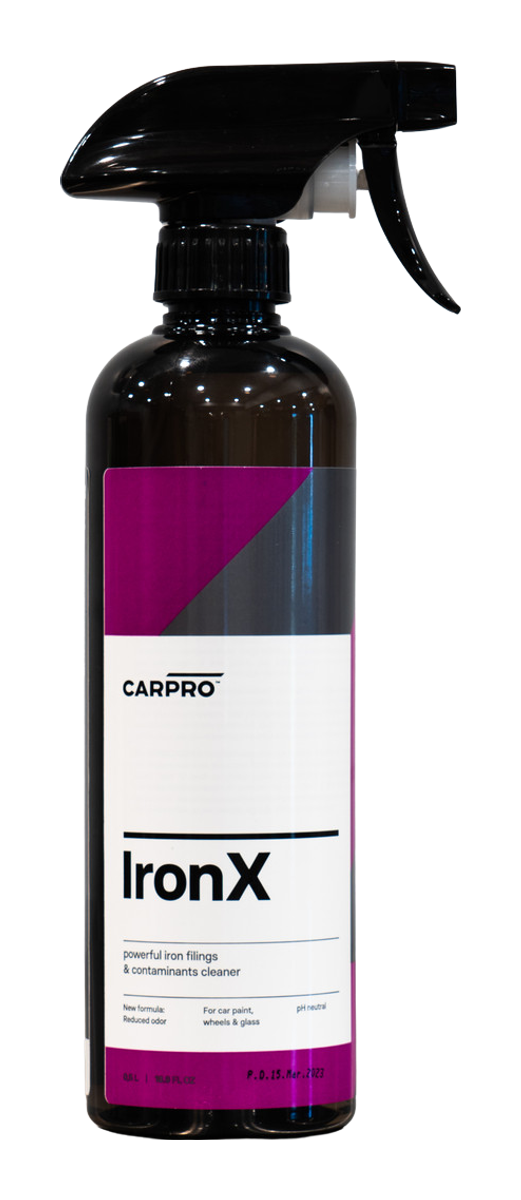
CARPRO IronX runs the same thioglycolate chemistry at a nearly identical pH of 7.5, making it the closest formulation match in the category. The difference is reputation and ecosystem: IronX pairs with CarPro's decontamination clay and coatings, so users already in that workflow get seamless compatibility.
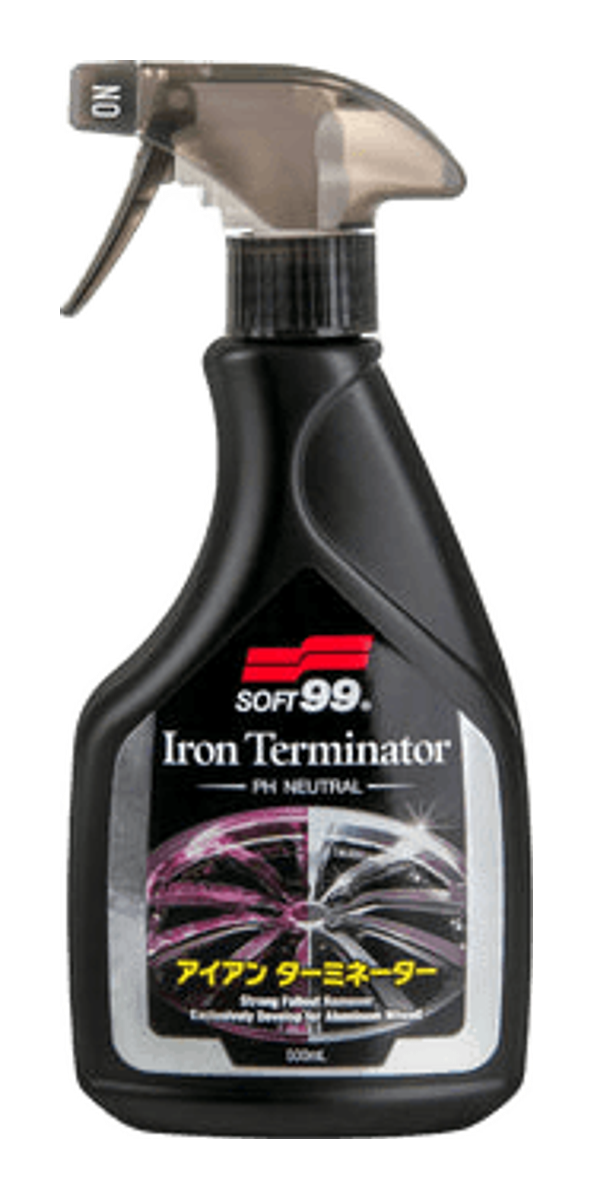
SOFT99 Iron Terminator also sits at pH 7.5 with thioglycolate as the active but ships in a thicker gel format that clings to vertical surfaces longer. That extended dwell time gives the chelation reaction more contact on heavily contaminated wheels without runoff.
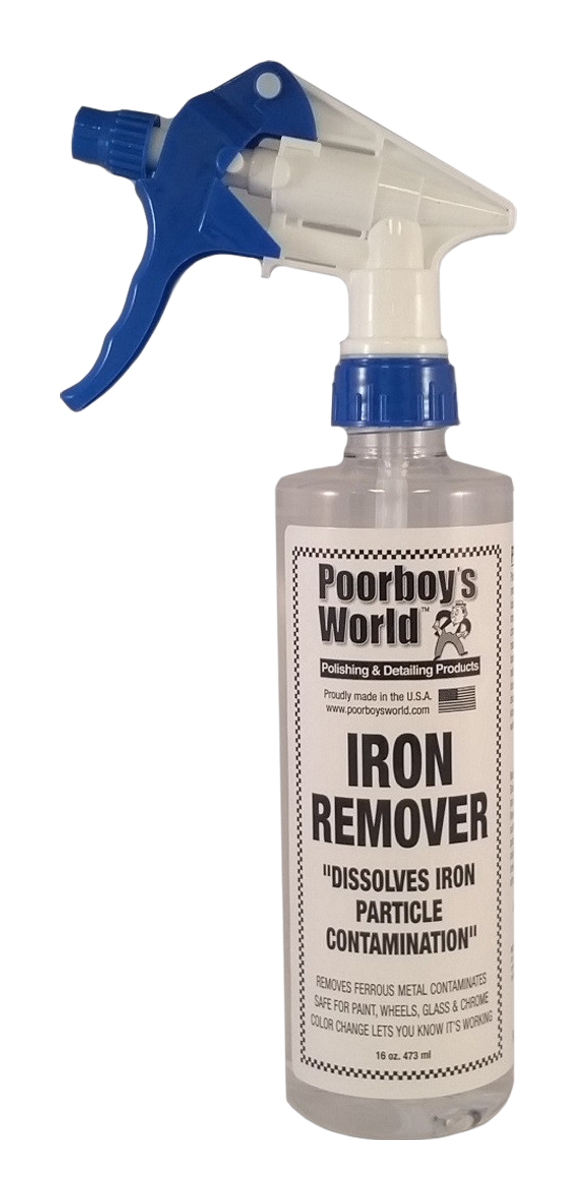
Poorboy's World Iron Remover delivers thioglycolate reactivity at pH 7, slightly lower, at a price point roughly 30% less per ounce. A straightforward alternative when the job doesn't demand a premium label.
Compare These Products


How the Chemistry Works
Monoethanolamine thioglycolate drives the reaction that makes this product work, but the formulation around it determines how well it performs on a real wheel. The thioglycolate ion reduces Fe³⁺ (oxidized iron from brake dust) to Fe²⁺, breaking the bond between embedded particles and the surface. That reduction is what generates the purple color change, a visible iron-thioglycolate complex that tells you contamination is dissolving in real time. A four-surfactant system then handles everything the thioglycolate can't touch: road film, grease, and organic brake pad binders. Two nonionic surfactants, nonylphenol ethoxylate and C9-11 alcohol ethoxylate, drop surface tension so the formula wets into pitted and textured surfaces rather than beading up and rolling off. Two proprietary amine oxides, amphoteric surfactants, build foam and add vertical cling time. The result is a spray that sticks to a barrel face long enough for the thioglycolate to finish reacting, instead of draining to the tire before it can work.
The nonylphenol ethoxylate choice stands out. It's one of the stronger nonionic degreasers available, aggressive at cutting through baked-on brake pad resin and petroleum-based road grime that clings to wheel finishes. That's a formulation decision prioritizing cleaning power while some manufacturers have moved away from nonylphenol ethoxylates due to environmental persistence concerns in wastewater. Pairing it with 2-butoxyethanol, a glycol ether solvent that dissolves both oil-soluble and water-soluble contamination, gives Decon Pro a broader cleaning range than a thioglycolate-only formula would achieve. The butoxyethanol is why this product can tackle greasy road film in the same pass as ferrous contamination, rather than requiring a separate degreaser step.
The ingredient list shows seven components, which is lean but plausible for a ready-to-use iron remover. The "proprietary diluent" is almost certainly water or a water-based carrier, standard practice for RTU products. What's absent is any disclosed chelating agent beyond the thioglycolate itself. Many competing formulas add EDTA or similar chelators to sequester calcium and magnesium from hard water, which can interfere with surfactant performance and leave white residue on dark wheels. Without one, rinse behavior on hard-water supplies could suffer. The two proprietary amine oxides are listed separately, suggesting two different chain-length variants tuned for different foam characteristics, one likely optimized for initial foam volume and the other for foam stability and drainage time.
What We Like
- 10–25% thioglycolate loading in a neutral carrier — most RTU iron removers dilute the active down to minimize odor and cost. Decon Pro keeps the concentration high enough to tackle heavy, multi-layer brake dust accumulation in a single pass rather than requiring repeat applications on neglected wheels.
- Multi-surface compatibility without a rinse-agent swap — the near-neutral pH means you can move from painted panels to chrome trim to glass without switching products or worrying about etching. One bottle handles a full decontamination wash across every exterior surface.
- RTU format at working strength — no measuring, no dilution math, no risk of mixing too strong and damaging coatings. You spray and walk away, which removes the most common user error in iron-removal workflows.
What to Know
- High thioglycolate concentration means high odor commitment. The 10–25% active loading that makes single-pass decontamination possible also produces a sulfur smell strong enough to linger in enclosed garages. Work outdoors or with airflow, and consider gloves since this concentration can sensitize skin with repeated bare-hand contact.
- RTU format locks you into one strength. You get grab-and-spray convenience, but no way to dial back the concentration for lighter contamination or stretch the bottle on maintenance washes. At the category's upper price tier, every trigger pull costs more than a dilutable competitor's.
- This is a decontamination step, not a cleaner. The neutral pH and thioglycolate chemistry target embedded iron specifically. Road grime, oils, and heavy soil stay behind. Pre-wash wheels before applying or the product spends its reactive capacity on surface dirt instead of the ferrous deposits underneath.
Who Should Buy This
If you're prepping panels for a ceramic coating and need embedded iron gone in one pass, not two or three, the concentrated thioglycolate loading here handles months of accumulated ferrous contamination without repeat applications. Same logic applies to European performance cars after a track day, where brake dust bakes into barrel surfaces and bonds at the molecular level; the neutral-pH carrier dissolves iron deposits without attacking the wheel finish underneath. For routine weekend washes where contamination is light, a standard wheel cleaner does the job at a fraction of the cost. But for dedicated decontamination sessions where the chemistry needs to do the heavy lifting on the first spray, Decon Pro earns its place on the shelf.
Want to see how this stacks up? Compare these 3 iron removers
Frequently Asked Questions
Can I use Decon Pro on ceramic-coated wheels? Yes. The neutral pH won't attack SiO₂ coatings the way acidic iron removers can. Thioglycolate targets iron compounds specifically, leaving the ceramic layer intact. Rinse thoroughly after the color change completes to avoid residue sitting on the coating.
How long should I let it dwell before rinsing? Watch the color, not the clock. Purple bleeding typically peaks within 2–3 minutes on moderate contamination. If you see no color change after 5 minutes, the surface is either clean or the contamination isn't ferrous and additional dwell time won't help.
How does Decon Pro compare to CARPRO IronX in practice? Nearly identical chemistry and pH, so decontamination performance is comparable.
Why does it carry a Danger signal word at a neutral pH? The thioglycolate active drives the hazard classification, not the pH. Monoethanolamine thioglycolate is toxic by ingestion and a skin sensitizer at the concentrations used here.