Adam's Polishes Deep Wheel Cleaner: ChemCX Analysis
Ranked Performance
Pricing
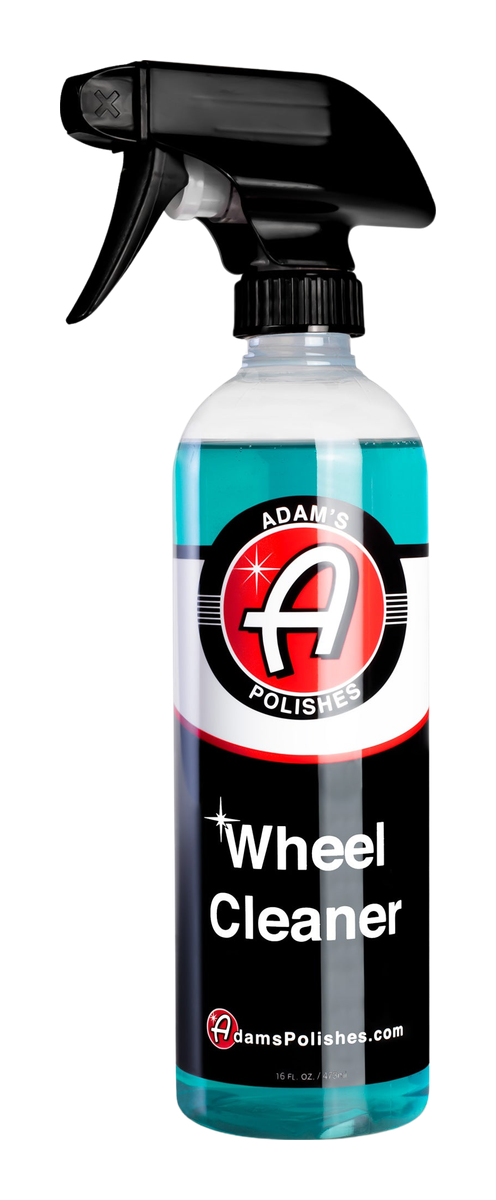
Adam's Deep Wheel Cleaner is a pH-neutral spray that dissolves brake dust and iron contamination chemically, so you're not grinding particles across the finish with a brush. Spray it on, let it dwell, and the purple bleed tells you it's reacting with embedded iron. The contamination loosens and rinses away without the aggressive chemistry that makes you nervous around polished or coated wheels. That's the real selling point: you can use it on any wheel finish without worrying about etching or discoloration.
The active ingredient is ammonium thioglycolate, a chelating agent that bonds directly to iron particles and pulls them free from the surface. That's what causes the purple color change, the iron forming a new compound that dissolves in water. A surfactant blend handles the road grime and oily brake residue that thioglycolate alone won't touch. The formula is straightforward for this chemistry type. Thioglycolate at neutral pH is well-established territory for iron removal, and Adam's executes it cleanly without leaning on acids or alkalis to boost cleaning power.
Specifications
| Attribute | Value |
|---|---|
| pH | 7 |
| Dilution Ratio | ready_to_use |
| Key Actives | (2-hydroxyethyl)ammonium mercaptoacetate |
| Signal Word | Warning |
| Transparency | excellent |
| Biodegradable | Not disclosed |
Category Context
| Metric | This Product | Category Average | Category Range |
|---|---|---|---|
| pH | 7 | 7.9 | 1 - 15 |
| Price/oz | $0.41 | $0.64 | $0.12 - $1.70 |
Where It Lands
Adam's Deep Wheel Cleaner sits squarely in the neutral-pH, iron-reactive segment of the wheel cleaner category, a growing cohort that trades raw chemical aggression for surface safety. At pH 7, it relies entirely on its thioglycolate active to dissolve ferrous contamination rather than acid or alkali attack. That makes it genuinely safe for coated, polished, and anodized wheels where even mildly alkaline cleaners risk etching over repeated use. The trade-off is that on heavily neglected wheels caked with months of baked-on brake dust, a neutral iron remover works slower than an alkaline degreaser and won't cut through road tar or grease films at all.
For weekly to biweekly maintenance on modern wheels, this is the right tool at a good price. It undercuts the category average by 36% and lands below Meguiar's Ultimate All Wheel Cleaner at $0.50/oz while matching Fireball Wheel++ at $0.39/oz. Budget-conscious detailers get a well-disclosed, neutral-pH iron remover without paying the premium that often accompanies enthusiast-brand packaging.
How It Compares
Closest Alternatives
Fireball Wheel++ shares the same pH-neutral, thioglycolate-driven approach. Both products chelate iron particles without alkaline or acid assistance, so the cleaning mechanism and surface-safety profile are nearly identical. The Fireball runs a few cents cheaper per ounce.
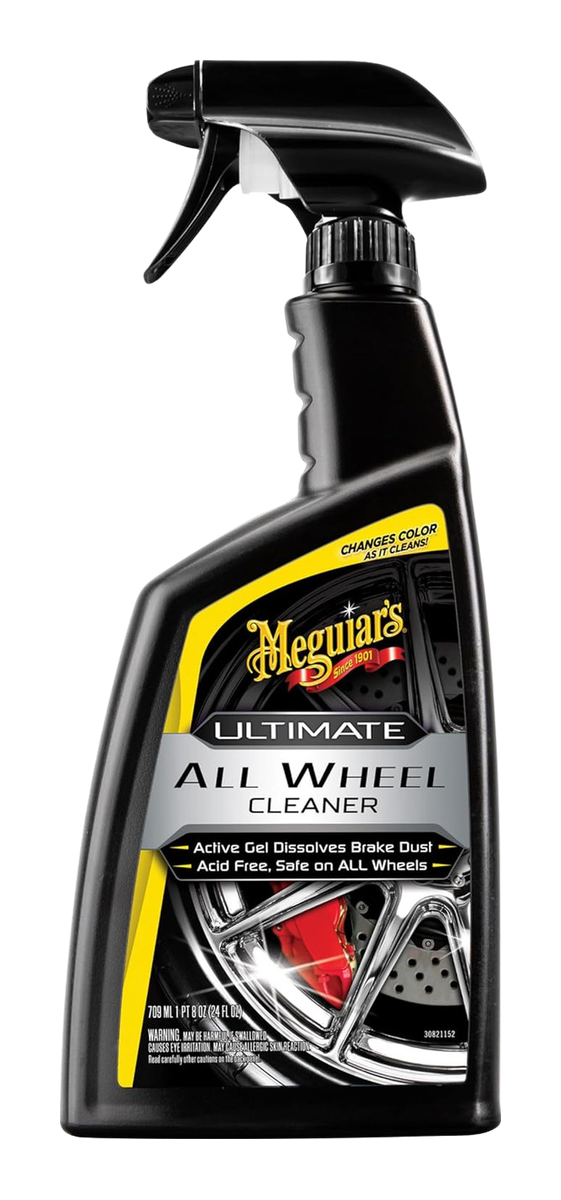
Meguiar's Ultimate All Wheel Cleaner takes a different route, pairing surfactant-heavy cleaning with iron reactivity rather than leaning on thioglycolate as the primary workhorse. It still reads pH 7 but relies more on mechanical lift from its foam structure. That broader cleaning action comes at a 22% price premium.
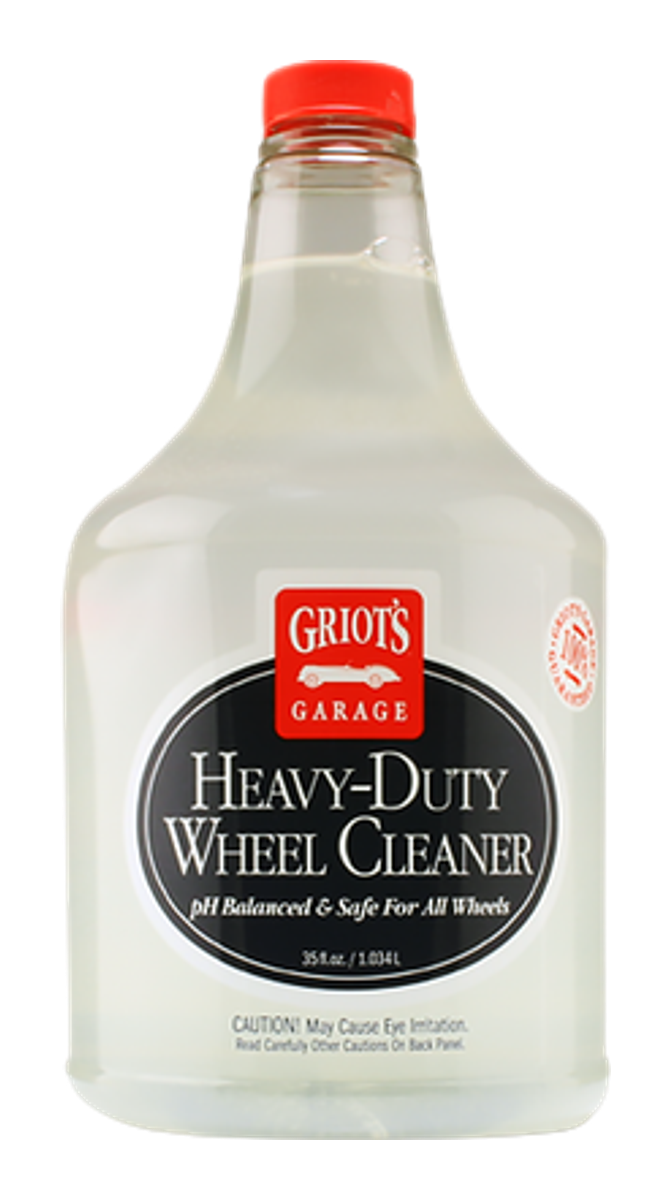
Griot's Garage Heavy-Duty Wheel Cleaner lands at pH 6.75 (functionally neutral) and delivers comparable iron-reactive performance at a similar per-ounce cost. A straightforward swap when availability or brand preference matters.
Compare These Products

How the Chemistry Works
The formulation builds its cleaning power around a three-stage system: react, suspend, rinse. (2-Hydroxyethyl)ammonium mercaptoacetate, the thioglycolate active, breaks the bond between iron particles and the wheel surface by reducing ferric iron (Fe³⁺) to ferrous iron (Fe²⁺), forming a soluble purple complex the user sees as the characteristic color-change bleed. While that reaction runs, disodium 4,5-dihydroxybenzene-1,3-disulphonate chelates the liberated metal ions, preventing them from redepositing onto the finish. Meanwhile, a dual-surfactant system (one cationic and one nonionic) emulsifies the organic layer of brake pad resin, road film, and grease that sits on top of the iron contamination. Xanthan gum thickens the spray into a clinging film so the actives stay in contact with vertical barrel surfaces instead of sheeting off immediately. The result is a product that does its heaviest work during dwell time, not during agitation.
Xanthan gum is the quiet differentiator here. Most pH-neutral wheel cleaners use thin, water-like carriers that run off the wheel face within seconds, forcing users to reapply or work one spoke at a time. By gelling the formula, xanthan gum extends surface contact and gives the thioglycolate more reaction time, which matters because thioglycolate chemistry is slower than the alkaline dissolution that acid or caustic cleaners rely on. The cationic surfactant, cocoalkylmethyl polyoxyethylene ammonium chloride, is an unusual pairing alongside the nonionic ethoxylated alcohols. Cationic surfactants carry a positive charge that binds to negatively charged metal oxide surfaces, which means the cleaning agents are actively drawn toward the contamination rather than floating in the carrier fluid. That charge-driven attraction improves contact efficiency on bare metal and clearcoated aluminum alike.
Fourteen ingredients is thorough disclosure for this category. Six of those are fragrance components, including benzaldehyde (almond-cherry), coumarin (warm vanilla-hay), and several fruity esters, which explains the product's distinctive scent profile and suggests real investment in the user experience beyond raw cleaning performance. What the list doesn't reveal is whether any corrosion inhibitors or rinse aids are present. Many competing iron-reactive cleaners include silicate-based inhibitors to prevent flash corrosion on exposed metal during dwell. Their absence from this list could mean the formulator relies on the neutral pH itself as the corrosion safeguard, or that such additives exist but fall outside disclosure thresholds.
What We Like
- Neutral pH with full chelation power — Running thioglycolate at pH 7 instead of boosting it with alkaline co-solvents means you get iron-reactive cleaning without risking damage to anodized, polished, or ceramic-coated finishes, even on repeated weekly washes where cumulative chemical exposure matters most.
- RTU format eliminates dilution guesswork — Thioglycolate concentration is critical: too dilute and iron particles stay bonded, too concentrated and you waste product. A pre-mixed formula locks in the effective ratio every time, which matters for a chemistry that only works within a narrow active-concentration window.
- 14-ingredient full disclosure — Lets you cross-check every component against coating manufacturer compatibility lists before the product touches your wheels, a practical advantage when protecting a $1,500 ceramic or powder-coat investment.
What to Know
- Neutral pH means patience on heavy buildup. Thioglycolate without acid or alkaline backup needs longer dwell times to dissolve thick brake dust layers. On neglected or track-driven wheels, you'll likely need multiple applications where an acidic cleaner would cut through in one pass.
- RTU format locks you into one concentration. No option to mix stronger for heavy jobs or weaker for maintenance washes. You use more product per session than a concentrate owner would, and at the current price point that adds up across a multi-vehicle garage.
- Wear gloves and respect the Warning signal word. The chelation chemistry that dissolves iron isn't picky about what metal it contacts, so protect your skin and avoid prolonged contact with raw, uncoated metal surfaces.
Who Should Buy This
If you're maintaining ceramic-coated or polished aluminum wheels on a weekly or biweekly schedule, this is the right chemistry for the job. Thioglycolate dissolves fresh brake dust without the surface risk that comes with alkaline or acidic alternatives. It's equally well-suited for quick decontamination passes between details, where you need iron reactivity confirmed by color change but can't afford to stress delicate finishes. Wheels caked with months of neglected track grime will overwhelm the neutral chemistry, and a stronger alkaline or acid-boosted cleaner will save time there. For routine upkeep on wheels you care about preserving, this formulation works well.
Want to see how this stacks up? Compare these 3 wheel cleaners
Frequently Asked Questions
Can I use Adam's Deep Wheel Cleaner on polished or bare aluminum wheels? Yes. The thioglycolate active chelates iron without acid or alkaline assistance, so it won't etch or dull uncoated metal the way a pH 13 alkaline cleaner or pH 2 acid would. Always test on an inconspicuous area first.
How long should I let it dwell before agitating? Give it 2–3 minutes on maintained wheels, long enough for the purple color change to develop fully. On heavier contamination, extend to 4–5 minutes but don't let it dry on the surface; mist additional product if needed.
Why does the product turn purple on my wheels? The thioglycolate reacts with ferrous brake dust particles, forming a water-soluble iron complex that happens to be deep purple. The intensity of the color tells you how much iron was present: faint pink means light contamination, dark purple means heavy.
How does this compare to Meguiar's Ultimate All Wheel Cleaner? Both run pH-neutral thioglycolate chemistry. Adam's discloses 14 ingredients versus Meguiar's 11, offering slightly more formulation transparency. Meguiar's costs more per ounce, but the cleaning mechanism and surface-safety profile are functionally equivalent.